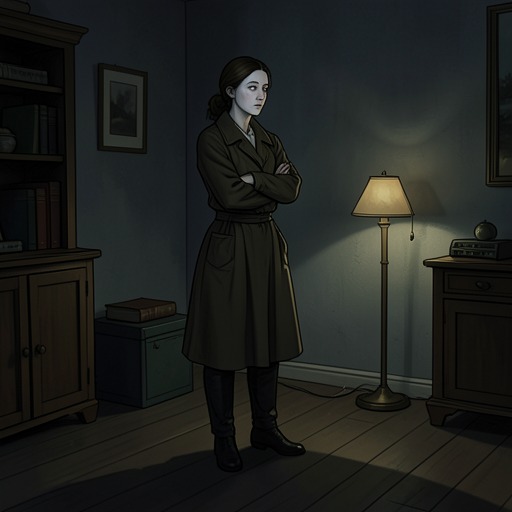
Okay is far from happy
After Ever Happy“Okay is far from happy” is Tessa Young’s name for a life that remains manageable without becoming fulfilling. Spoken in the context of her long-distance relationship with Hardin Scott, the phrase captures a double truth: she can be all right and keep going, while also longing for the joy she remembers experiencing with him.
Meaning and Definition
Tessa defines okay not as collapse, but as a gray middle ground. A person can wake, carry on, and even laugh and smile often; those signs of functioning do not necessarily amount to joy. As she puts it, “Okay isn’t joy.” Nor does okay mean looking forward to each day or getting the most out of life. The expression therefore marks a gap between being able to continue and feeling fully engaged with living.
That distinction gives the phrase its force. Okay can look acceptable from the outside, and Tessa acknowledges that she has settled into it herself. But she also recognizes the concealment in calling it fine: people may carry on while disliking the limits of that state and waiting to move beyond it. The word becomes less a declaration of contentment than a description of endurance mistaken for satisfaction.
Distance and Longing
In the exchange where Tessa explains her situation, she tells two women that she is okay with the long-distance relationship. She misses Hardin Scott constantly, but says that the space has been good for them. The phrase does not cancel either part of this account: distance can help the relationship while remaining a source of absence, and missing someone does not mean that every part of life has stopped functioning.
Her reflection also makes the present state relational. Hardin Scott has shown her “how great life can be outside of okay,” and she has missed that experience ever since. The contrast is not simply between being alone and being together; it is between the life she can sustain now and the fuller happiness she knows is possible. The memory of that alternative makes okay bearable, but also makes its limitations harder to ignore.
The Hope Beyond Okay
Tessa describes the condition as prolonged: she has been okay for a long time and is unsure how to get out of it. The passage does not present a solution or claim that recognizing the problem immediately changes it. Instead, it ends with a modest but distinct hope—that one day she will be able to say she is great rather than okay.
That movement from okay toward great gives the expression its lasting significance. It refuses to treat mere continuity as a happy ending, while stopping short of denying the value of the space that has helped the relationship. Tessa can acknowledge that she is managing, admit that she misses what she has lost, and still imagine a life beyond the gray middle. The phrase holds those positions together without pretending they are the same.