Smith
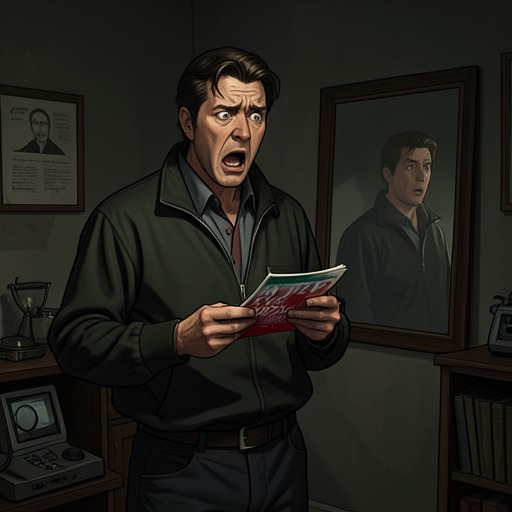
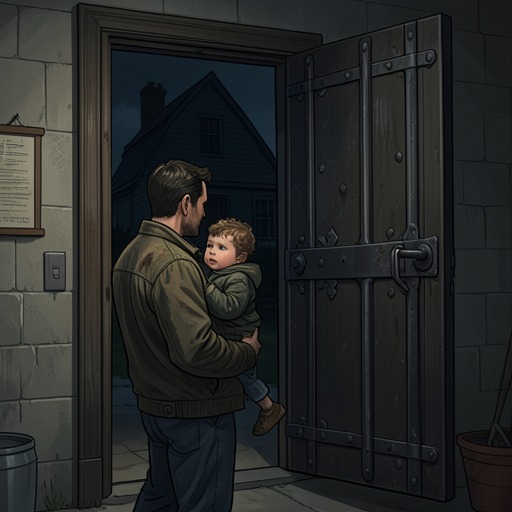
After Ever HappySmith is Christian Vance’s young son and Hardin Scott’s half-brother, a relationship that turns an already complicated family history into a question of belonging. His arrival in the story first matters as a revelation about the adults around him; later, his watchful questions and ordinary gestures make that revelation personal. He is at once a child with his own place in Christian Vance’s household and the unexpected younger brother whose existence forces Hardin Scott to reconsider what counts as family.
Identity and Family Background
Smith is the son of Christian Vance and Rose, the woman Christian Vance loved after his relationship with Trish. Rose gave birth to Smith and died, leaving Christian Vance to describe his son as a second chance at fatherhood and as the person who helped make him whole again after her death. Christian Vance says that Smith resembles Hardin Scott as a boy, though with lighter hair and eyes. The resemblance makes the new kinship visible to him, even when Hardin Scott does not recognize it in the child.
Smith’s connection to Hardin Scott is biological, but the revelation unsettles more than one relationship. When Tessa learns that Smith is Christian Vance’s son and therefore Hardin Scott’s brother, her thoughts immediately extend to Landon, Karen, and Ken Scott. She wonders whether Hardin Scott will still feel connected to Landon, and whether Ken Scott knows that the boy he has tried so hard to raise is not his biological son. Smith’s existence thus exposes how biological ties and lived family bonds overlap without neatly replacing one another.
The Revelation and Its Uncertainty
The news arrives while Tessa is trying to reach Hardin Scott. After his voicemail answers twice, she asks Kimberly to take her to him. Seeing Smith approach, she grasps the implication: Hardin Scott has a younger brother. Her immediate concern is not only the fact itself but what it may do to Hardin Scott, who will have to absorb the revelation while already facing questions about his family. Tessa wants him to know she is there and that they can face it together.
The adults do not know how much Smith understands. When Tessa asks whether he knows, Kimberly explains that they had assumed he did because of the way he behaves with Hardin Scott, but that he could not possibly know. The uncertainty persists in later scenes. Smith asks Hardin Scott whether he does not want Smith to be his brother, a question that suggests he has noticed the emotional stakes even if the evidence does not establish what he has been told. Hardin Scott cannot offer a full answer; he says only that he never said he did not want Smith. The exchange leaves their relationship open rather than resolving it with a declaration.
Encounters with Hardin Scott
Hardin Scott’s first intimate conversation with Smith takes place while Kimberly is grieving and crying with Tessa. Hardin Scott withdraws to the kitchen, where Smith quietly takes a seat beside him and asks whether his father is coming back. Hardin Scott answers that he thinks so, while privately confronting the fact that Christian Vance is both Smith’s father and his own. The child’s question is practical and immediate; the answer carries the weight of a family truth that Smith may not yet know.
In another encounter, Smith asks Hardin Scott whether he wants him as a brother. Hardin Scott looks for Tessa, hoping she will know what to say, but has to answer for himself. His uncertainty is plain: he tries to appear calm and manages only to deny having rejected Smith. The scene makes their new bond neither automatic nor hostile. Smith asks directly for reassurance, while Hardin Scott is still trying to understand what the relationship means and what he can promise.
Smith’s presence continues to shape Hardin Scott’s sense of family through small, unforced interactions. When Hardin Scott visits Christian Vance’s house, Smith descends the stairs with a disgusted remark about finding his father rubbing his leg. Hardin Scott laughs, and the child sits on the couch absorbed in a gadget while Hardin Scott watches him. Smith had earlier opened the door with a small smile; Hardin Scott had noticed the gesture. He also recognizes that Smith had long seemed unusually curious about him and enjoyed his company. After the revelation, those earlier signs acquire a new meaning for Hardin Scott, though they do not prove what Smith knew.
Family Life and the Wedding
Smith belongs to the everyday household as well as the family revelation. When Tessa is alone at Kimberly and Christian Vance’s house, she learns that Smith will spend the night at a sitter’s while the adults stay downtown. His absence sharpens her loneliness in that moment, but the scene also places him within the ordinary arrangements of a family home: cared for, expected, and part of the household’s rhythms.
At Landon’s wedding, Hardin Scott finds Smith sitting alone at a table and joins him rather than remaining with Christian Vance and Kimberly. Smith agrees with Hardin Scott that weddings are boring, then turns his attention to Tessa and says she looks pretty. Hardin Scott gently warns him away from her, and Smith answers with a crooked, gap-toothed smile. The exchange is teasing rather than solemn; their brotherhood now has room for shared jokes and a familiar ease that the earlier revelation could not guarantee.
Smith also helps Hardin Scott approach Tessa. After a brief negotiation about when they will dance, Smith agrees to go over to her table. Hardin Scott watches him walk toward her, then follows, resting his hands on Smith’s shoulders as he arrives. The moment does not settle every question about their family, but it shows Hardin Scott acting alongside Smith rather than treating him as an abstract consequence of Christian Vance’s past.
Narrative Role and Significance
Smith’s importance lies partly in the contrast between what his existence changes and what it cannot erase. The revelation makes Hardin Scott question his ties to Ken Scott and Landon, while Smith’s actual behavior offers no demand that those bonds be discarded. The story keeps both kinds of kinship in view: blood establishes Smith as Hardin Scott’s brother, but attention, reassurance, and shared time begin to give that fact emotional substance.
Smith is also written through the gap between adult assumptions and a child’s directness. Kimberly believes he cannot know the secret, yet his question to Hardin Scott reaches straight to the fear beneath it: whether this new brother wants him. Later, his uncomplicated comments about the wedding and Tessa move the relationship into a less guarded register. He does not resolve the adults’ history or explain what he understands. Instead, his questions and small acts make the consequences of that history tangible, leaving Hardin Scott to answer not only who Smith is, but how he will treat him.