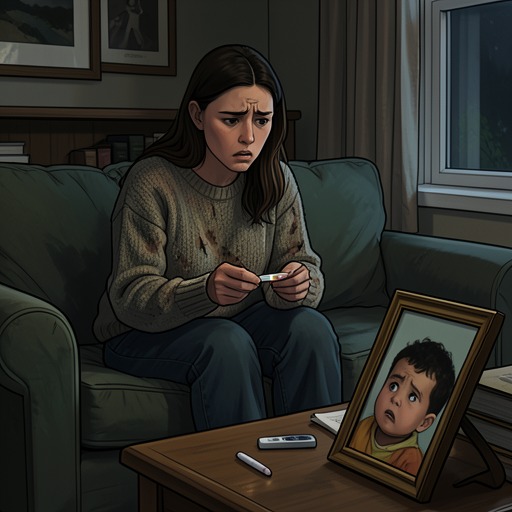
Tessa becomes pregnant again and gives birth to Emery
After Ever HappyTessa becomes pregnant again and gives birth to Emery after a prolonged period in which medical concerns, a previous pregnancy loss, and the uncertainty of trying to conceive have shaped her and Hardin Scott’s hopes for a family. The pregnancy begins not with certainty but with a positive urine test after the couple has decided to pause their efforts; seven months later, Emery arrives as the “blond little miracle” they had hoped for.
Medical Concerns and the Earlier Loss
Tessa’s fears have a concrete medical source. After visiting a doctor to obtain birth control, she learns that an initial scan shows her cervix is shorter than average. Her doctor wants further testing and mentions infertility. Later, Dr. West examines the images and describes her cervix as very narrow and, as far as he can tell, very short. He explains the findings in detail, while Tessa recognizes that the results confirm what she had already feared. The account establishes a significant reproductive concern, not a final declaration that she cannot conceive; the uncertainty itself becomes part of the strain.
The prospect of fertility trouble also unsettles Tessa because of what she has heard about another woman’s experience. Kimberly tells her that the woman struggled for years to become pregnant and tried fertility treatments, describing the process as terrible. She eventually conceived, but Kimberly looks away as she recounts the happy news, leaving Tessa to suspect that part of the story has been withheld. The conversation offers no simple reassurance: a hoped-for pregnancy is possible, but effort and treatment do not erase the fear surrounding it.
That uncertainty is sharpened by a previous pregnancy loss. When Tessa holds her hands over her stomach and says, “I can’t,” Hardin answers, “We can.” Her words and gesture show how pregnancy has become inseparable from apprehension, while his reply expresses hope without supplying a guarantee. Later, a doctor’s call and Tessa’s knowing look confirm the loss of their baby. They reach the hospital, and thirty minutes after arriving receive the news. Tessa apologizes through her tears; Hardin tells her she has nothing to be sorry for. The loss remains an essential part of the later pregnancy’s context: the couple’s hope returns, but it does not return untouched by grief.
Trying to Conceive
Two years later, Hardin describes the couple as having tried to conceive for more than a year. They know the odds are against them, but continue to hope through fertility appointments and ovulation schedules. Their efforts alternate between sex and lovemaking, while Tessa tries various wives’ tales and gives Hardin a bittersweet, chunky concoction that she believes helped a friend’s husband. These details make the attempt at conception part of ordinary shared life: it involves appointments and schedules, but also improvised remedies and repeated intimacy.
The surrounding circumstances make their private disappointment more visible. Landon and his wife are expecting a baby girl, and Tessa and Hardin are to be the child’s godparents. Tessa helps plan the baby shower and paint the nursery, while Hardin wipes tears from her cheeks and pretends not to feel sad for them. Their care for their friends does not cancel their own longing; the two coexist in the same acts of preparation. Hardin’s account places the strain in a domestic setting, where helping to make a room ready for another baby brings their own uncertain future close at hand.
The Positive Test
A year after the account of their prolonged attempts, Tessa and Hardin have just decided to take a break from trying to conceive. On a winter morning, Tessa comes into the kitchen in a light pink lace dress, her hair in an elegant bun and her makeup different from usual. Hardin invites her onto his lap. Their affectionate exchange briefly makes the announcement seem like a familiar moment between them, until Tessa clarifies that her greeting is not the kind of “Daddy” he thinks it is and playfully swats him.
Tessa takes a piece of paper from her dress pocket and puts it in Hardin’s hand. He cannot immediately understand what it says; she scolds him for ruining the moment, and he lifts the paper closer. It reads, “Urine test positive.” The small, blurry page carries enormous weight precisely because it is so plain: after medical concerns, a year of trying, and a decision to pause, it gives them evidence of a pregnancy without telling them what will happen next.
Hardin’s first response is “Shit.” Tessa laughs, but admits that she is afraid to become too excited. He takes her hand, crumpling the paper between them, and tells her they do not know what will happen and should be as excited as they want to be. Tessa calls it a miracle, trying to make a joke but sounding serious. Their exchange holds celebration and fear together rather than resolving one into the other. The test confirms a pregnancy; it cannot promise its outcome.
Emery’s Birth and Significance
Seven months later, Hardin reports that they have a blond baby named Emery. The account moves quickly from the positive test to the birth and gives no details about labor or delivery. Its emphasis falls instead on the distance the couple has traveled to reach this point: the earlier loss, the medical uncertainty, the year of trying, and the cautious joy of the winter announcement all gather around the brief statement that Emery has arrived.
The birth is therefore a culmination, but not a retroactive guarantee that Tessa’s earlier fears were unfounded. The book has shown the bodily findings that raised those fears, the grief of losing a pregnancy, and the exhausting work of trying again. In that context, calling Emery a “miracle” conveys the couple’s experience of improbable hope, not a medical explanation. Their new child marks the realization of a longed-for future while preserving the emotional history that made the positive test so difficult to trust.