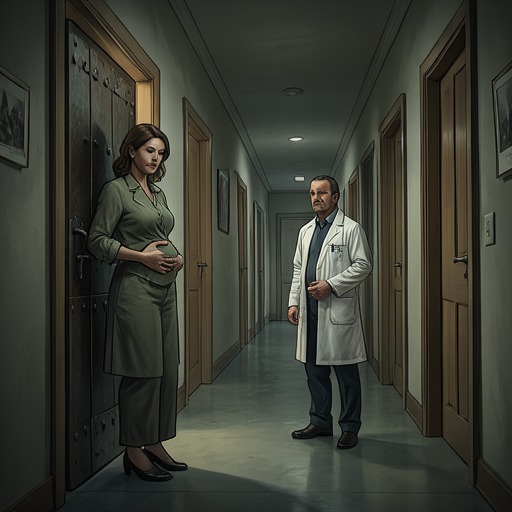
Tessa tells Hardin about her fertility diagnosis
After Ever HappyTessa’s disclosure of her fertility diagnosis turns a medical uncertainty into a defining test of how she and Hardin face loss together. Her cervix is unusually short and narrow, and the doctor has raised infertility as a possibility; Tessa also understands that pregnancy could carry a high risk of miscarriage. The conversation makes clear that the news threatens not only a possible future family but a hope she has cherished for as long as she can remember. Hardin first retreats into silence and responds badly, then recognizes the damage and tries to listen, apologize, and stay beside her.
Medical Findings and the Approach to Disclosure
Before telling Hardin, Tessa confides in Kimberly that she has gone to a doctor to obtain birth control. During a quick scan, the doctor notices that her cervix is shorter than average and recommends further testing, mentioning infertility. Tessa lowers her voice when she admits why she went to the doctor, and Kimberly urges her not to whisper. The exchange shows how abruptly a routine appointment has opened onto a frightening possibility: Tessa has not yet received a complete assessment, but the word infertility has already altered what she imagines for herself.
Further examination gives the concern more specific contours. After reviewing the images, the doctor describes Tessa’s cervix as very narrow and, from what he can see, very short. He offers to explain the findings using the images. The review takes ten minutes; Tessa already knows what he is going to conclude, having anticipated it when she left his office two and a half weeks earlier. The evidence establishes serious concerns, not certainty that she can never become pregnant. Tessa’s account distinguishes the physical findings from the possibilities attached to them, even as the implications feel increasingly difficult to contain.
Kimberly also tells Tessa about a woman who struggled for years to become pregnant and tried fertility treatments. The woman eventually conceived and was, Kimberly says, overjoyed. But Kimberly looks away, leaving Tessa unsure whether the story is incomplete or being softened for her sake. This conversation gives Tessa an example of prolonged difficulty and eventual pregnancy without promising that her own experience will follow the same course. It also places her private fear within the wider reality of fertility treatment and uncertain outcomes.
The Conversation in the Car
When Tessa finally tells Hardin what the diagnosis may mean, the disclosure comes amid a day already crowded with distress: a doctor’s appointment, crying, wine, and Hardin’s worry about Karen and her baby. Tessa holds her hands over her stomach and says she cannot. Hardin initially hears the statement as a possible consequence of his own actions and asks whether he did something to her. Tessa corrects him: the problem is inside her, not something he has caused. Her explanation shifts the conflict away from blame for the medical condition and toward what each of them can bear emotionally.
Tessa describes the uncertainty plainly. There is a very slim chance of pregnancy, she says, but the risk of miscarriage would be high, and her hormone levels are not right. She cannot imagine enduring either a pregnancy loss or years of trying without success, and tentatively concludes that motherhood may not be in the cards for her. Her words sound less like a settled decision than an attempt to make an unbearable possibility speakable. Hardin, meanwhile, imagines the children he had never expected to want and feels their imagined future disappear. The scene makes his shock visible, but it does not make his reaction equivalent to Tessa’s: she is confronting a threatened dream she has carried since childhood.
Hardin cannot find a comforting response. He remains silent, then asks whether Tessa thought he never wanted children and suggests that he did not expect the news to matter so much. Tessa asks him to say something, but his first response leaves her feeling alone with the diagnosis. In his own narration, he recognizes the pattern: he pulls away when she needs him, despite promises to change. His insight arrives after his silence has already made the car feel painfully still.
Hurt, Recognition, and Repair
Hardin pulls onto the busy highway’s shoulder, switches on the hazard lights, and reaches across the console. When Tessa jerks away, her hand strikes the door. He turns toward her, takes her wrists, and admits that his head is not right and that he is sorry for reacting as he did. He asks her not to shut down and acknowledges that he had never seriously considered having children before the diagnosis. His apology does not erase the first response, but it marks a change from withdrawal toward an effort to remain in the conversation.
Tessa tells him that he is allowed to feel upset, too; what she needed was for him to say something. She also challenges the imbalance between their losses. She has wanted to be a mother since childhood, playing with dolls and never questioning whether motherhood would be possible. She is now experiencing an immense loss, while Hardin did not want children until the news confronted him with that future. She does not forbid him from grieving, but makes clear that his sudden grief cannot eclipse the dream she has already had to fear losing. When a semi’s horn startles her, Hardin says he will drive back to Christian Vance’s and asks to come in and be with her in a comforting way, as he should have been from the beginning. Tessa gives him a small nod.
Longer-Term Consequences
The diagnosis remains a source of uncertainty rather than a definitive pronouncement that pregnancy is impossible. Two years later, Hardin recounts that he and Tessa have been trying to conceive for more than a year. They continue to hope through fertility appointments and ovulation schedules, alongside wives’ tales and efforts to time intimacy. That later account shows that Tessa’s earlier fear did not end the possibility of trying; instead, the couple lives with the odds against them while pursuing a pregnancy together.
Their attempts are entangled with the lives around them. Landon and his wife are expecting a girl, and Tessa and Hardin are godparents to Addelyn Rose. Tessa helps plan the baby shower and paint the nursery while Hardin wipes tears from her cheeks and conceals his own sadness. The contrast between celebrating another family’s expected child and privately hoping for one of their own gives the earlier diagnosis continuing emotional weight. Later, after a call from their doctor, Hardin carries his fiancée to the car and drives her to the hospital. Thirty minutes after arriving, they learn that Tessa has lost the baby. Hardin tells her she has nothing to be sorry for and repeats the reassurance while trying to comfort her. The loss does not prove that the earlier diagnosis determined the outcome, but it brings the feared possibility of miscarriage into their lived experience.
Significance
The disclosure matters because it exposes two different forms of grief at once: Tessa’s fear that a lifelong hope may be taken from her, and Hardin’s belated discovery that a future he had dismissed has become precious. The conversation refuses an easy equivalence between them. Tessa gives Hardin room to feel, but also asks him to recognize that the dream was hers before it became his. Their movement from silence and hurt toward apology and listening offers no medical certainty; it establishes instead that confronting fertility risk will require them to speak honestly about desire, fear, and unequal histories of hope.