Tessa’s traumatic grief
After Ever HappyTessa’s traumatic grief follows the discovery of her father’s body and is marked not by a steady progression through sorrow but by suspended feeling, involuntary returns to the scene of his death, and conflicted anger. At first she can scarcely respond to the people around her; later, memories of the needle and the apartment recur alongside an effort to control what she feels. The change is partial rather than a simple resolution: eventually, she can remember her father’s humor without the same pain in her chest.
Discovery and Immediate Shock
After leaving a shoe box in the closet, Tessa crosses the hall to the bathroom and catches her foot on something. Her attention settles on the body on the floor; before she can focus, she fears it may be the young man who left her. When she recognizes that it is not him, the relief is only partial. The body is her father’s. The abrupt movement from an ordinary task to the sight of a dead parent gives the discovery its traumatic force: the familiar domestic setting offers no preparation or protection.
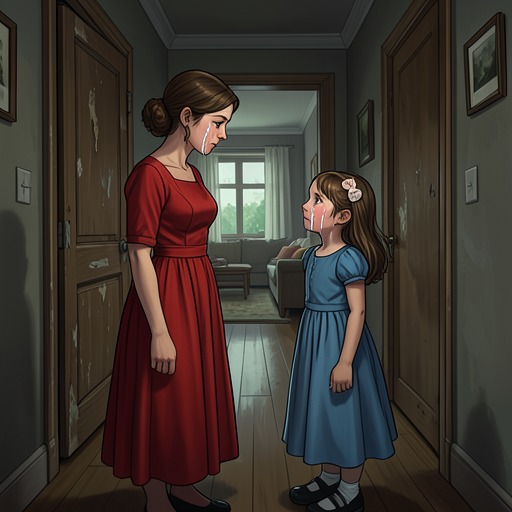
In the aftermath, Tessa seems present to others but experiences herself as absent. Landon asks how long she will remain this way, and Karen explains that she is in shock. Tessa rejects that description internally, even as she does not want to be there and finds a strange comfort in feeling invisible. Everyone around her appears to be crying except her. Her inability to comfort Landon, despite knowing that she wants to, makes the numbness feel not like calm but like a barrier between her and the people she loves.
The official account of Richard’s death makes explicit what Tessa already sensed when she found and touched him. Paramedics and police confirm that he died by injecting heroin; bags of the drug in the pocket of his jeans indicate that he had brought it with him for the weekend. He had been alone in the apartment and dead for hours before Tessa found him. The details make the loss both intimate and procedural: the image of her father’s pale face remains in her mind like a mask, while official confirmation fixes the cause and circumstances of his death.
Immobilization and Intrusive Memory
Tessa’s response is physical as well as emotional. Karen tries to give her water and tells her that Carol is coming to get her, but Tessa cannot make her body nod. She describes an inward scream that nobody can hear and wishes to remain in shock because it hurts less. The sun sets while people make hushed attempts to reach her; eventually they stop, leaving her alone in the living room with her knees drawn to her chest and her gaze fixed on the wall. Time passes around her while she remains unable to engage with it.
When Noah is present with Carol, Tessa feels relieved to be near an old friend who knew her before this loss. She wants to be taken away from the house and from the immediate pressure of other people’s care. Her recollection of finding Richard is sharply sensory: she cried his name and shook him, his jaw fell open, and the needle came out of his arm and landed with a small clink. The sound continues to echo in her mind. She also remembers his hand jerking in hers, and cannot decide whether it was an involuntary spasm or a false hope created by her mind. Checking his pulse again and finding none ends that moment of uncertainty in the deadness of his eyes.
The narrative later gives this memory a nightmare form. In the dream, a needle pricks Tessa’s finger; she sees her father’s skin lose its color, then watches him pick up the needle and inject her while she is unable to move. Landon shakes her awake, and she searches her arm for puncture marks, her shirt soaked with sweat. The nightmare does not change the known facts of Richard’s death; it shows how the remembered needle and helplessness return in altered form, making the original scene feel present again.
Numbness, Anger, and Conflicted Attachment
The numbness extends beyond grief. As memories of tenderness with Hardin give way to memories of fights and his recent infidelity, Tessa feels nothing. She experiences that absence as temporary control: she believes she can refuse to feel or remember what threatens to cripple her. Yet Hardin’s touch unsettles the resolve. Its calming effect exposes the tension in her attempt to make numbness permanent: she wants protection from pain, but remains responsive to intimacy.
Anger later offers a different refuge. Walking with Zed, Tessa admits that she feels angry with her father for dying and recognizes that the anger feels better than nothing because it distracts her. Zed suggests that Richard may not have understood what he was doing. Tessa distinguishes the certainty he lacked from the risk he did know: he may not have known he would die, but he brought drugs into the apartment and pursued a high without thinking of anyone else. Her judgment does not cancel her love for him. She acknowledges guilt as she speaks, but also needs to let the anger and truth be expressed rather than concealed.
Memory and Continuing Connection
The novel does not present Tessa’s later change as forgetting Richard or reaching a clean endpoint. During a later domestic moment, Hardin and Landon discuss cereal, and the exchange brings back a memory of Richard bickering with Hardin because Richard had eaten all of Hardin’s Frosted Flakes. Tessa smiles and keeps the memory. She no longer experiences thoughts of her father only as pain in her chest; she can appreciate the humor he had and the positivity she saw in the short time she knew him.
That recollection revises, rather than erases, the earlier image of the apartment and the needle. Richard remains the man whose heroin use ended his life and left Tessa to discover his body, but he also becomes present in an ordinary, funny memory shared with Hardin. The shift gives her grief a continuing bond with the dead: the relationship changes as the memories change, without requiring Tessa to deny the circumstances of his death or the anger they produced.
Narrative Significance
Tessa’s grief is conveyed through interrupted access to feeling and repeated sensory returns, not through a single declaration that she has recovered. The clink of the needle, the still body, the failed attempt to respond, and the nightmare’s frozen movement make trauma legible through what Tessa cannot control. By contrast, her later smile at the cereal memory marks a small but consequential change in how the past can be held.
The movement from shock to numbness, from numbness to anger, and from painful recollection toward humor is not a tidy sequence in which one feeling replaces another. Tessa can love Richard and resent his choices; she can wish not to feel and still be calmed by another person’s touch. Her grief therefore remains bound to contradiction. Its most significant change is not that the loss disappears, but that remembering her father becomes capable of containing more than the manner of his death.