Hardin's confession letter to Tessa
After We CollidedHardin's confession letter to Tessa is a handwritten account in which Hardin Scott lays out a history of lies, bullying, violence, and harm to others, then asks Tessa Young to give him another chance. Delivered when Tessa is deciding how to respond to what he has done, it makes disclosure itself a test of their relationship: Hardin no longer asks her to judge only the man she knows, but to read the past he has kept from her. Yet the letter's candor does not amount to a promise that the pattern is over. He admits that he cannot guarantee he will never hurt her again.
The letter's arrival
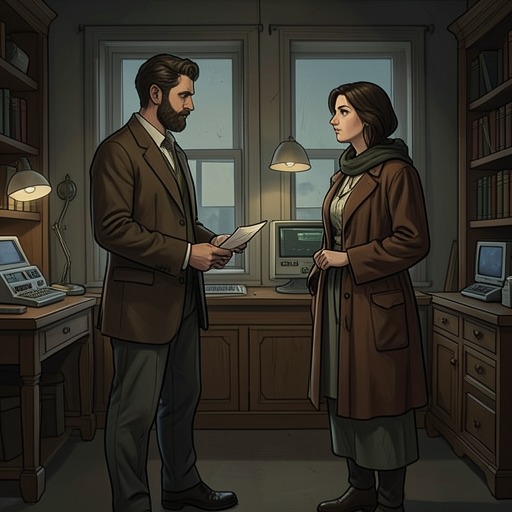
After hearing more about Natalie and the consequences of the video shared by James, Tessa calls Hardin and asks him to come home so they can talk. She intends to stand her ground and tell him that his actions were wrong even though she loves him. When he arrives, he places a folded piece of paper in her hand, closes her fingers around it, and asks her to read it before making up her mind. He then kisses her temple and goes into the living room, leaving the decision to her.
The object is modest but emphatically personal: Tessa unfolds a sheet covered with black handwriting on both sides and recognizes it as Hardin's letter. Its length is part of its meaning. He has put on paper what he says he struggles to express aloud, and the physical act of handing it over temporarily gives his account a form separate from the conversation they have not yet managed to complete. The request to read before deciding frames the letter as evidence, but also as a plea directed at the person whose judgment matters most to him.
A written history of wrongdoing
Hardin begins by acknowledging that he has done many things to Tessa and does not deserve her. Rather than excuse his character, he says he will describe the person she never knew, starting with what he remembers and admitting there may be more. He promises not to deliberately conceal anything else from that point on. The qualification matters: the letter offers a sincere attempt at disclosure, but not a claim to complete knowledge of his own past.
His account reaches back to childhood. At about nine, he says, he stole a neighbor's bicycle and damaged it, then lied; in the same year, he broke a window with a baseball and lied about that too. He recalls having few friends, picking on classmates, and treating his mother badly. Around thirteen, he and friends broke into a nearby drugstore. When one friend was caught, Hardin threatened him into taking responsibility. These recollections are presented not as isolated youthful mischief but as early instances of a recurring pattern: causing harm, evading responsibility, and using intimidation to protect himself.
As he describes his adolescence, the account broadens from dishonesty into a life organized around anger, drinking, drugs, fighting, and reckless behavior. He says that by sixteen and seventeen he was drinking, getting high, fighting, and damaging property. At eighteen, after meeting James, he and his group drank every day; Hardin returned home drunk, broke things, and left his mother to deal with the aftermath. He also recalls that his mother eventually left him at a police station overnight after he was arrested for being drunk in public. The letter does not present these details as a single turning point. Instead, their accumulation makes clear how long destructive conduct had become ordinary to him.
Natalie and the history brought to light
The account gives particular weight to Natalie. Hardin says the games he had previously described began during this period and calls what happened to her the worst of them. James wanted Natalie after seeing the video; when she rejected him, he showed it to others. The video spread quickly, reaching her family within a day. Because her family was prominent in its church community, Natalie was expelled from her home, and she lost the scholarship that would have taken her to a private university that fall.
Before the letter, Hardin had admitted that he did not care at the time and could not explain that indifference. In writing, he returns to Natalie while driving to an empty hotel room and imagines Tessa in her place. He says the thought nearly makes him sick and recognizes that he was wrong to participate. That recognition is meaningful, but the letter also exposes its limits: his new horror is sharpened by imagining the victim as Tessa, while Natalie remains the person who suffered the actual consequences. The account records remorse and a changed perspective; it does not describe any direct repair to Natalie or undo the losses she experienced.
Hardin also describes being sent to America after his mother had reached the end of her patience, following the scandal surrounding Natalie and his assault on someone at a festival. He says he hated being near his father and responded by drinking and partying at the fraternity house at WCU. He recounts meeting Steph and becoming closest to Nate, while also mentioning Jace and Dan. In the same section, he admits that he once became involved with Molly after his first kiss with Tessa, and that he had recently gone on a date, though he stopped himself before kissing the other person. These admissions widen the confession beyond childhood: Hardin includes facts that could hurt Tessa because he fears losing her through further concealment.
Love, borrowed language, and the limits of a promise
The letter's form is shaped by Hardin's difficulty speaking about his inner life. He opens by borrowing language from Mr. Darcy's letter to Elizabeth, a passage Tessa recognizes as an adaptation of the opening of Darcy's letter in Pride and Prejudice. The allusion gives Hardin a model for articulating what he cannot easily say in his own words, while tying the confession to a book Tessa loves. At the same time, the letter is not simply literary imitation: its long inventory of specific admissions makes the borrowed opening lead into his own account of culpability.
Hardin connects his feelings to moments Tessa already knows, including his realization that he loved her while highlighting Tolstoy and the hope he felt when she told him she loved him. He admits that he kept hurting her without having an excuse, describes himself as fighting bad instincts and habits, and says her departure the previous week left him lost. He insists that he would understand if she could not love him after reading the letter. His declaration of need and devotion thus sits beside an explicit recognition that she may refuse him.
The closing appeal is deliberately imperfect. Hardin says he is neither romantic nor kind, apologizes for the pain he has caused, and asks for a chance to restore her faith in him. Most strikingly, he cannot promise never to hurt her again, though he swears to love her until he dies. That contradiction keeps the letter from functioning as a simple assurance of safety: it offers emotional commitment without evidence that commitment alone will prevent repetition. He ends with an enduring declaration of love, and Tessa sits dazed, rereads the letter twice, and sees it alongside the charm bracelet on her wrist as evidence of a romantic impulse he denies having.
Reception and narrative significance
For Tessa, the letter changes the terms of the decision without settling it. She had expected to confront Hardin's actions; instead, she receives a written history that makes his past more extensive and particular, while also giving her his own account of how he understands it. Her response registers both the unsettling content and the care involved in writing it. The letter's intimacy is therefore double-edged: it offers access to what Hardin has hidden, but it also places the burden of deciding what that disclosure means on Tessa.
Later, after Hardin attacks Zed, Tessa asks Zed whether he will press charges and pleads with him not to. Zed agrees, but points out that Hardin attacked him and that Tessa is again cleaning up the consequences. This later episode does not negate the confession, but it places its promise of change beside a renewed act of violence and Tessa's continuing role in managing the fallout. As an object, the letter preserves a moment of unusually direct self-disclosure; as part of the larger story, it shows why confession and love cannot, on their own, stand in for accountability or guarantee that harm will not recur.