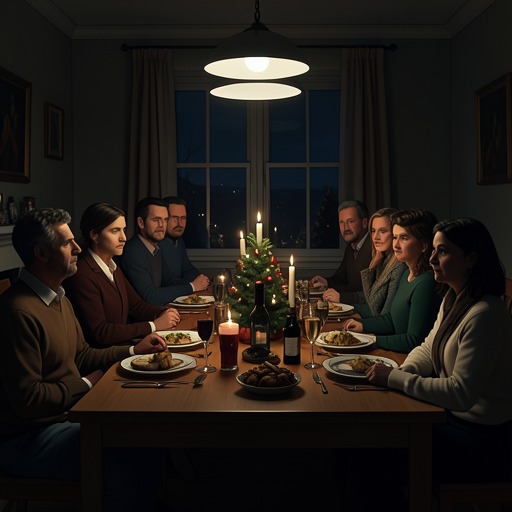
Hardin’s Christmas Fight with Ken
After We CollidedHardin’s Christmas Fight with Ken turns a strained holiday gathering into a confrontation over abandonment, alcoholism, and the family’s competing memories of what happened after Ken left. Hardin’s accusations draw out facts he had not known, but neither revelation nor apology can contain his anger: he attacks his father, damages a cabinet, and accidentally knocks Tessa aside as she tries to intervene. The fight marks a collapse in the tentative progress between father and son, though Hardin later considers reaching out again.
Background and Unsettled History
The gathering takes place after Hardin and Ken have begun to repair their relationship. Ken had attended a wedding, and, as Tessa recognizes, the two men were trying to move beyond their estrangement. Landon’s invitation brings Hardin and Trish into the family Christmas gathering; Tessa knows the reconciliation is fragile, but hopes they can share the occasion without reopening old grievances.
The family’s tensions are already heightened by revelations about Hardin’s past. Tessa’s mother has learned that Hardin’s pursuit of Tessa was tied to a bet with his friends, and Trish has defended Tessa’s choice to stay with him. These revelations place Tessa between her mother’s judgment and her attachment to Hardin. They do not explain the quarrel with Ken, but establish the strained holiday atmosphere and the wider family conflict surrounding Tessa’s decision to remain.
The deeper dispute between Hardin and Ken concerns the years after Ken left. Hardin believes his father abandoned the family without money or practical support. Ken, by contrast, says that he sent money each month and offered a car, which Trish declined. The argument exposes how differently father and son understand the same absence: Ken points to assistance and his own departure as an attempt to spare his family his drinking, while Hardin measures the loss by the father who was not there.
From Provocation to Confrontation
The meal begins awkwardly but remains manageable. When wine is offered, Hardin turns the gesture into a pointed reference to his father’s former drinking, asking whether Ken wants some and implying that he misses it. The room reacts with alarm. The remark makes the history of alcoholism present at the table before anyone has addressed the deeper grievance behind it.
Ken tells Hardin that he is angry and can say what he wants. Hardin rejects that characterization, describing himself as annoyed and amused, then accuses Ken and Trish of behaving as though nothing had happened. Ken responds that he thought they were moving past the past and invokes his attendance at the wedding as evidence of an effort to reconnect. Hardin disputes the idea that reconciliation can proceed without Ken acknowledging what he did. Tessa tries to stop the exchange, aware that the relationship they had begun to rebuild could worsen if the argument continues.
The quarrel soon becomes a dispute over money and responsibility. Hardin says Ken left them with nothing; Ken insists that he sent money regularly and offered a car. Trish then confirms that the money was sent. She explains that it went toward Hardin’s tuition and household bills, resolving one part of the argument while revealing another: Hardin had not known that his father contributed, or that those funds had helped support the family. He questions why Trish kept this from him and argues that money intended to keep them housed and fed should not have been needed for his education.
Hardin nevertheless insists that financial support does not undo the abandonment he experienced. In particular, he resents Ken’s leaving without even calling on his birthday. Ken explains that he was a heavy drinker and believed his family deserved better than what he could provide. He connects his decision to leave with a night that has haunted him for ten years. Hardin refuses to let Ken frame the night as a burden Ken alone has carried: he remembers witnessing what happened and dealing with its aftermath while Ken was still drinking. The exchange makes clear that the same history has remained painful to both men, but in different ways.
The Fight and Its Immediate Consequences
Ken says he is sober and has not had a drink in years, and asks Hardin not to hold his past against him forever. The appeal does not settle the conflict. Trish cries out as Hardin lunges at Ken; Landon tries to intervene, but Hardin pushes his father against the china cabinet and strikes him. Ken manages to turn them before Hardin can hit him again, and Hardin punches through the cabinet’s glass door instead.
The damaged cabinet carries its own history: it is a replacement for one Hardin had broken months earlier. The repeated damage gives the confrontation a visible connection to earlier violence in the family home, without suggesting that the underlying dispute has been repaired. Tessa is frozen at first, then grabs Hardin’s shirt in an effort to stop him. His movement knocks her against a table, spilling red wine over her white cardigan. Landon turns from the fight to help her. Trish stands by the door, furious with her son, while Ken looks from the broken cabinet to Tessa. Hardin stops attacking his father and turns toward her.
The scene leaves more than one relationship unsettled. Ken and Hardin have moved from accusations to physical violence; Trish is angry with Hardin, and Landon has been forced to intervene. Tessa’s effort to restrain Hardin places her directly in the path of the conflict, even though she had hoped the family would avoid another argument. The Christmas gathering has not simply revived old grievances: it has brought new information into the open, while making the cost of unresolved anger immediate for everyone present.
Aftermath and Significance
Hardin later wonders whether he should contact Ken—not necessarily to apologize, but to call him his father and keep the relationship from collapsing after the fight. Tessa encourages him to call and try to preserve the beginning of the relationship they had been forming. Her response recognizes both the harm of the attack and the possibility that the father-son bond need not be defined exclusively by it. Hardin admits that, after hitting Ken, he briefly feared Tessa would stay behind and make him leave, a sign that the fight also tested his relationship with her.
The event’s central reversal is the revelation that Ken did send money, a fact that complicates Hardin’s belief that his father offered no support without erasing his experience of being abandoned. Trish’s confirmation changes the factual account of the family’s finances, but it does not change the emotional weight Hardin places on Ken’s absence or on the night he witnessed. The later possibility of a phone call offers a tentative next step, not a resolution: Hardin has stopped the attack, and considers contact, but the evidence leaves reconciliation dependent on confronting the past rather than pretending it never happened.