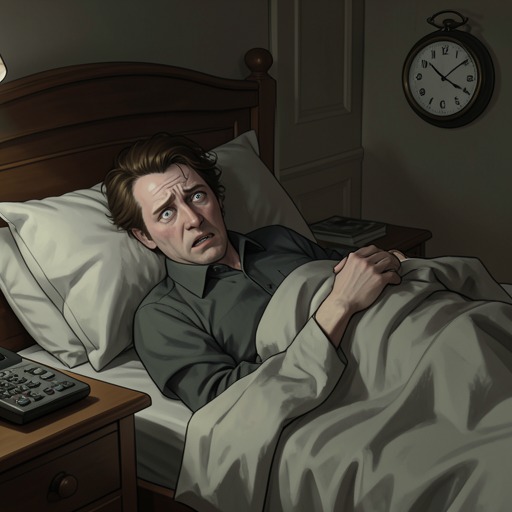
Hardin’s nightmares
After We CollidedHardin’s nightmares expose a change in the focus of his recurring fear: in England, he dreams that Tessa is being harmed, and the image is worse for him than the earlier dreams centered on his mother, Trish. The episode connects an old trauma-related pattern with his fear of losing Tessa, while the conversation that follows makes her a witness to the distress he has tried to avoid by refusing to sleep.
Return and altered focus
The disclosure takes place in a quiet moment with Tessa, after they have been together in bed. When she asks whether he slept well, Hardin says that he did, then trails off before explaining that he has not slept like that since an earlier, unspecified time. The pause gives way to an account of the period he spent in England at his mother’s home: he had a nightmare there.
Tessa already knows that his nightmares have returned, but Hardin corrects her understanding. They were not merely back; they were worse. The distinction is not a claim that the older dreams have disappeared. Rather, he compares the new dream with the familiar ones involving his mother and identifies what changed: this time, Tessa was the person being harmed. The dream therefore shifts the focus of his recurring fear from a history associated with Trish to the person he loves in the present.
The narrative withholds the dream’s particulars. Hardin gives Tessa its central fact, then says that it was more disturbing than the nightmares about his mother because those are familiar to him. That contrast establishes repetition without making the past and present interchangeable: he has learned to recognize one recurring pattern, but imagining Tessa in its place makes the experience newly difficult to bear.
Avoidance and the cost of sleep
Hardin did not try to sleep after the nightmare. He says he deliberately stayed awake because he could not bear to see it again. The choice shows the dream persisting beyond the sleeping moment: even without a further account of its images, the possibility of its return shapes his behavior while awake. Rest is welcome when he finally sleeps beside Tessa, but it has been made precarious by the fear attached to dreaming.
His explanation locates that fear in concern for Tessa. The thought of someone hurting her, he says, drives him to an extreme state of distress. The account does not establish that the dream predicts an actual danger, or that its imagined events occur outside the dream. Its force lies instead in what Hardin says it means to him: Tessa’s vulnerability has become part of the content of a nightmare pattern he already associates with painful memories of his mother.
Telling Tessa
Tessa responds by touching Hardin’s scalp and arm as he speaks. When he describes the changed nightmare, she is shocked and saddened; he reaches up to catch her tears and asks her not to pity him. She distinguishes pity from concern, explaining that she is upset because she does not want him to be hurt by the thought of harm coming to her. Her response treats his disclosure as something to meet with care, not as a reason to reduce him to his distress.
The scene also shows the emotional effect of the dream on Tessa. She understands the earlier nightmares as involving abuse of Trish, and the prospect of her own face taking Trish’s place troubles her. The shift in the dream’s focus consequently affects both of them: Hardin is distressed by what he imagined happening to Tessa, while Tessa is shaken by the way the nightmare joins her to the traumatic material he already carries. She nevertheless continues to comfort him rather than withdrawing from the conversation.
Hardin then tells Tessa that he would not let anyone hurt her. She confirms that she believes him. Their exchange turns a dream he could not bear to revisit alone into a shared disclosure and reassurance. It does not erase the nightmare or resolve its underlying fear, but it allows Tessa to answer the fear directly and gives the conversation an intimate, caring conclusion.
Protection, fear, and autonomy
The scene presents Hardin’s wish to protect Tessa as sincere, but the wider relationship gives that impulse a less simple meaning. In another conflict, he insists that she stay away from Zed and demands no contact at all; Tessa answers that he cannot decide whom she may speak to. Elsewhere, she accuses Hardin of trying to lock her in the car after he has made her leave Zed’s house. These incidents do not establish that the nightmare causes his controlling behavior. They do, however, place his promise of protection beside moments when fear and jealousy become restrictions on Tessa’s choices.
The contrast matters to the nightmare’s significance. In the bedroom conversation, Hardin’s fear is voiced as distress about Tessa being hurt, and Tessa accepts his reassurance. In the conflicts over Zed, she asserts that concern does not give him authority over her. The recurring nightmares thus deepen the portrait of a character whose attachment carries both tenderness and anxiety, without making his protective intentions a substitute for Tessa’s autonomy. The episode’s clearest change is internal to the nightmare itself: an old fear has acquired a new focus, and Hardin can disclose that change only after it has kept him awake.