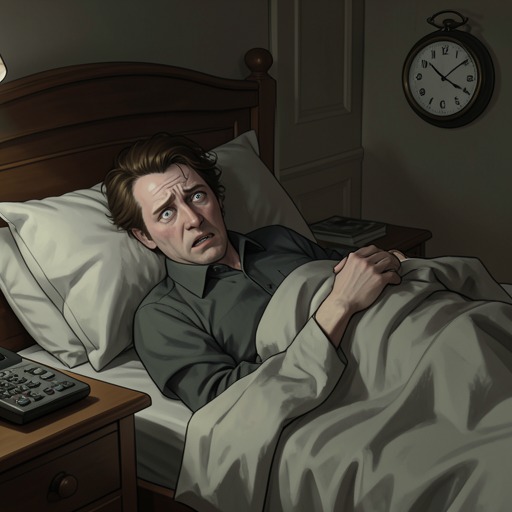
Hardin’s recurring trauma-related nightmares
After We CollidedHardin’s recurring trauma-related nightmares turn an old childhood terror into a repeated measure of his present fear of losing Tessa. A familiar dream in which his mother is threatened worsens when Tessa takes her place, making the nightmares a disturbing link between Hardin’s family history and his separation from the woman he loves. The dreams recur through the days apart and continue to disrupt his sleep afterward, even as he tries to imagine Tessa beside him.
The Childhood Nightmare and Family History
The nightmare predates the separation: Hardin recognizes it as the same one he has experienced throughout his life. In its earlier form, his mother is in danger and looks toward him; he cries out before waking to find his mother trying to rouse him. He asks where Tessa is, then gradually understands that the scene was a dream and that it was his mother, not Tessa, who had appeared in it. The substitution is the crucial change. The threat belongs to an older wound, but Tessa’s appearance gives that fear a new and immediate object.
The book places the dream against a family history marked by a formative night and the subsequent break between Hardin’s parents. When Hardin confronts Ken, Ken recalls that he was a drunk and says that, after that night, he knew he had to leave. Hardin blames Ken for what happened. The details of that night are not fully established in these scenes, but the exchange makes clear that it remains a painful point in the family’s past. The nightmares return the history as an image of helplessness rather than as a settled account of what happened.
Intensification During the Separation
The dreams become more distressing during Hardin and Tessa’s separation. On the fourth day, Hardin wakes after seeing Tessa where his mother had appeared before. His mother explains that he has been dreaming, but he pushes away her attempt to comfort him and says he is fine. His insistence does not end the episode: later that day, he misses a call from Tessa, and the nightmare returns after he has spent hours drinking whiskey. In this version, Tessa appears to want him to leave her alone. The dream thus combines his fear for her with the separation itself, turning absence and rejection into part of the recurring threat.
The waking hours reinforce the same distress without resolving it. Hardin keeps looking for Tessa beside him, where he expects to speak with her, and repeatedly traces the call button without calling. He believes that he cannot give her what she wants and that staying apart is better, even as he misses her. He also looks up the cost of moving his belongings back to England, imagining that he will eventually return there. His attempts to treat separation as a practical decision run alongside longing, guilt, and recurring dreams; none of them quiets his fear.
Tessa Takes the Place of His Mother
By the later dream, the substitution has become the organizing pattern. Tessa is sitting on his mother’s couch with a book when men enter. Hardin recognizes one of them as the figure who torments his dreams. Tessa calls to him, but he cannot move or help her. He wakes without anyone having interrupted the dream, and the narrative marks the ninth day of separation. The scene is presented as a nightmare, not as an event that has happened to Tessa. Its significance lies in Hardin’s repeated position as a witness who cannot intervene.
The dream’s progression makes the old and new fears overlap: the setting recalls his mother, while Tessa occupies the threatened person’s place. Hardin’s helplessness also contrasts with his waking wish to protect and keep Tessa. The nightmare does not offer him a way to act on that wish; instead, it repeats his inability to prevent harm. That contrast gives the dream its force without making it a prediction or evidence that Tessa is actually in danger.
Recurrence and Continuing Effects
The nightmares persist beyond the ninth day. In a later chapter, Hardin wakes at six in the morning, soaked in sweat, and reflects that he had thought his sleepless nights were over. He needs uninterrupted sleep and longs for Tessa, then tries to fall asleep again by imagining her beside him. Even the imagined closeness is an attempt to manage a night disturbed by the past; it does not establish that she is there or that the nightmares have ended.
Across these episodes, the dreams change in intensity and in whom they place at risk, but their central structure remains stable: a loved one is threatened, Hardin is unable to help, and waking leaves him confronting absence. Their recurrence connects his childhood fear to the immediate separation from Tessa, while their persistence shows that longing alone cannot undo the distress. The nightmares make the cost of that separation visible in Hardin’s interrupted sleep and in the gap between his wish to protect Tessa and his repeated experience of helplessness.