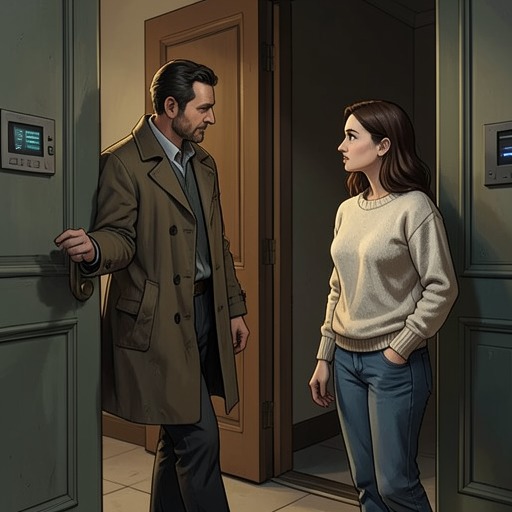
Zed reveals the bet to Tessa
After We CollidedZed reveals the bet to Tessa at a moment when she is already reeling from the disclosure. His account recasts Hardin Scott’s pursuit as a deception shared with his friends, while Tessa’s questions expose how much of her private life they knew. The scene’s force lies not only in the bet itself, but in the realization that intimacy she understood as hers had been made part of other people’s knowledge and amusement.
The disclosure
The conversation takes place in Zed’s truck as he drives Tessa toward campus. She is crying and feels sick as he explains how the bet began. It had continued for longer than a month. During that time, Hardin repeatedly made excuses, asked for more time, and lowered the amount he was supposed to win. Zed and the others had interpreted this persistence as an obsession with winning or proving a point; the possibility that Hardin’s feelings had changed did not become clear to Zed until later.
Zed also describes a change in Hardin’s conduct after a movie outing. After Hardin had taken Tessa home, he became furious with Zed and told him to stay away from her. Zed initially dismissed the outburst, thinking Hardin might have been drunk. In retrospect, the order makes the bet’s history look less like a simple contest among friends and more like something Hardin continued to conceal even as his possessiveness and attachment became visible.
Tessa asks whether Hardin told Zed about a stream and other private material. Zed’s expression answers before his words do: he confirms that Hardin had told them everything. For Tessa, the scale of that knowledge compounds the betrayal. Her understanding of her intimate moments had depended on them belonging to a relationship between two people; now she realizes Hardin’s friends had been made witnesses to them without her consent or knowledge.
The concealment surrounding the bet
Zed says that Hardin had largely disappeared from the group. The one recent exception was an appearance at the docks, where Hardin tried to persuade Zed and Jace not to tell Tessa. He offered Jace a large sum of money to keep silent. Jace laughed off the offer and said he would keep quiet, while Zed says he had already told Hardin that if Hardin did not tell Tessa soon, he would do it himself.
That difference matters to Tessa even in the shock of the moment. She does not absolve Zed: she tells him that he and Hardin had brought the situation on themselves. But she believes Zed’s intentions had been better than Hardin’s, and his eventual disclosure gives her information Hardin had continued to withhold. Zed’s offer to let her stay on his couch is a practical gesture of help, not a solution to the betrayal. Tessa declines, but asks to use his phone to call Landon, the friend she relies on despite his connection to Hardin’s family.
Hardin’s attempts to keep the secret also sharpen the contrast between what Tessa believed and what the group knew. His calls keep vibrating on her phone after she has left the bar, but she turns it off: she does not consider herself obliged to answer him while the revelations are still unfolding. She thinks briefly about what might have happened had she not turned away from Zed after the bonfire and chosen Hardin instead. That thought is not proof that Zed would have been a better partner; it registers how the disclosure makes her revisit the choices that led her into the relationship.
Immediate consequences
Tessa’s response is both emotional and physical: she covers her face, struggles to speak, and later rests her head against the truck window. She describes the loss at the center of the betrayal as a loss of ownership over her own private experience. The disclosure has altered the meaning of past kisses and touches, because she now believes they were shared among Hardin’s friends rather than kept between the couple.
When Tessa gets out of the truck, the cold is present but she says she cannot feel it. The scene does not turn that reaction into a resolution. Zed offers continued help, and she accepts the offer in principle, but her immediate plan is to contact Landon. The support she can reach for is limited by the fact that her closest friend lives at Hardin’s father’s house. Even in seeking refuge from Hardin, she remains tied to his family through the people she trusts.
The disclosure also gives Tessa grounds to demand a different kind of conversation if the relationship is ever to continue. Later, she tells Hardin that moving past the betrayal would require him to open up and tell her exactly how he feels. When he points out that she has not communicated her own feelings, she recognizes that her thoughts have been so confused that she has not explained them either. She names the uncertainty directly: she does not know what to do about their relationship or the betrayal. The scene thus opens a second problem beyond the exposed secret: knowledge alone cannot repair a relationship in which both people have struggled to speak plainly.
The wider reckoning
Later disclosures give weight to Tessa’s fear that Hardin’s past conduct harmed people beyond herself. In a conversation about Natalie, Hardin explains that James wanted to have sex with her and, after she rejected him, circulated a video of her. The video spread rapidly; Natalie’s family learned of it, expelled her from their home, and she lost the scholarship she had secured to attend a private university. This account is distinct from Zed’s explanation of the bet, but it shows the wider history against which Tessa must assess Hardin’s claim to have changed. It also makes clear that the group’s treatment of private material carried consequences far beyond embarrassment.
In later conflicts, Tessa describes the relationship not only in terms of lying, but also in terms of whose needs and future decisions take priority. She tells Hardin that she feels his friends, parties, and plans come before her, that she has been denied a real part in decisions about her own future, and that his dismissive response to her thoughts about marriage made her feel unheard. She also cites his drunken night away with another woman. These grievances do not all originate in Zed’s disclosure, but the bet is an essential part of the history that makes trust and honest communication central questions between them.
The action therefore marks a turning point in what Tessa knows, not a clean end to the relationship. Zed’s account gives her a more complete explanation of Hardin’s pursuit and the group’s silence; it cannot decide for her whether she should forgive him, nor can an offer of shelter undo the loss of trust. The scene’s decisive consequence is that Tessa must confront the relationship on the basis of what happened, rather than on the version Hardin had allowed her to believe.