Tessa’s bracelet
After We FellTessa’s bracelet is one of the most precious possessions Tessa left behind when she moved out of the bed and apartment she had shared with Hardin. In a later car ride, its absence is made physically present: Hardin holds her hand and traces the bare place on her wrist where the bracelet would normally rest. The exchange turns a missing object into a concrete sign of what remains unresolved between them—Tessa wants it back, and Hardin recognizes that it belongs with her.
Identity and Absence
The bracelet is a personal possession Tessa left in a pile with her other gifts when she departed. Recalling that moment, she asks Hardin to return the things she left behind. Her request is practical, but the bracelet’s absence has continued to matter to her: she says that she misses it every day. She also names her e-reader and Hardin’s letter to Tessa among the things she wants back, placing the bracelet in a small collection of belongings tied to their shared past.
The scene does not describe the bracelet’s design or explain its original history. What it establishes is its importance to Tessa and its continued absence from her wrist. Rather than treating it as an incidental item, the exchange gives its missing place a distinct physical presence.
The Car Ride
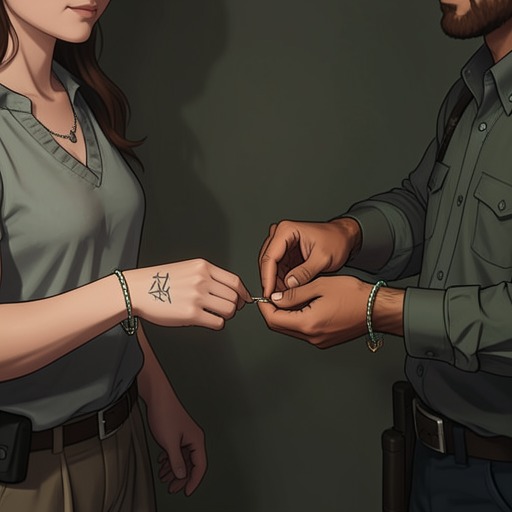
As they get into the car, Hardin turns up the heat and reaches across to take Tessa’s hand. He rests their joined hands on her thigh and traces a thoughtful pattern over her wrist, where the bracelet would normally sit. His gesture makes the object’s absence visible before Tessa explains how much she misses it. Hardin then presses at the base of her wrist and tells her that he hates that she left it behind and that it should be there.
Tessa answers quietly that she knows. She hopes Hardin can bring the bracelet and her other belongings when she comes back the following weekend. He agrees, though he keeps his eyes on the road. The moment establishes a tentative plan, not a confirmed return: the passage ends without showing the bracelet recovered or put back on her wrist.
Significance
The bracelet links a past act of separation to an immediate gesture of care. Tessa had left it among the possessions she could not take with her; now Hardin’s attention to her bare wrist acknowledges both the loss and her wish to reclaim what remains in the former shared home. His words frame the bracelet as something that belongs with her, while her daily sense of its absence shows that it has not become emotionally unimportant simply because it was left behind.
The bracelet also sits alongside the e-reader and Hardin’s letter to Tessa, but the scene gives it a particular bodily emphasis: unlike the other named belongings, its absence is traced directly on Tessa’s skin. That detail makes the object a quiet measure of separation and continued attachment, without resolving either. Tessa asks for the belongings back; Hardin agrees to bring them, and the bracelet remains absent at the scene’s close.