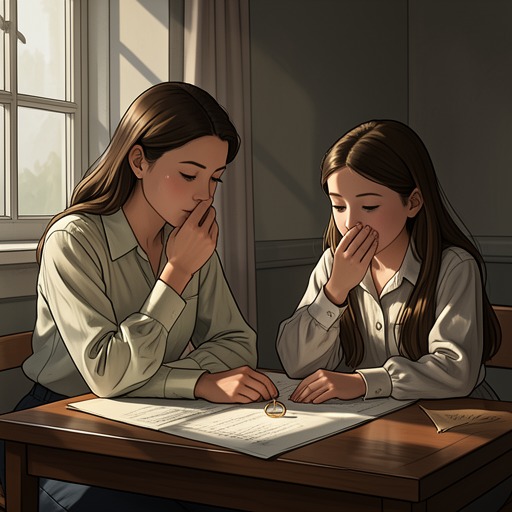
Tessa's Childhood Home
After We FellTessa's Childhood Home is both a family residence and a measure of how far Tessa feels she has moved from the life formed there. During a visit with her mother, ordinary domestic details—a meal at the stove, a childhood bed, and a goodbye before dawn—become charged with Tessa's sense of being corrected and confined. The house makes that old pressure tangible just as she prepares to drive to Seattle and pursue a more independent life, while her hope that Hardin might come with her shows how difficult separation remains.
Setting and Domestic Routine
The house is presented through Tessa's return to its familiar rooms rather than through a broad description of its location or layout. After a period of painful silence, she says little; her mother responds by shifting into polite-hostess mode and asks how Tessa will get home and how she found her way there. The exchange makes the visit feel carefully managed: Tessa is present, but conversation initially stays on practical ground.
In the kitchen, her mother tends something cooking at the stove and hands Tessa a plate of lettuce and grilled tomatoes. Tessa takes it despite thinking that she has never shared her mother's idea of a good meal. The modest plate is more than a detail of the visit: it helps define the household through a routine Tessa recognizes but no longer feels at ease within. The domestic scene gives physical form to the differences between her mother's expectations and the more relaxed life Tessa associates with Hardin.
Conflict and the Childhood Bedroom
The visit turns on Tessa's discovery that her mother knew Hardin had come to the house on an earlier night. Her mother remarks disapprovingly that Hardin brought Tessa's car; Tessa then asks why she was not told about his visit, explaining that she remembers it now. The exchange brings an unspoken piece of the past into the room, but the evidence does not resolve what happened during that earlier visit. When her mother's red lips form a confident smirk, Tessa throws her napkin onto her plate, gets up, and leaves the table. Her abrupt exit is a concrete refusal to continue the conversation on her mother's terms.
Tessa goes to her childhood bedroom, where the light-gray walls seem to close in around her. She describes the house as a place where she feels unable to breathe without being scolded or corrected, and recognizes that she had not understood how caged and controlled she felt until she experienced freedom with Hardin. The bedroom therefore holds two versions of her life in tension: it is the room of her childhood, but now it also gives her a vantage point from which to name what that childhood felt like to her.
Her comparison is specific rather than abstract. Freedom means pizza for dinner and spending a whole day naked in bed with Hardin; the old domestic world is marked by folded napkins, curled hair, and hideous yellow curtains. These details establish the contrast through habits and objects, not merely through a declared wish to leave. From the childhood bed, Tessa calls Hardin, who answers on the second ring. The call connects the constricting room to the life she wants, even as her need to reach him shows that her independence does not mean emotional detachment.
The Goodbye and Departure
The next morning, Tessa tells her mother she will be fine. Her mother says she is only trying to help, and Tessa acknowledges that she knows this before opening her arms for a goodbye hug. The embrace is stiff and brief: Tessa pulls away, then pours herself coffee for the road. The small exchange preserves the care between them without erasing the strain. Her mother intends to help, but the visit has left Tessa feeling that help and correction are difficult to separate in this house.
As Tessa prepares to leave, she still entertains the hope that headlights will appear in the darkness and that Hardin will arrive with bags, ready to go to Seattle with her. She recognizes that this hope is foolish, but its persistence gives the departure its emotional complication: she is setting out on her own while still wishing that he would choose to accompany her. At ten minutes after five, after one last hug, she climbs into the car. She had turned on the heater in advance, and the GPS on her phone is programmed with the address for Kimberly and Christian's Home. It keeps shutting down and recalculating before she has even left the driveway; Tessa thinks she needs a new phone and imagines Hardin repeatedly reminding her that this is another reason to get an iPhone.
Narrative Significance
The house matters because it makes Tessa's pursuit of independence legible through a return, not simply through departure. In the kitchen, she encounters her mother's routines and the withheld information about Hardin's earlier visit; in the bedroom, she puts her sense of confinement into words; at the door, she accepts a stiff embrace and leaves before dawn. Each setting within the home marks a different pressure point in the visit, moving from polite conversation to confrontation, private recognition, and separation.
The final image is deliberately unsettled. Tessa's car is ready, her destination is entered, and she is on the verge of the long drive, yet her imagined headlights keep Hardin present in the departure. The house thus stands at the threshold between the life Tessa associates with being controlled and the future she is trying to claim. Leaving it is a practical act, but the hope she carries into the darkness shows that the emotional transition is not complete.