
The Human Cost of the Bosporus Attack
AfterburnThis flow follows the attack's consequences for civilians, Turkish-American relations, and the force trapped behind the destroyed passage.
increasing Bearing strength in each event
 decreasing
Bearing strength in each eventdecreasingA Politically Delicate Transit
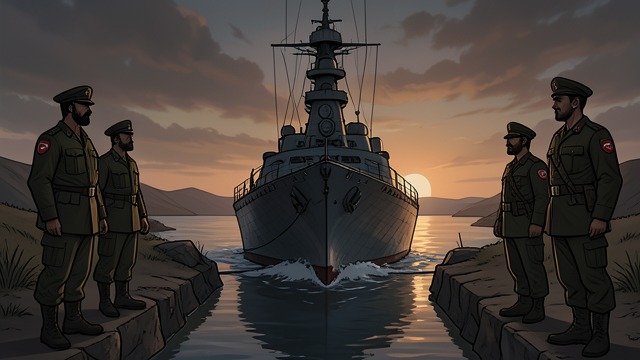
A Politically Delicate Transit
Turkey permits passage
Turkey allows the American carrier group to cross the straits despite strained relations and anxiety about regional separatist conflicts. The decision is limited and conditional rather than an endorsement of the whole intervention.
The route carries political risk
The Montreux restrictions and Turkish sensitivities make every passage politically significant. Once the ships enter the Black Sea, the group depends on a passage over which it has little control.
The Bridge Becomes a Mass Casualty Scene
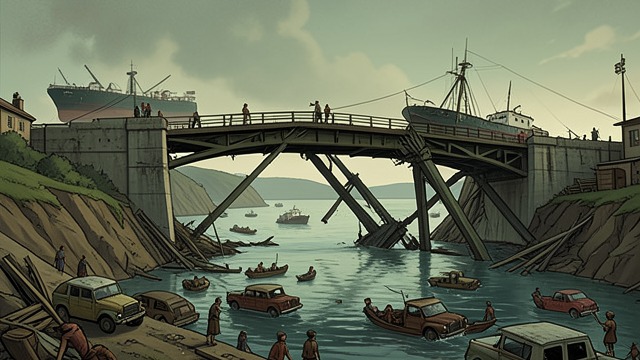
The Bridge Becomes a Mass Casualty Scene
The span collapses
Missiles break the supporting structures of the Bosporus Bridge and send vehicles and people into the strait. Rescue efforts begin amid falling debris, submerged wreckage, and disrupted shipping.
Civilian loss changes the stakes
The attack is no longer a remote confrontation involving only military forces. Turkish civilians are killed in large numbers, while the channel becomes dangerous and unusable for large ships.
Turkey Blames the Americans
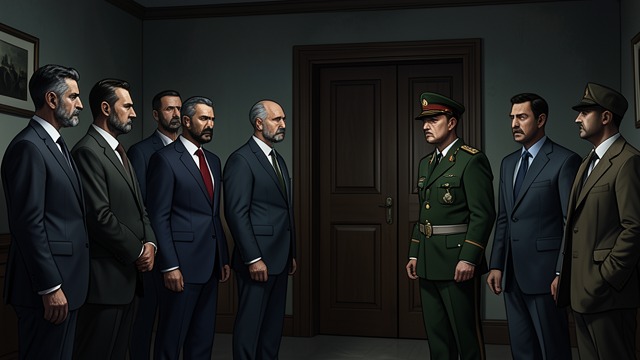
Turkey Blames the Americans
The alliance frays
After the strike, Turkish officials resist admitting American ships to their ports. Some leaders fear that Turkey's earlier accommodation of the carrier helped provoke the attack.
Cooperation cannot be assumed
The United States had hoped to rely on Turkey as a nearby partner, but Turkey is balancing its own security interests and relations with Russia. The crisis leaves Washington without an easy diplomatic route out.
The Carrier Remains Trapped
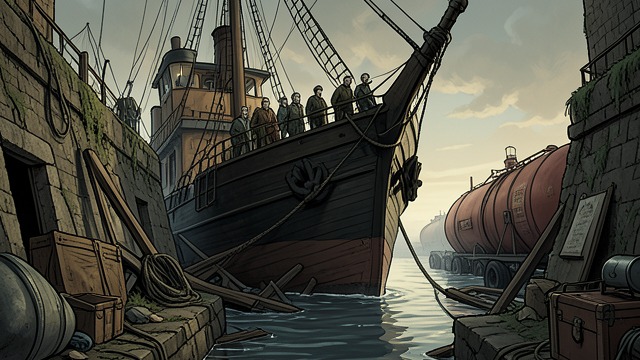
The Carrier Remains Trapped
A narrow channel is blocked
With the bridge wreckage and fuel ship in the strait, the carrier cannot simply withdraw to the Mediterranean. The nearest exits are restricted by both physical damage and Turkish political decisions.
Rescue and escape diverge
Washington debates how far to escalate, while sailors at sea and the Yalta party face immediate danger. The same closure that traps ships also makes the fate of people ashore harder to resolve.
The Passage Reopens
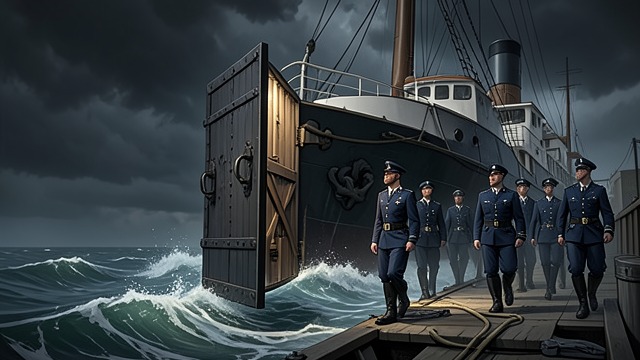
The Passage Reopens
Clearance follows fighting
American engineers and Seabees clear the Bosporus Strait after the Battle of Kerch. The Thomas Jefferson can finally begin its passage out of the enclosed sea.
A return with scars
The reopened route closes the immediate entrapment crisis, but it does not reverse civilian deaths or settle the political disputes that produced the attack. The carrier group's departure is a narrow operational success rather than a regional peace.
Friday, October 30, before the carrier enters the Black Sea
Thursday, November 5, at about 1006
Friday, November 6, during White House deliberations
After the attack, as the battle group considers its options
Sunday, November 15, at the northern approaches
