
Women's Combat Service
AfterburnThis flow follows the institutional and personal debate over women in combat, from hard-won access to the risks and achievements made visible in battle.
increasing Bearing strength in each event
 decreasing
Bearing strength in each eventdecreasingThe Great Experiment
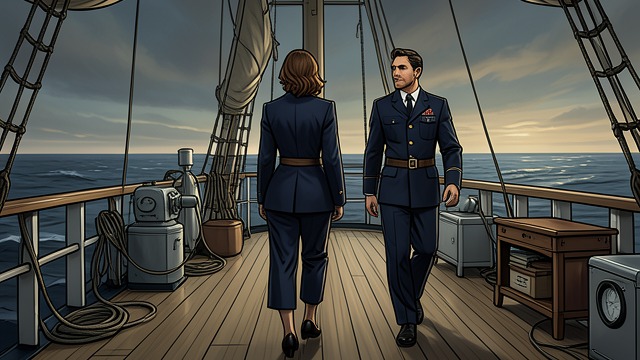
The Great Experiment
A contested history
The Navy's earlier trials with women at sea are recalled alongside legal challenges and changing policy. Official claims of success do not erase the logistical, cultural, and privacy problems that accompanied integration.
Progress is uneven
Women now fly from carriers and serve in combat roles, but their presence still carries the burden of being treated as a test of policy rather than as ordinary service. The institution has changed faster than all of its habits.
Conway's Command Dilemma
Conway's Command Dilemma
Authority without acceptance
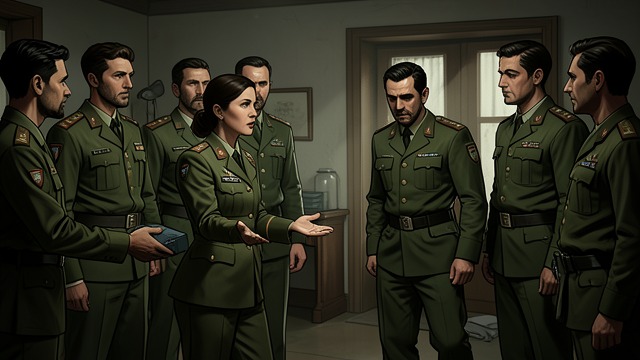
Tricia Conway becomes executive officer of the Vipers under a policy that promotes women into command positions. Some personnel resent the selection, while others are uncomfortable bringing personal problems to a female superior.
Professionalism cannot erase friction
Edward Wayne tells Conway that respect for her skill does not automatically remove resistance to the way the appointment was made. Her challenge is to exercise genuine command within a squadron still negotiating its assumptions.
The Cost of Being a Symbol
The Cost of Being a Symbol
Representation shapes assignments
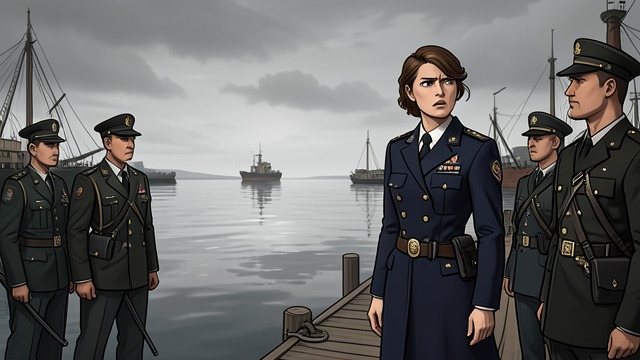
Joyce Flynn joins the shore party partly because senior women officers are expected to demonstrate the Navy's modern policy. Magruder suspects that the public image of women's service has influenced who is selected.
The individual exceeds the symbol
Flynn is not merely evidence in a political argument: she is an experienced pilot with an existing bond to Magruder. The tension reveals how institutional visibility can impose extra meanings on an individual assignment.
Ivanov's Assumptions
Ivanov's Assumptions
A sexist expectation
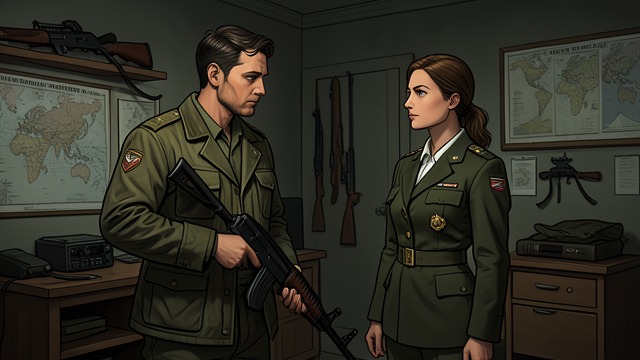
Yevgenni Ivanov believes women lack the ability for high-performance combat aviation. He expects an American female pilot to be an easy opponent rather than a serious threat.
Combat exposes the error
Joyce Flynn defeats him in a close fight. His assumptions are not disproved by rhetoric but by the tactical skill of the pilot who destroys his aircraft.
Skill and Risk Together
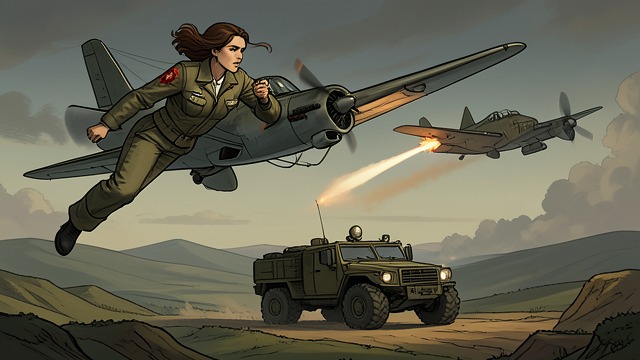
Skill and Risk Together
Combat success is real
Flynn's air-to-ground attack helps open the route for Boychenko's force, and her close aerial victory removes a dangerous attacker. Her contributions are central to the operation rather than token participation.
Vulnerability remains real
She is also hit and forced to eject over the sea. The story acknowledges that equal service includes exposure to injury and danger without treating that danger as proof that women do not belong in combat.
From the early experiments in naval service to the current deployment
Saturday, October 31, during the first carrier mess discussions
Wednesday, November 4, on the delegation's arrival in Yalta
Saturday, November 7, during the dogfight over Arsincevo
Near the ending, after Flynn's damaged-aircraft escape
