
The Meaning of Duty
AfterburnThis flow traces how the characters distinguish duty from obedience, ambition, protection, and the political uses of military service.
increasing Bearing strength in each event
 decreasing
Bearing strength in each eventdecreasingDmitriev's Oath

Dmitriev's Oath
A duty to the homeland
Nikolai Sergeivich Dmitriev frames his service as loyalty to Russia and honor, even as he admits that the state is failing. He sees restraint as part of his responsibility because an impulsive attack could destroy his fleet.
Duty has competing meanings
Preserving the fleet, defending Crimea, and following political authority do not point in the same direction. Dmitriev's later choices grow from the unresolved question of which obligation comes first.
Magruder Questions the Mission

Magruder Questions the Mission
Service without certainty
Magruder doubts that the Black Sea deployment serves a clear American interest. He resents the political vagueness but still performs his duties as a naval officer.
Loyalty is not agreement
His criticism does not make him unwilling to serve. The story distinguishes obedience to lawful command from belief that every policy is wise, a distinction that becomes more urgent when the mission changes.
Grant Accepts the Desk
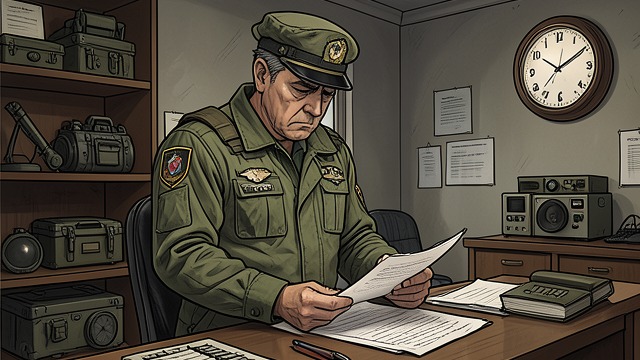
Grant Accepts the Desk
Identity moves beyond flying
Will Grant misses his squadron and finds staff work emotionally harder than expected. Magruder tells him that senior responsibility means managing details so others can fight effectively.
Duty requires separation
Grant must stop thinking only as a pilot and consider the air wing as a whole. The adjustment is a personal loss, but it makes later crisis command possible.
Magruder Stays Behind

Magruder Stays Behind
Safety is not the only obligation
Magruder orders Joyce Flynn back to the carrier but remains with Boychenko and the shore party. He believes the situation needs someone to coordinate the local operation and keep the general's forces moving.
Personal risk follows command
His choice is neither an official combat assignment nor a private gesture alone. It reflects his sense that responsibility continues where the evacuation plan ends.
A Career Becomes a Home

A Career Becomes a Home
The return clarifies identity
After the crisis, Magruder is again aboard the Thomas Jefferson and looks toward the long voyage home. He has tested the idea of leaving the Navy against the demands and bonds of actual service.
Duty is chosen, not inherited
He recognizes that the carrier's crew and shared work are integral to his sense of belonging. The ending frames service as a chosen community rather than merely an institution imposing orders.
At the beginning, before the American carrier enters
Friday, October 30, during the carrier's entrance
Saturday, October 31, after the friendly-fire incident
Friday, November 6, when the helicopters evacuate Yalta
Sunday, November 15, during the carrier's departure
