
Combat Identity and the Carrier Fraternity
AfterburnThis flow explores how the carrier's professional fraternity defines belonging through skill, risk, and shared responsibility while remaining strained by hierarchy and exclusion.
increasing Bearing strength in each event
 decreasing
Bearing strength in each eventdecreasingThe Pilot's Fraternity
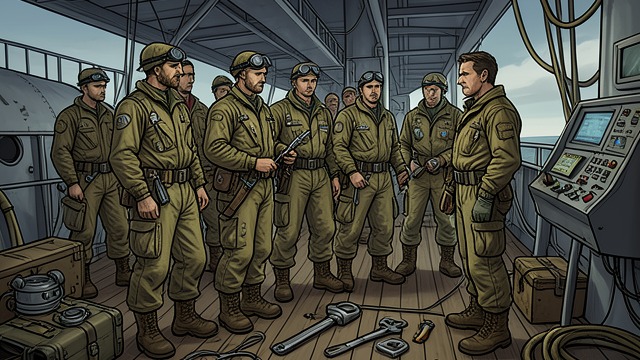
The Pilot's Fraternity
Skill as belonging
Carrier aviators distinguish themselves through demanding training, launches, and recoveries. Their shared culture values competence and composure because errors can endanger the entire flight deck.
The culture has boundaries
The same standards create a strong professional identity, but can also produce exclusion and condescension. Newcomers, women, and officers moved into staff work must negotiate who counts as one of the group.
Mason's Fear of Exclusion
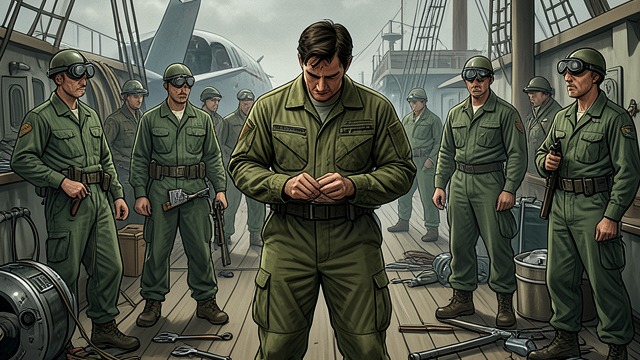
Mason's Fear of Exclusion
A mistake threatens belonging
Mason has fought to become a carrier aviator and fears that the Black Hawk incident may define him as untrustworthy. His embarrassment is sharper because he has worked so hard to prove his place.
Membership requires learning
The squadron does not erase the error, but gives him a constrained path back to operational trust. His later conduct shows that belonging is maintained through actions after failure, not granted once and for all.
Grant Leaves the Cockpit
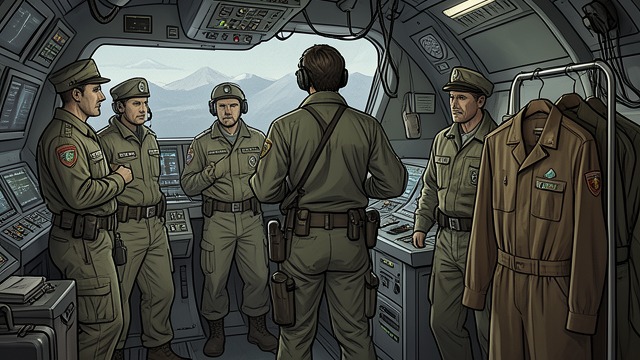
Grant Leaves the Cockpit
A promotion changes the group
Grant moves from direct participation in VF-95 to work across the entire wing. He remains respected, but no longer shares the squadron's daily rhythm in the same way.
A new form of service
The role asks him to accept distance from the flying he loves. The change suggests that professional identity can persist even when its familiar rituals disappear.
Women Claim the Flight Deck
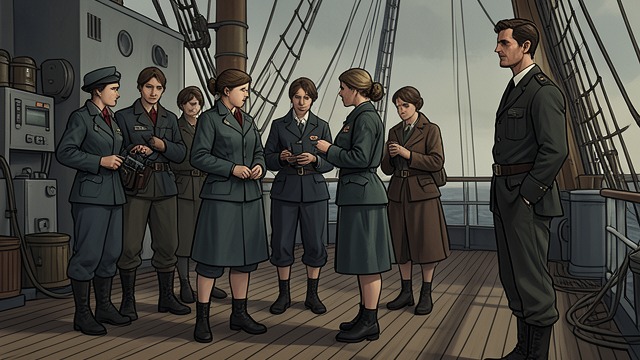
Women Claim the Flight Deck
Competence meets scrutiny
Women aboard the carrier face restrictions, harassment, and assumptions about their place, even after demonstrating their skill. Their service is evaluated as evidence in a continuing institutional argument.
Recognition is earned repeatedly
Tricia Conway, Joyce Flynn, and Kathleen Garrity must perform their roles under an additional burden of visibility. The story presents acceptance as a practice that must be renewed through work rather than assumed from policy alone.
A Deck Is Home
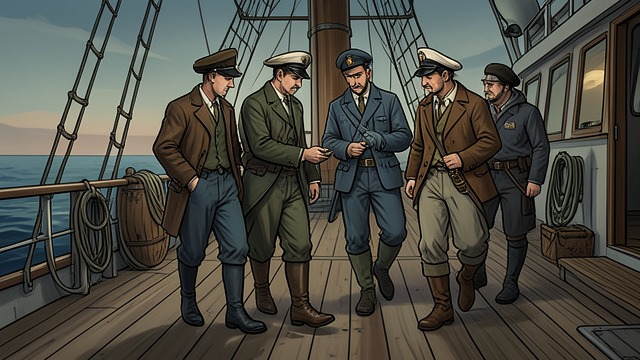
A Deck Is Home
Routine returns after combat
Sailors conduct a foreign-object walk-down across the flight deck, searching for small debris that could destroy aircraft. The ordinary procedure follows extraordinary fighting and restores the ship to a working community.
Shared labor gives meaning
Magruder sees the people aboard not merely as personnel but as the fraternity he is unwilling to leave. The carrier's repeated, collective tasks provide a form of belonging that survives fear and loss.
Before the Black Sea air battles
After the Georgia shootdown
Before the Russian attacks intensify
During the crew's debates about women in combat
Sunday, November 15, during the homeward passage
