
Operation Sustain Hope and Mission Creep
AfterburnThis flow traces how a limited humanitarian mission expands into broader military commitments in response to changing conditions and political ambitions.
increasing Bearing strength in each event
 decreasing
Bearing strength in each eventdecreasingHumanitarian Access in Georgia
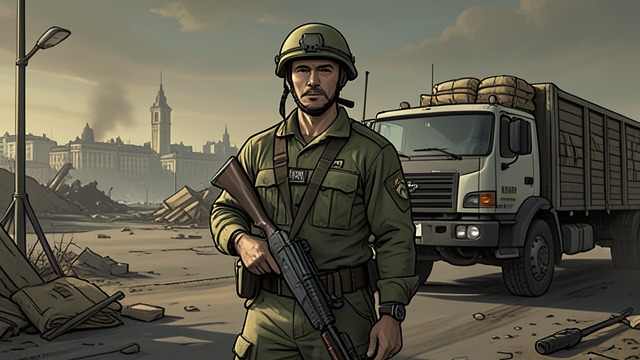
Humanitarian Access in Georgia
A bounded purpose
The original mission aims to secure Poti and enable relief supplies to reach war-damaged Georgia. Marines are meant to deploy only after an assessment concludes that organized Russian forces have withdrawn.
Limits begin to blur
Even the initial task depends on air patrols and armed protection. The military presence is framed as temporary support, but its responsibilities already extend beyond delivering aid.
The No-Fly Zone Adds Force
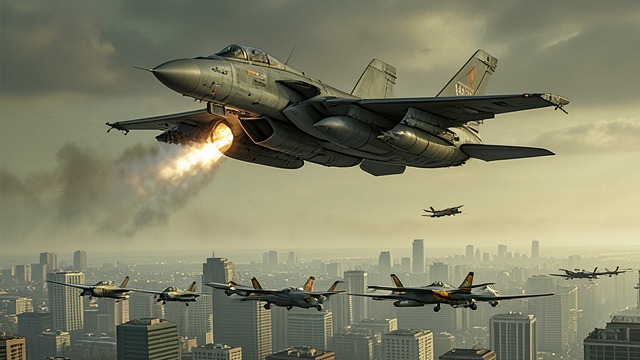
The No-Fly Zone Adds Force
Policing becomes enforcement
Carrier aircraft are assigned to stop flights in western Georgia. The United Nations hopes successful enforcement will make the intervention a model for a wider regional settlement.
A small task gains strategic meaning
The no-fly zone now serves both local security and the political goal of strengthening UN authority. The larger ambition increases the consequences of every incident in the air.
The Black Hawk Incident
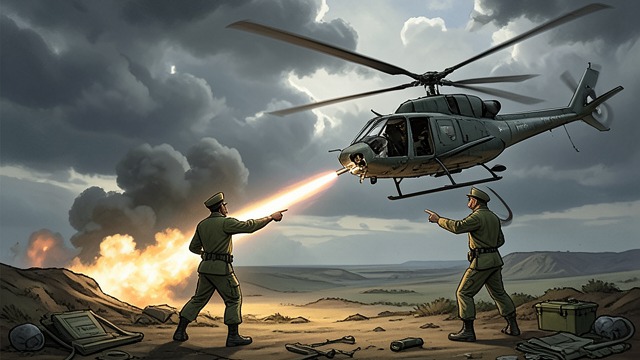
The Black Hawk Incident
Interservice coordination fails
A Navy fighter shoots down an Army helicopter working on a UN mission because the crews lack the information needed for reliable identification. The aircrew survives, but the incident illustrates the danger of a sprawling joint operation.
Political arguments multiply
Officials cite the accident to support unified command, while the carrier's officers see it as evidence of a mission whose participants are not adequately coordinated. A humanitarian task produces another demand for institutional change.
The Mission Moves to Crimea
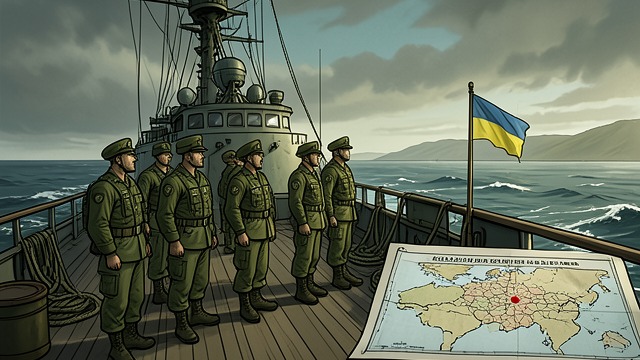
The Mission Moves to Crimea
The assignment expands
Washington redirects the carrier group toward the threatened Crimean transfer. The Marines may now be used to secure military facilities and prevent a Ukrainian landing, while Georgia's relief work becomes secondary.
One mission contains several wars
The force is expected to support peacekeeping, deter Ukraine, protect Boychenko, and manage a conflict between Russian factions. The original humanitarian rationale no longer defines the operation's real scope.
From Peacekeeping to Battle
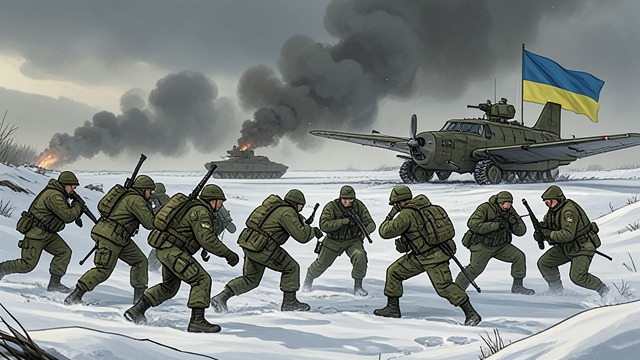
From Peacekeeping to Battle
Force is used to solve the crisis
American aircraft and Marines fight to secure Arsincevo, obtain fuel, and open a route for the trapped shore party. The mission now includes attacks on Russian positions and the destruction of naval assets.
Expansion has a cost
The carrier group achieves immediate operational goals, but the region remains unstable and Ukraine later moves into Crimea. The story presents mission creep not as an abstract warning but as a sequence of changed purposes with consequences that outlast the mission.
Before the carrier enters the Black Sea
After Special Resolution 1026
Saturday, October 31, in the Georgia No-Fly Zone
Tuesday, November 3, at the carrier briefing
Saturday, November 7, at Kerch
