
The Press as Witness and Participant
AfterburnThis flow traces how American Cable News personnel shape the mission's public record while depending on military protection and communications.
increasing Bearing strength in each event
 decreasing
Bearing strength in each eventdecreasingA Reporter Arrives

A Reporter Arrives
Coverage follows the deployment
Pamela Drake arrives in Yalta to report on the peace initiative and the accidental shootdown. Her presence connects events in Crimea to an American audience already questioning what the carrier group is doing there.
Personal and professional roles overlap
Drake encounters Matthew Magruder, her former fiancé, in the same city where she must cover his mission. Their history complicates the boundary between private conversation and public reporting.
The Interview Before the Crisis
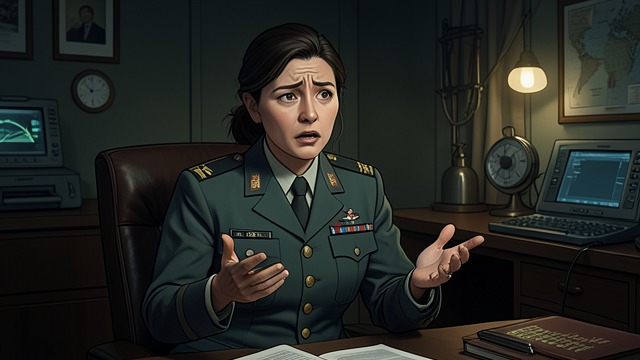
The Interview Before the Crisis
Flynn represents the carrier
Drake interviews Joyce Flynn about women living and serving aboard an aircraft carrier. Flynn answers from experience rather than treating the ship as a publicity abstraction.
The crew becomes a story
The exchange makes military personnel visible as individuals shaped by their workplace and mission. It also shows how institutional symbolism can enter even a brief, ordinary interview.
A Journalist Sees the Attack

A Journalist Sees the Attack
The camera is among the crowd
Drake and her crew are present when gunmen attack the transfer ceremony. The violence kills and wounds people around them, including her cameraman, and leaves Drake in shock.
Witnessing becomes survival
The reporters are not safely outside the event they cover. Their presence provides a record, but also places them among the civilians whom Magruder must protect.
The News Van Becomes a Lifeline
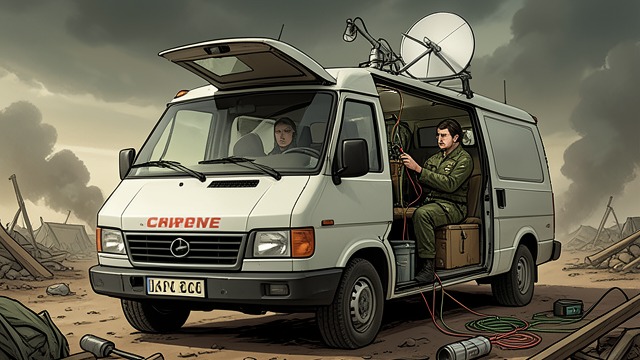
The News Van Becomes a Lifeline
Civilian equipment reaches Washington
The ACN satellite uplink gives Magruder a route to naval communications headquarters when the Russian radio equipment cannot reach the carrier. Media technology becomes an improvised military communications channel.
Dependence cuts both ways
Magruder needs the reporters' equipment, while Drake and her team remain exposed within the conflict. The relationship between press and military is cooperative in practice but never fully absorbed into the military chain of command.
The Broadcast Records Suffering
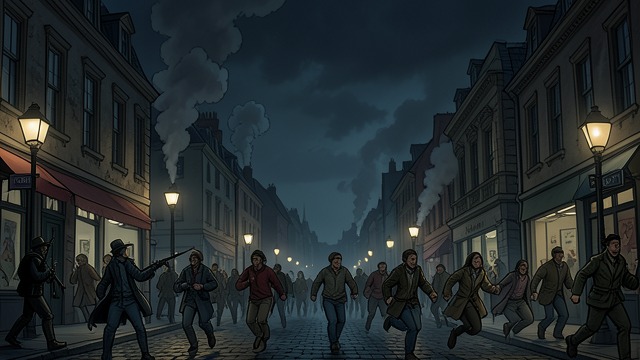
The Broadcast Records Suffering
Civilians enter the national picture
Drake reports from a city where armed patrols, burning buildings, and frightened residents reveal the continuing fighting. Her broadcast presents the human consequences that strategic briefings cannot capture.
Reporting does not end the crisis
The story informs viewers but cannot remove the party from danger or restore order to Crimea. The press can bear witness to political failure without possessing the power to correct it.
Wednesday, November 4, at Yalta Hotel
Wednesday, November 4, in the hotel lobby
Thursday, November 5, at the White Palace
Thursday, November 5, after normal communications fail
Friday, November 6, from Yalta
