
From Rescue to Landing
AfterburnThis flow follows the shift from extracting the isolated Yalta party to mounting a larger operation at Kerch to secure fuel and support Boychenko's escape.
increasing Bearing strength in each event
 decreasing
Bearing strength in each eventdecreasingA Narrow Rescue Window
A Narrow Rescue Window
A vulnerable force
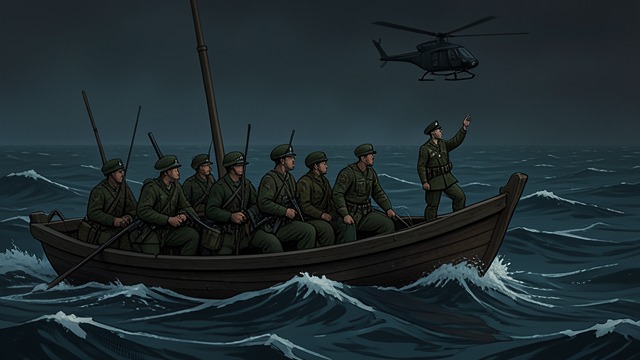
After the attacks and the loss of the shore helicopter, the group at Yalta needs evacuation and medical care. At sea, commanders know the aircraft are consuming fuel faster than the trapped carrier group can replace it.
Operation Ranger takes shape
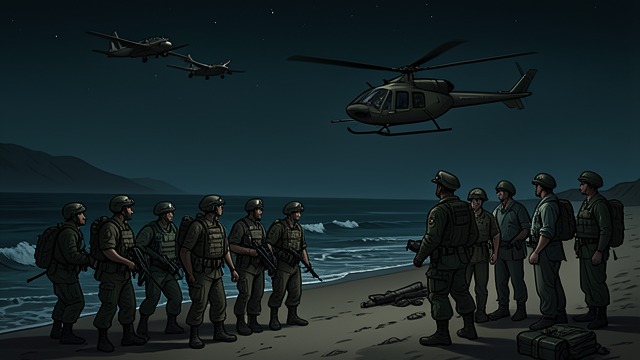
The staff develops a plan to provide air cover and send Marine helicopters to the shore. The rescue depends on suppressing hostile aircraft and coordinating a mixed force in darkness.
Air Cover Opens the Route
Air Cover Opens the Route
Fighters engage
As Russian aircraft attack American planes, the carrier group authorizes its aircrews to respond. Dixie and Cat Garrity fight at long range while aircraft establish a path for the rescue helicopters.
Helicopters reach shore
CH-53s land and take aboard the wounded and many of the UN and civilian personnel. The operation is not a clean withdrawal: Magruder stays behind with Boychenko and a small group as the broader ground situation worsens.
A Retreat Toward Kerch
A Retreat Toward Kerch
A dangerous road journey
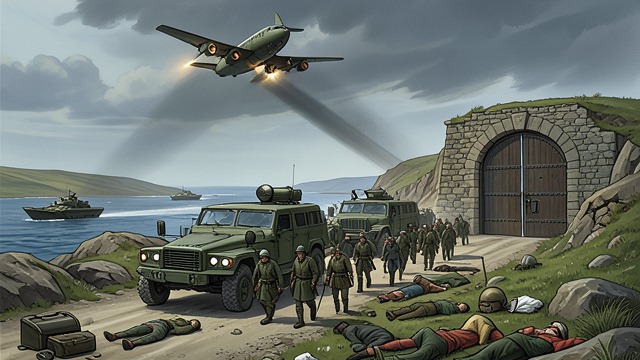
Boychenko's forces move east along the Crimean coast, carrying their wounded and trying to reach Kerch. Russian units pursue, while American aircraft provide cover as far as their fuel and mission allow.
The goal changes
Magruder's party now needs more than an exit from Yalta. Reaching the strait requires passing the Russian defenses at Kerch, and the group's safe passage becomes bound to a larger military operation.
Landing at Arsincevo
Landing at Arsincevo
Marines secure a foothold
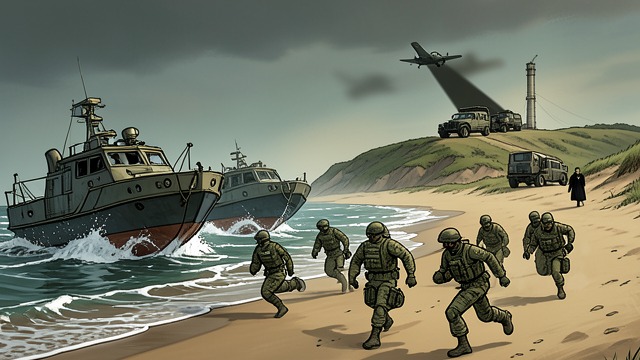
Marine aircraft and amphibious vehicles land near Arsincevo, supported by strikes meant to disrupt Russian defenses. The small expeditionary force uses speed and surprise to seize the beach and refinery area.
Confusion on the ridge
Magruder and Boychenko's column are nearby, but American aircraft initially mistake vehicles and positions amid the confusion. The landing provides strength, yet it does not automatically make the scattered forces safe.
Fuel Restores Mobility
Fuel Restores Mobility
A hazardous transfer
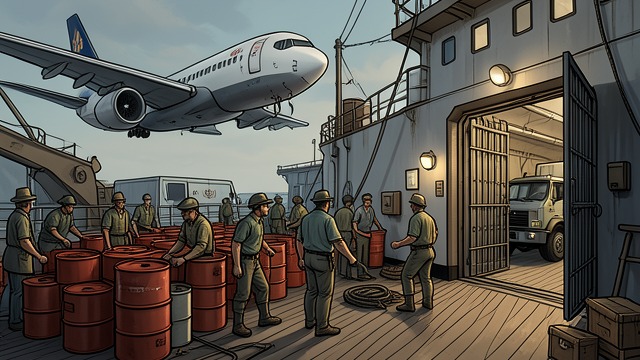
The Thomas Jefferson takes on aviation fuel from the Arsincevo facility while flight operations pause and its close-in defenses are restricted. The carrier is exceptionally vulnerable during the transfer.
The operation's purpose
Securing the fuel allows the group to keep aircraft in the air and prevents its entrapment from becoming decisive. The refueling transforms Arsincevo from a contested shore location into the key to the carrier group's continued mobility.
Friday, November 6, during planning aboard the carrier group
Friday, November 6, at night over Yalta
Late Friday, November 6, leaving Yalta
Saturday, November 7, shortly after sunrise
Saturday, November 7, during the carrier's refueling at Arsincevo
