
The Battle for Airspace
AfterburnThis flow traces how ambiguous contacts, electronic warfare, and escalating attacks turn routine interceptions into open combat over the Black Sea.
increasing Bearing strength in each event
 decreasing
Bearing strength in each eventdecreasingA False Sense of Routine
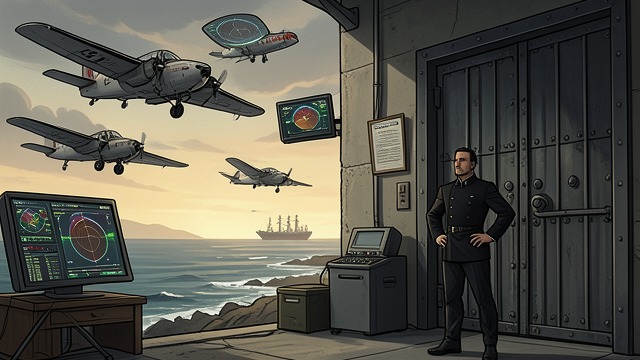
A False Sense of Routine
Patrols resume
The carrier launches fighters and an airborne radar aircraft to monitor the sea and the surrounding coast. Russian aircraft and submarines may be nearby, but the group's initial work remains surveillance and deterrence.
The rules are restrictive
American forces are instructed not to fire unless fired upon, while the authority of the Russian factions is uncertain. The rules are clear in language but difficult to apply against threats that may develop in seconds.
The Bosporus Strike
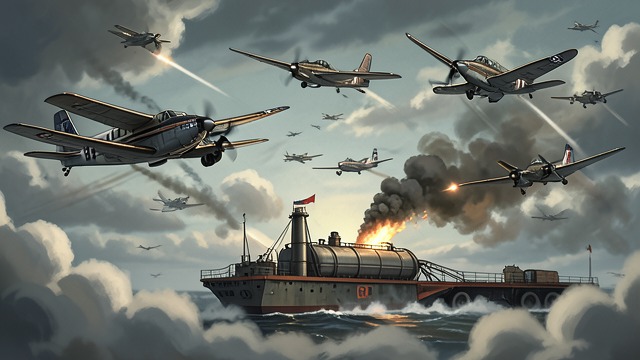
The Bosporus Strike
Attackers cross the boundary
MiG-27s attack the bridge and tanker after approaching through jamming and at low altitude. Turkish forces are caught in the violence, while the American group struggles to identify the attackers and their objectives.
Interception becomes combat
Dixie and other fighters encounter Russian aircraft as the attack unfolds. What began as a mission to identify unknowns becomes an air battle in which hostile launches finally remove the ambiguity from the rules.
The First Engagement
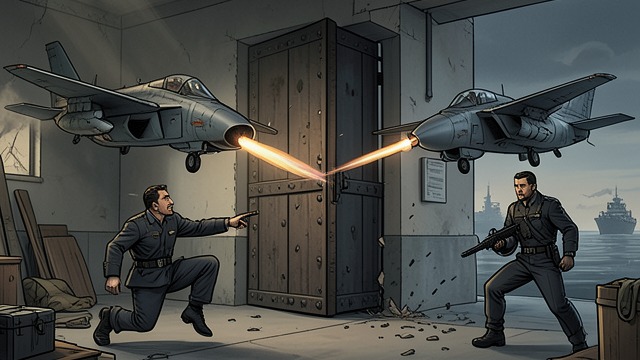
The First Engagement
Fighters meet at range
Dixie and his wingman encounter Russian fighters amid a broad formation protected by jamming. They exchange missile attacks and must maneuver defensively before they can establish what aircraft and forces are involved.
Survival precedes certainty
The engagement reveals the risks of sending a small patrol against a much larger force. Pilots have to respond to missiles before political leaders can settle questions of identity or escalation.
A Rescue Corridor
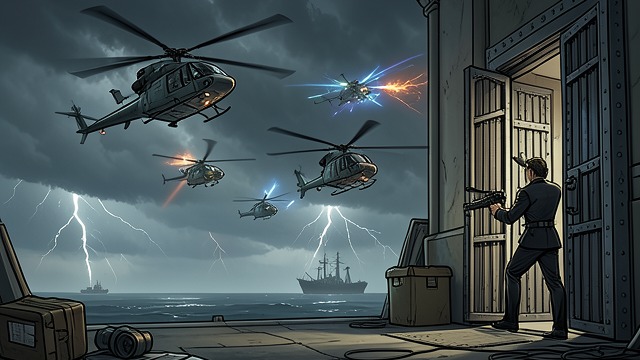
A Rescue Corridor
Darkness conceals movement
American aircraft fly low toward Yalta while electronic warfare aircraft probe and disrupt Russian defenses. The helicopters need a protected route through an airspace already contested by fighters and antiaircraft fire.
Hostile action is confirmed
Russian aircraft launch missiles at American planes, and the carrier command declares weapons free. The rescue operation has become a combat mission whose success depends on controlling the skies long enough for helicopters to reach shore and return.
The Kerch Furball
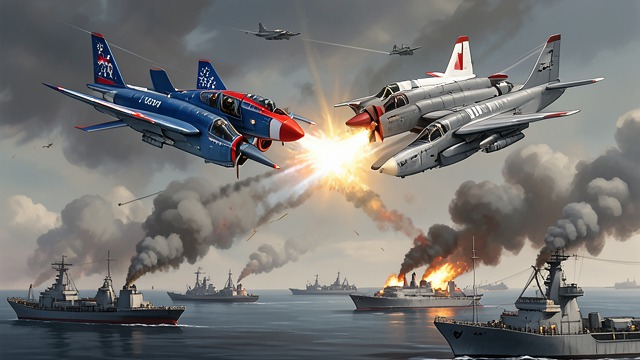
The Kerch Furball
Two formations converge
Russian aircraft approach the Marine landing and carrier group from different directions. American Tomcats and Hornets meet them before they can overwhelm ships, transports, and support aircraft.
Air power shapes the ground battle
The engagement fills the sky with contrails and burning aircraft, while forces on the ground wait for its outcome. Russian losses weaken the pressure on the landing, but aircraft continue to threaten the carrier during its fuel transfer.
Friday, October 30, after the carrier enters the Black Sea
Thursday, November 5, around 1004
Thursday, November 5, shortly after the bridge attack
Friday, November 6, during Operation Ranger
Saturday, November 7, around 0840
