Dinah
Alice's Adventures in WonderlandDinah, Alice's beloved pet cat, is never physically present in Wonderland, yet she functions as one of the most persistent and emotionally charged figures in Alice's inner life during her journey. Mentioned repeatedly from the moment of her fall until the final moments of her dream, Dinah represents the warmth, familiarity, and domestic order of the world Alice has left behind. More than a simple pet, Dinah becomes a measure of Alice's own disorientation: every time Alice invokes her cat's name, she inadvertently reveals her own foreignness and disrupts the fragile social logic of Wonderland, turning a creature of comfort into a source of repeated conflict and loneliness.
Identity and Background
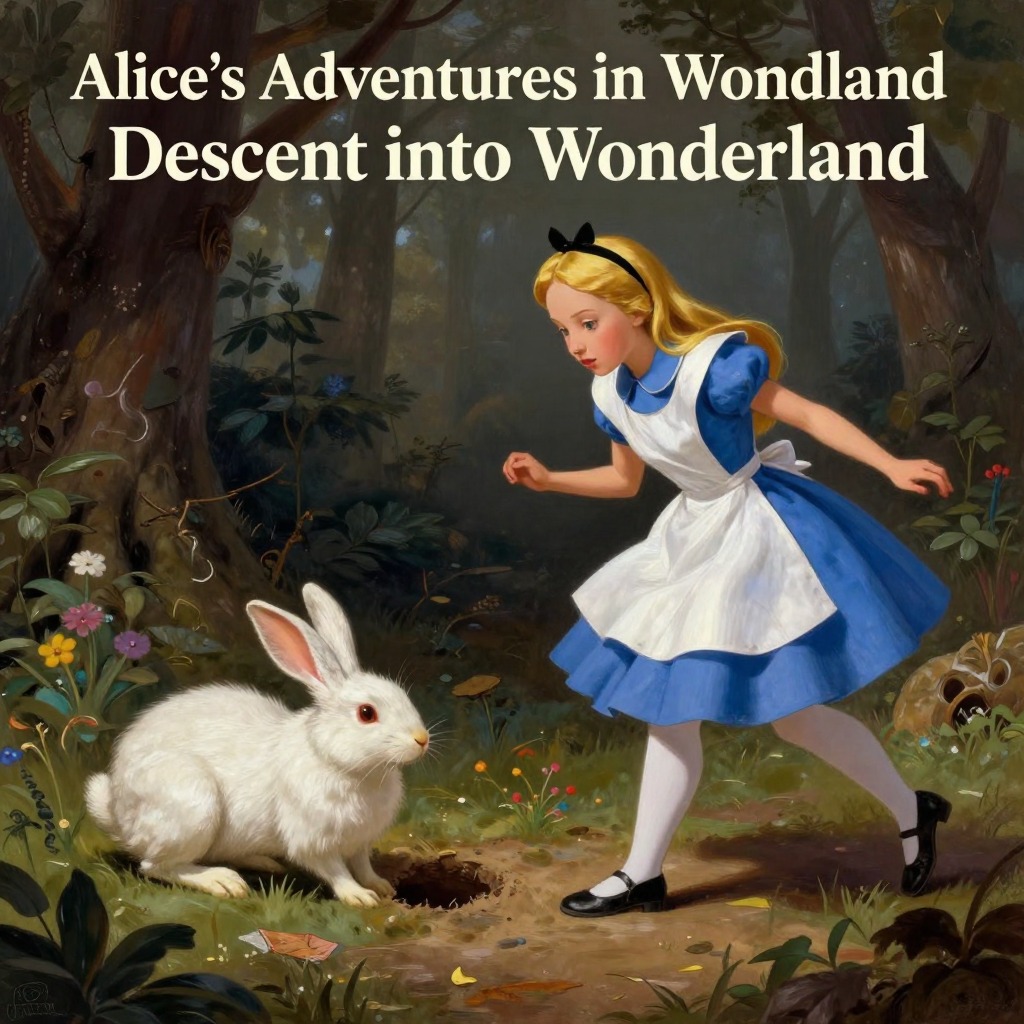
Dinah is Alice's cat, a figure of deep affection and familiarity from her life above ground. Alice's first thoughts of Dinah occur as she falls down the rabbit-hole, when she worries aloud that "Dinah'll miss me very much to-night" and hopes "they'll remember her saucer of milk at tea-time." In the midst of the disorienting fall, Alice wishes Dinah were with her, reasoning that "there are no mice in the air, I'm afraid, but you might catch a bat, and that's very like a mouse." This early association establishes Dinah as a creature of domestic comfort and predatory skill, a combination that will prove disastrous in Wonderland. Alice's attachment to Dinah is so strong that she even dreams, while falling, of walking hand in hand with the cat and earnestly asking, "did you ever eat a bat?"
Arc Through the Plot
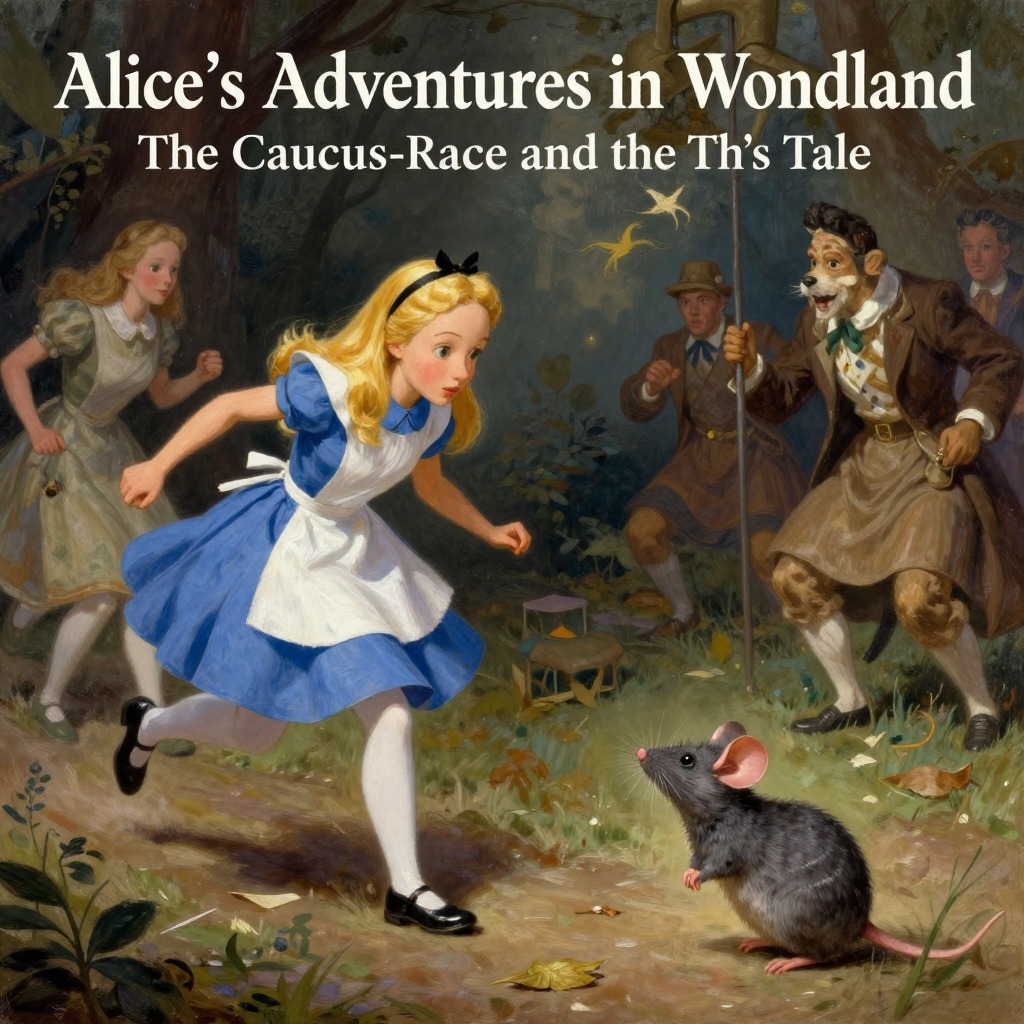
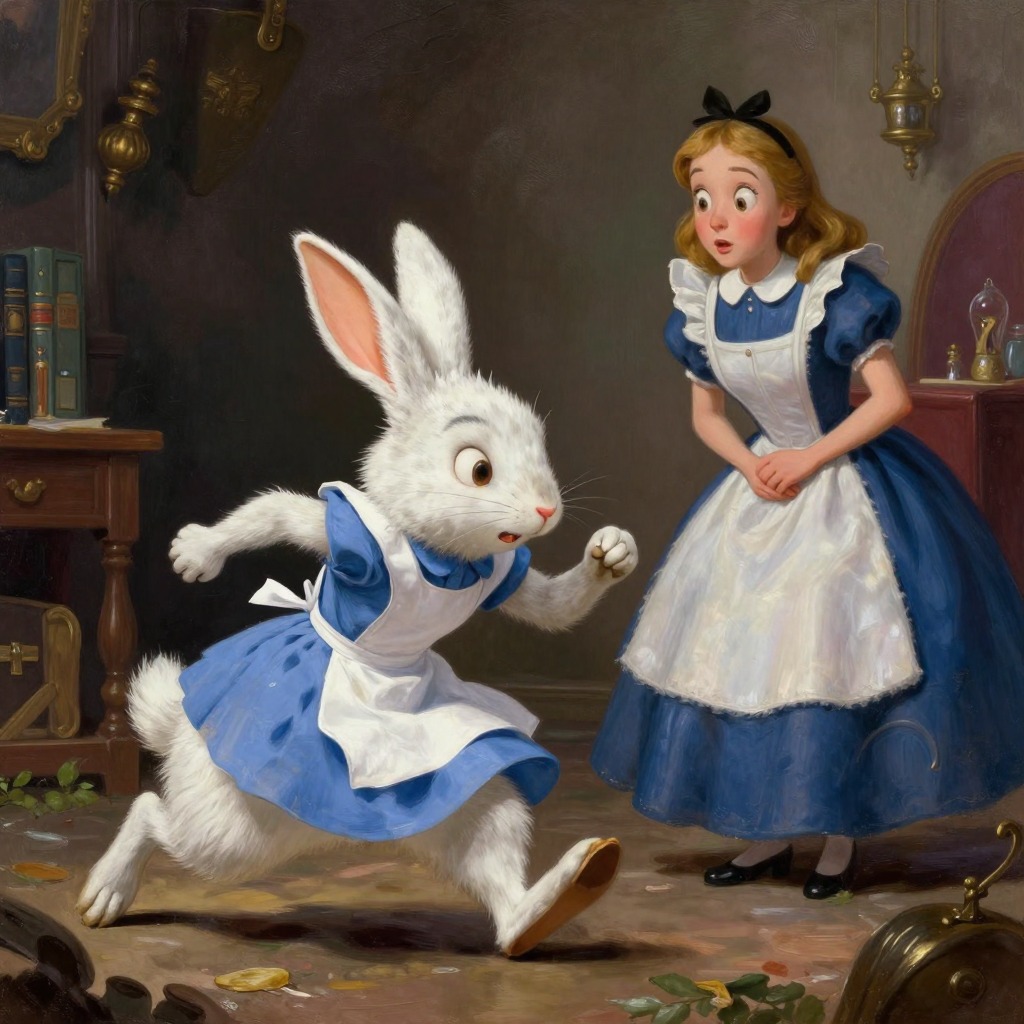
Dinah's name surfaces at critical junctures throughout Alice's adventures, each time with escalating social consequences. After the Caucus-race, when the Mouse has stormed off in anger, Alice aloud wishes for Dinah, declaring "She'd soon fetch it back!" This remark prompts the Lory to ask who Dinah is, and Alice eagerly explains that Dinah is "such a capital one for catching mice" and that "she'll eat a little bird as soon as look at it!" The effect is immediate and devastating: the birds and animals, terrified, make excuses and depart, leaving Alice alone and remorseful. She laments, "I wish I hadn't mentioned Dinah! Nobody seems to like her, down here, and I'm sure she's the best cat in the world!" Later, when the Rabbit and his allies threaten to burn down the White Rabbit's house, Alice threatens them in turn: "If you do, I'll set Dinah at you!" This produces a dead silence, showing that even the mere threat of Dinah carries power in Wonderland. In the Duchess's kitchen, Alice's thoughts turn to Dinah again as she reflects on the pepper that makes everyone hot-tempered, imagining that when she is a Duchess she will have no pepper in her kitchen, and that "barley-sugar and such things" make children sweet-tempered—a domestic fantasy that implicitly includes Dinah in a well-ordered home.
Relationships and Conflict
Dinah is the unwitting cause of Alice's most significant social failure in Wonderland. The Mouse, whom Alice meets in the pool of tears, is deeply offended when Alice mentions that Dinah is "such a capital one for catching mice." The Mouse bristles and trembles, declaring that "Our family always hated cats: nasty, low, vulgar things!" Alice's attempts to change the subject by praising a terrier only offend the Mouse further, and it swims away. This pattern repeats with the birds after the Caucus-race: Alice's enthusiastic description of Dinah's hunting prowess—"she'll eat a little bird as soon as look at it!"—causes a sensation, with the Magpie, Canary, and others fleeing on various pretexts. Alice is left alone, crying, and reflecting that "nobody seems to like her, down here." Dinah, who in the upper world is "the best cat in the world," becomes in Wonderland a symbol of predation and danger, marking Alice as an outsider whose most cherished companion is a threat to the very creatures she tries to befriend.
Change and Ending
Dinah does not appear in Wonderland, but her presence in Alice's mind persists until the very end of the dream. When Alice wakes on the bank with her head in her sister's lap, she tells her sister about her "curious dream," and her sister, left alone, dreams of Wonderland in turn. In the sister's dream, the sounds of Wonderland—the White Rabbit hurrying, the Mouse splashing, the March Hare's teacups rattling, the Queen's shrill cries—mingle with the ordinary sounds of the farmyard. Dinah is not mentioned in this final dream, but the domestic world she represents—the world of tea-time, saucers of milk, and warm fires—is precisely the world Alice returns to. The sister imagines that Alice, as a grown woman, will "keep, through all her riper years, the simple and loving heart of her childhood" and tell strange tales to other children. Dinah, as the most intimate symbol of that childhood heart, is implicitly part of that future, though she remains forever absent from the dream itself.
Thematic Significance
Dinah embodies the tension between the safe, ordered world Alice has left and the chaotic, ruleless world of Wonderland. Every mention of Dinah is an attempt by Alice to import the logic of home—affection, domesticity, the familiar hierarchy of pet and owner—into a place where that logic does not apply. The repeated failure of these attempts underscores the fundamental incompatibility between Alice's ordinary life and the dream-world she inhabits. Dinah also serves as a foil to the creatures of Wonderland: where they are unpredictable, contradictory, and often hostile, Dinah is constant, loving, and reliable. Yet it is precisely this constancy that makes Dinah dangerous in Wonderland, where the rules of predation are not abstract but immediate. In this sense, Dinah is not merely a cat but a symbol of the unbridgeable gap between Alice's two selves—the girl who belongs to the world of daisy-chains and saucers of milk, and the girl who must navigate a world where even the most innocent remark can lead to social catastrophe.