Hatter's teacup
Alice's Adventures in WonderlandThe Hatter's teacup is a deceptively ordinary object that becomes a central prop in two of Wonderland's most memorable scenes, first at the Mad Tea-Party and later in the trial of the Knave of Hearts. More than a mere drinking vessel, it embodies the Hatter's perpetual imprisonment in a single moment—always six o'clock, always tea-time—and, when brought into the courtroom, it becomes a conduit for the Hatter's terror and the Queen of Hearts' arbitrary cruelty. The teacup's journey from a fixture of an endless, chaotic meal to a piece of evidence in a nonsensical legal proceeding encapsulates the way Wonderland's objects are saturated with the irrational rules of their environment.
The Teacup at the Mad Tea-Party
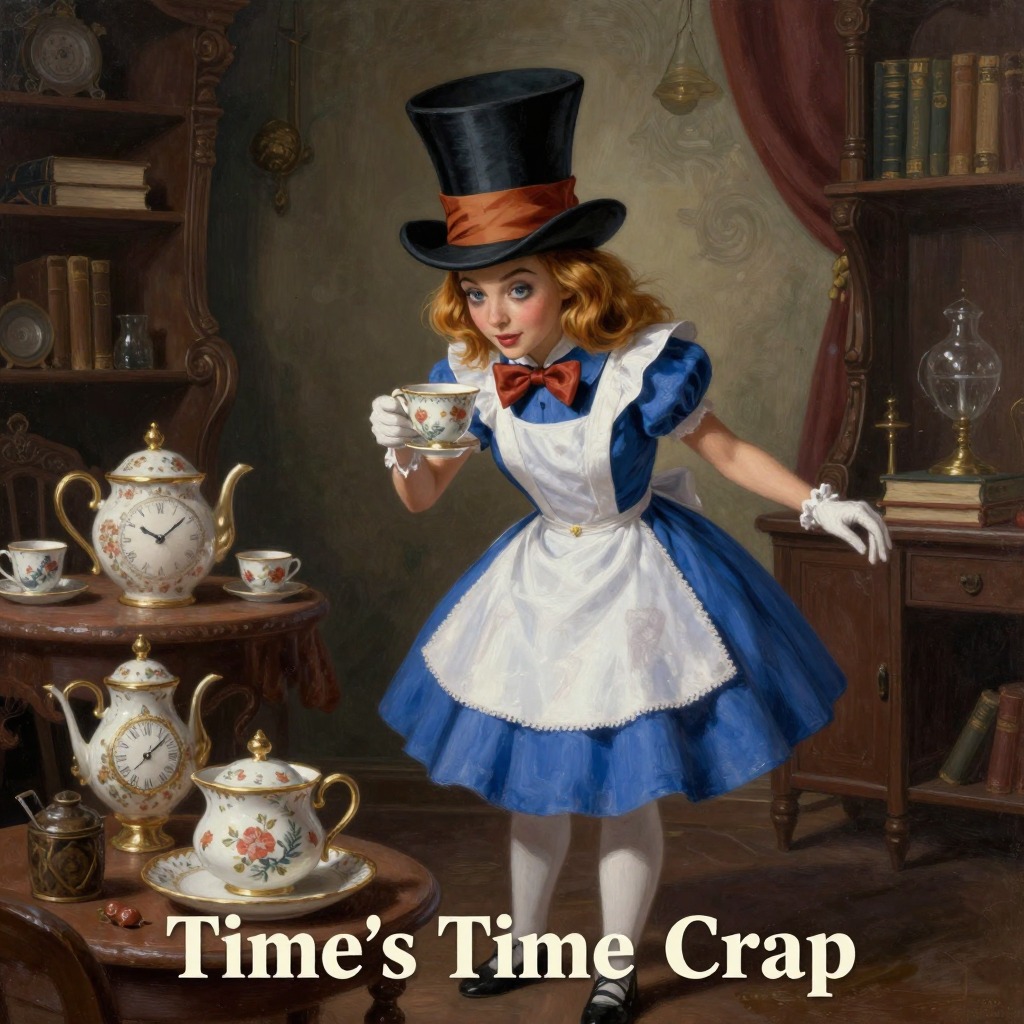
The teacup first appears as part of the sprawling, never-cleaned tea service that the March Hare, the Hatter, and the Dormouse have set out under a tree. The Hatter explains that because Time, after a quarrel, has stopped at six o'clock for him, "it's always tea-time, and we've no time to wash the things between whiles." The teacup is thus not a vessel for a single meal but a permanent fixture of an endless, dirty ritual; the party simply moves around the table as cups are used up. During the tea-party, the Hatter uses his teacup as a tool of petty aggression, pouring a little hot tea onto the Dormouse's nose to wake it when it falls asleep. The teacup is also the object of the Hatter's anxious attention: he produces his watch, which tells the day of the month but not the hour, and complains that butter has ruined its works, dipping it into his cup of tea to examine it. The teacup is thus woven into the Hatter's personal mythology of a broken relationship with Time, a physical token of his stalled existence.
The Teacup in the Courtroom
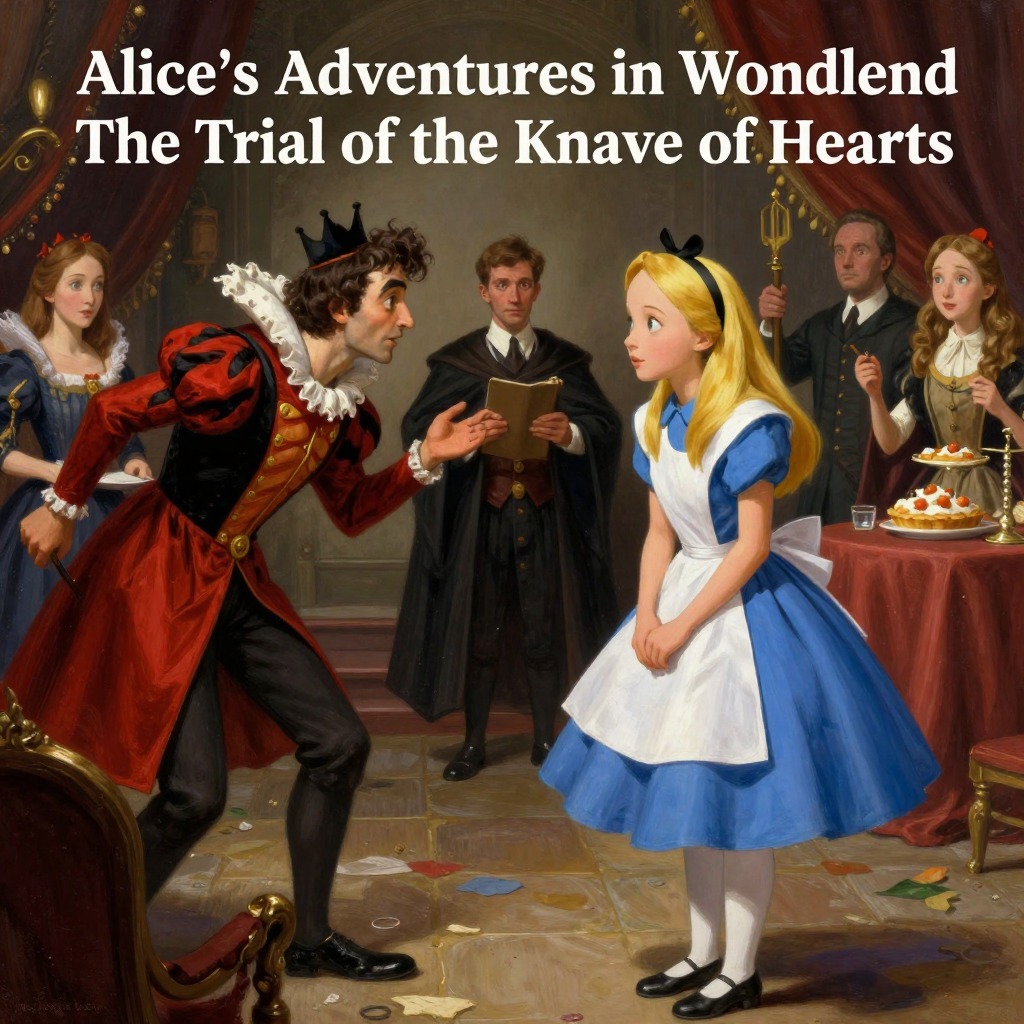
The teacup reappears in a radically different context when the Hatter is called as the first witness in the trial of the Knave of Hearts. He enters the courtroom carrying a teacup in one hand and a piece of bread-and-butter in the other, apologizing to the King that he "hadn't quite finished my tea when I was sent for." The teacup, an absurd object to bring into a formal legal proceeding, immediately marks the Hatter as a creature of Wonderland's illogic. Under the intimidating stare of the Queen of Hearts, the Hatter becomes so nervous that "in his confusion he bit a large piece out of his teacup instead of the bread-and-butter." This act—biting into the ceramic cup as if it were food—is a perfect image of the Hatter's disintegration under pressure: the boundary between utensil and comestible collapses, and the teacup becomes a symptom of his terror. The Hatter's testimony disintegrates into a jumble of references to tea, twinkling, and bread-and-butter, and he is eventually dismissed. As he leaves, the Queen orders an officer to "just take his head off outside," but the Hatter is already out of sight. The teacup, now bitten and abandoned, is left behind as a relic of a witness who could not survive the Queen's scrutiny.
The Teacup and the Logic of Wonderland
The Hatter's teacup is a minor but telling object in the larger pattern of Wonderland's material culture, where everyday items are imbued with strange properties and rules. Like the "DRINK ME" bottle that makes Alice shrink or the mushroom that alters her height, the teacup is an object that governs the behavior of those who use it. But unlike those transformative items, the teacup's power is negative: it is a symbol of stasis, of a ritual that can never be completed or cleaned. The Hatter's inability to finish his tea—he brings the cup to court still full—mirrors his inability to escape the endless tea-time. The teacup, bitten and discarded, is the physical trace of a character who is trapped in a cycle of repetition and fear, a small, broken piece of the larger machinery of Wonderland's absurdity.