the hall
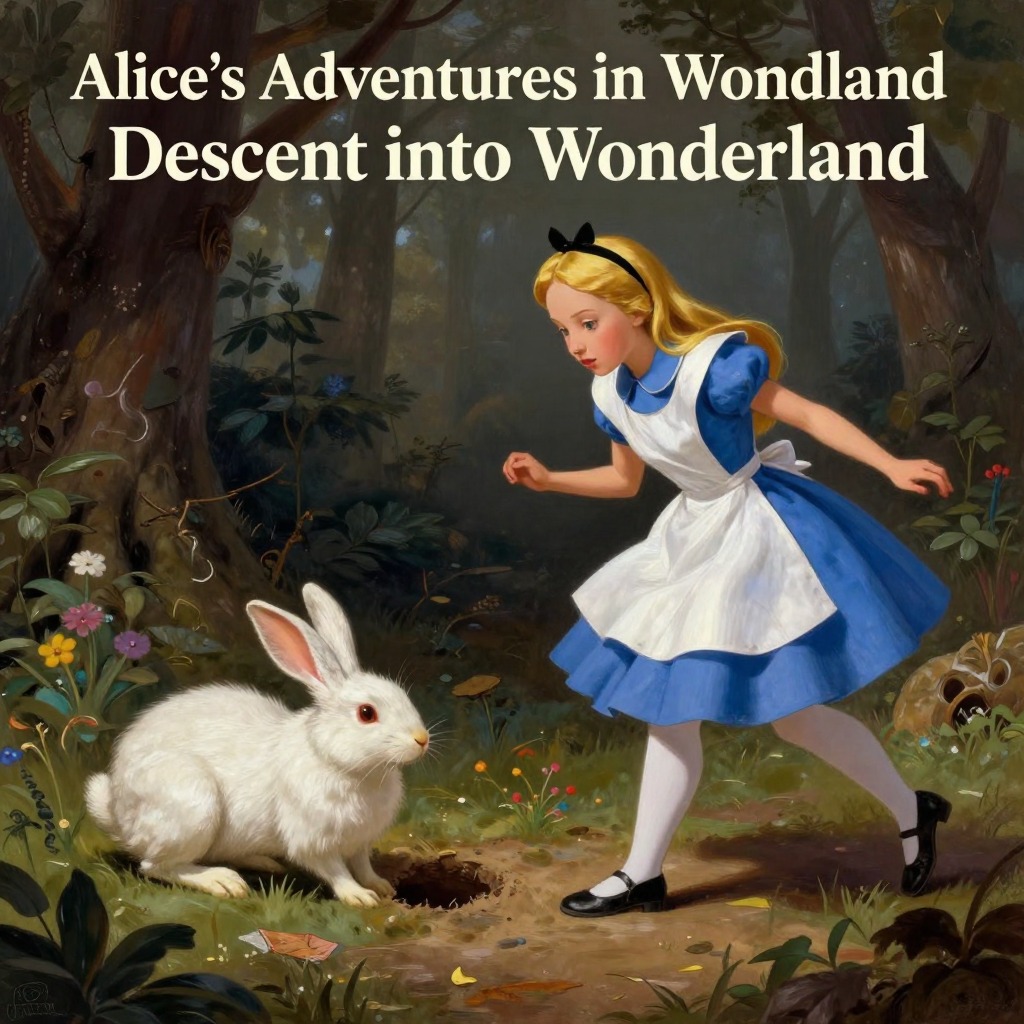
Alice's Adventures in WonderlandThe hall is the first interior space Alice encounters after her long fall down the rabbit-hole, and it functions throughout the story as a liminal threshold between the ordinary world and the wonders of Wonderland. It is a long, low hall lit by a row of lamps hanging from the roof, with doors all round — all locked — and a little three-legged table made of solid glass at its center. On this table rests a tiny golden key, which Alice discovers unlocks a small door behind a low curtain, a door only fifteen inches high that leads into a passage to the loveliest garden she has ever seen. The hall thus immediately establishes the central problem of the narrative: Alice's desire to reach the garden, and the obstacles of size and access that define her journey.
Architecture and Transformations
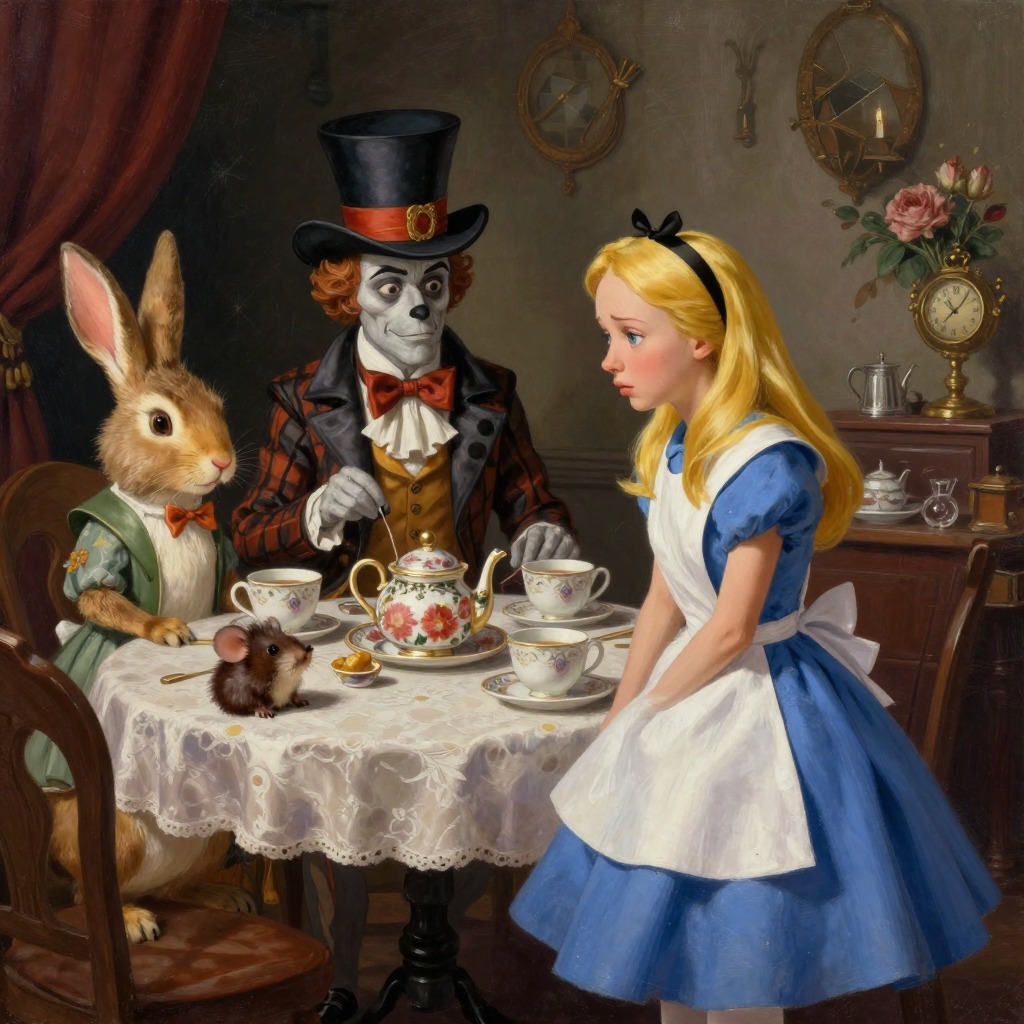
The hall is not a static setting; it changes dramatically between Alice's visits. When she first arrives, it contains the glass table, the golden key, and the little door, but after her swim in the pool of tears, the hall vanishes completely — the glass table and the little door are gone, replaced by the White Rabbit's house and the wood. Later, after the Mad Tea-Party, Alice finds herself once more in the long hall, close to the little glass table, and this time she successfully uses the golden key to unlock the door and enter the garden. The hall's reappearance at this crucial moment suggests it is a recurring, almost magical space that responds to the narrative's needs, a place where Alice's progress is measured and her failures and successes are staged.
Alice's Size Changes and Emotional States
The hall is the primary site of Alice's most extreme and disorienting size changes. After drinking from the DRINK ME bottle, she shrinks to ten inches high, only to find she has forgotten the golden key on the table and cannot reach it. After eating the EAT ME cake, she grows to more than nine feet high, her head striking the roof, and she cries so profusely that she creates a pool of tears four inches deep that reaches halfway down the hall. Later, in the White Rabbit's house, she grows so large that she fills the room, her head pressing against the ceiling, her arm out the window, and her foot up the chimney — a grotesque expansion that echoes the hall's earlier capacity to contain her tears. These physical transformations are directly tied to the hall's architecture: the locked doors, the unreachable key, the too-small passage, and the too-low ceiling all enforce the lesson that size determines access and agency.
Narrative and Thematic Significance
The hall is the spatial embodiment of the story's central themes: the desire for a beautiful, unattainable garden; the arbitrary and frustrating rules of size and access; and the dreamlike instability of Wonderland itself. It is the place where Alice first confronts the puzzle of her identity — "Who in the world am I?" — as she wonders whether she has been changed into another child. The hall's disappearance and reappearance, its locked doors and its single tiny key, mirror the narrative's own structure of repeated attempts, failures, and eventual success. In the final chapter, when Alice wakes from her dream, her sister imagines the hall as part of the fading dreamscape, with the White Rabbit hurrying by and the pool of tears still present, but now transformed into the ordinary rustling of grass and rippling of a pond. The hall thus becomes a symbol of the boundary between dream and reality, a space that exists only in the logic of Wonderland but leaves a lasting impression on the waking world.