the sea school
Alice's Adventures in WonderlandThe sea school is the underwater educational institution that the Mock Turtle recalls with a mixture of pride and sorrow during his conversation with Alice in Chapter IX of Alice's Adventures in Wonderland. It is a central element of the Mock Turtle's identity, defining his sense of a lost, structured past and providing the framework for one of the book's most sustained satirical passages on Victorian education. The school is not a place Alice visits but a story-within-a-story, a remembered world that reveals the Wonderland logic applied to the most earnest of human institutions.
Location and Nature
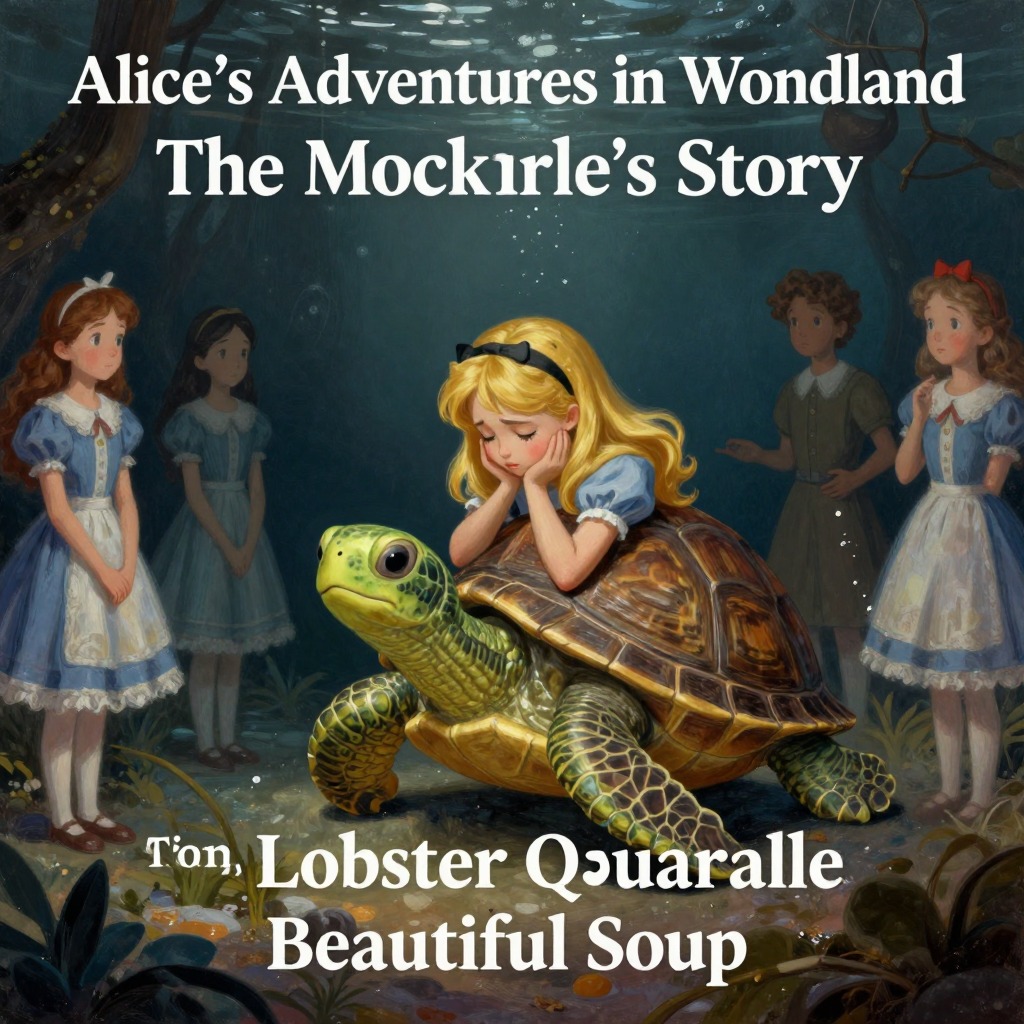
The sea school is located at the bottom of the sea, a setting that the Mock Turtle introduces with the matter-of-fact statement, "we went to school in the sea." When Alice expresses skepticism, he insists on the truth of his claim, and the Gryphon supports him. The school is a day-school, as the Mock Turtle specifies that they attended "every day." Its curriculum is a parody of a rigorous Victorian education, with subjects that are puns on real ones: the regular course begins with "Reeling and Writhing" (Reading and Writing), followed by the branches of Arithmetic: "Ambition, Distraction, Uglification, and Derision" (Addition, Subtraction, Multiplication, and Division). The school also offers "extras" such as French, music, and washing, a detail that the Mock Turtle uses to judge the quality of Alice's own education. The teaching staff includes an old Turtle called Tortoise ("because he taught us"), a conger-eel who serves as the Drawling-master (teaching Drawling, Stretching, and Fainting in Coils), and an old crab who is the Classics master (teaching Laughing and Grief).
Curriculum and Pedagogy
The curriculum of the sea school is built entirely on verbal puns and absurd substitutions. The Mock Turtle lists the subjects with great seriousness, counting them off on his flappers: "Mystery, ancient and modern, with Seaography" (History and Geography); then "Drawling" (Drawing), taught by the conger-eel who "used to come once a week." The Gryphon adds that he attended the Classics master, an old crab who taught "Laughing and Grief" (Latin and Greek). The hours of instruction follow a peculiar logic: "Ten hours the first day," the Mock Turtle says, "nine the next, and so on." The Gryphon explains that this is why they are called "lessons"—"because they lessen from day to day." This system means that the eleventh day would be a holiday, as Alice deduces, and the Mock Turtle confirms. The pedagogy is thus both rigorous in its structure and entirely nonsensical in its content, a perfect Wonderland inversion of the orderly, fact-based education Alice herself receives.
The Mock Turtle's Relationship to the School
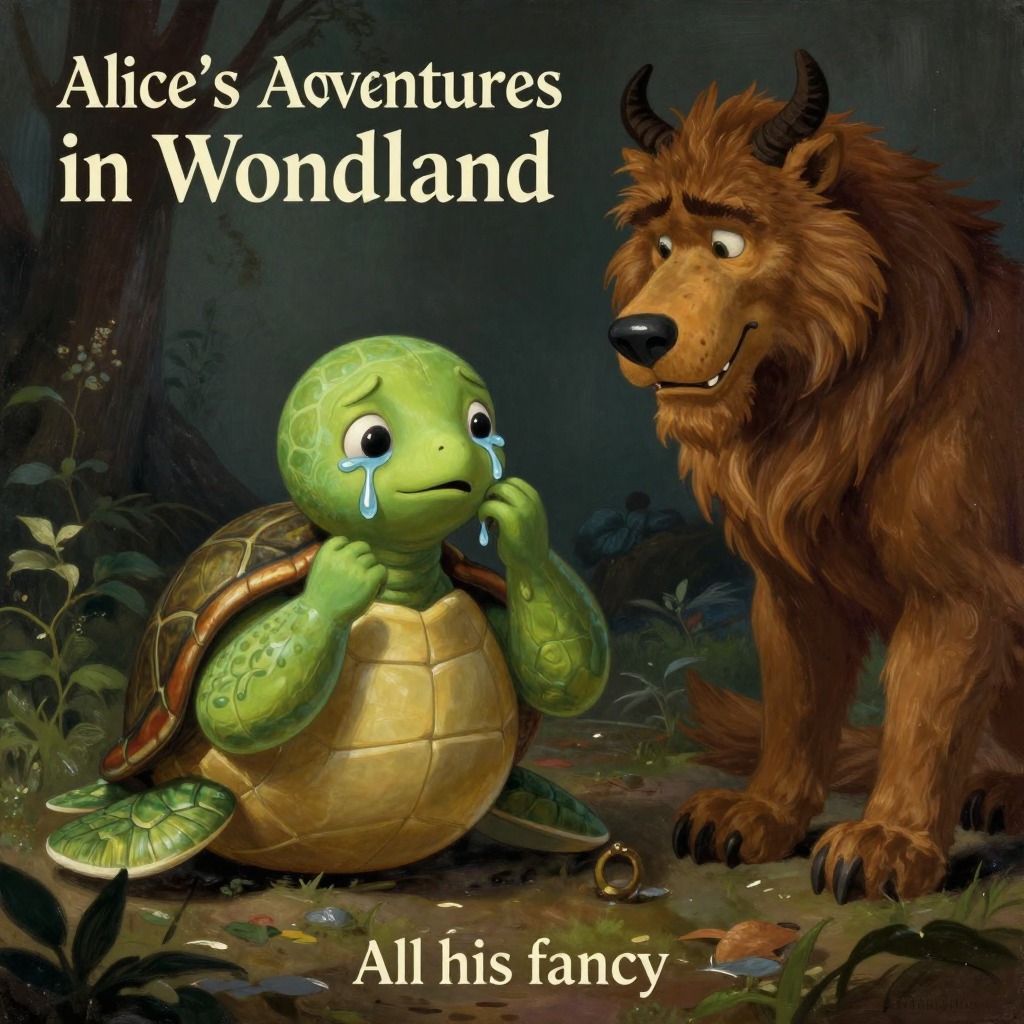
The Mock Turtle speaks of the sea school with a deep, sentimental melancholy. He sighs heavily when he begins his story, and his account is punctuated by sobs and tears. He takes pride in having had "the best of educations" and is anxious to establish that his school was superior to Alice's, particularly in offering "washing" as an extra subject. When Alice says her school taught French and music but not washing, the Mock Turtle responds "in a tone of great relief," declaring that hers "wasn't a really good school." He admits that he "couldn't afford to learn" the extras, having "only took the regular course." This detail reveals a class-consciousness and a sense of deprivation that makes his nostalgia poignant: he is proud of a school that, by its own absurd standards, gave him a fine education, yet he also regrets what he missed. The Gryphon, who attended a different master, shares in the Mock Turtle's wistfulness; when the Mock Turtle mentions the Classics master, the Gryphon sighs in his turn, and "both creatures hid their faces in their paws."
Narrative Role and Significance
The sea school functions as a sustained satirical set-piece within the Mock Turtle's story. It parodies the Victorian school system's emphasis on rote learning, its arcane terminology, and its moral seriousness, replacing them with puns that are both clever and empty. The school also deepens the characterization of the Mock Turtle: he is a figure of pathos, clinging to a past that is objectively ridiculous but that he treats with the utmost gravity. His education has not made him wise or capable—he is, after all, a creature made of soup ingredients, sitting on a rock and sobbing—but it has given him a framework for his identity. The sea school is thus a key example of how Wonderland's logic transforms the mundane into the fantastic while preserving the emotional structures that make those transformations meaningful. It is a place that never appears in the main action but whose description is essential to understanding one of the book's most memorable and melancholic characters.