Chronic nonpayment of veterinary fees
All Creatures Great and SmallChronic nonpayment of veterinary fees is a persistent pressure on the Darrowby veterinary practice, not a mere accounting nuisance: it places the cost of professional care at the center of the relationship between vets and farmers. The account traces that pressure through unpaid quarterly bills, a collection system that rarely moved the hardest cases, and debtors who might demand immediate attendance while allowing fees to remain outstanding. Siegfried Farnon’s alternating anger and reluctant amusement give the problem its human scale, while individual cases reveal how difficult it was to turn professional service into dependable income.
The Economics of Veterinary Work
James Herriot presents payment as a lesson practical experience added to veterinary knowledge. In his account, a barrier separated farmers from vets because many farmers believed they knew their stock better than an outsider and could regard paying someone else to treat an animal as an admission of defeat. He contrasts the vet’s position with that of medical practitioners, who had also once required payment for treating patients, and with the later availability of the Health Service and the National Agricultural Advisory Service. In that changed setting, the veterinary surgeon remained, in his description, the professional who had to be paid directly.
Most farmers paid, but Herriot estimates that perhaps one in ten tried to avoid the expense. In Darrowby, that minority was small enough not to define every client relationship, yet numerous and persistent enough to irritate the practice. The difference between a general reluctance to pay and chronic nonpayment mattered: the accounts accumulated as work continued, while the practice still had to answer calls and provide treatment. For an assistant such as Herriot, the unpaid bills initially had little direct financial consequence; the strain became visible when the practice’s quarterly accounts arrived.
The Accounts and Siegfried’s Collection System
Miss Harbottle typed the accounts and presented them to Siegfried in a neat pile. He examined the bills one by one, setting some aside with muttered complaints and others with more forceful outbursts. Herriot describes the sight of Siegfried’s irritation mounting as he worked through the accounts after a hard day. The process made the debts concrete: each unpaid name appeared not as an abstract business problem but as an entry in a regular cycle of billing and disappointment.
Siegfried’s response was not consistently hostile. He could erupt at the mention of a debtor, then regard the same people with wry benevolence. He joked that, if he ever held a cocktail party for clients, he would have to invite the non-payers first because they were such charming fellows. That amusement did not mean the debts were settled or harmless; it coexisted with an effort to recover the practice’s fees.
For that effort, Siegfried relied on the P.N.S. system: letters that moved from polite, to nasty, to solicitor’s. He had considerable faith in its graduated pressure, but the letters seldom worked on the hardest cases. Those debtors were accustomed to receiving threats in the morning post, and the sequence did little to alarm them. The solicitor’s letter was no more decisive when its recipient knew from experience that Siegfried was reluctant to pursue the matter to the full limit of the law. The system therefore exposed a practical weakness: escalating the tone of a demand was not the same as securing payment.
Debtors Who Complicated Collection
The individual debtors differed in manner, but their accounts illustrate the system’s uneven results. Henry Bransom had paid nothing for more than two years, even as Siegfried complained that he lived comfortably, attended markets, drank heavily, and had placed ten pounds on a horse at the races. Major Bullivant presented another kind of case. After the P.N.S. letters, he paid five pounds on account, then nothing more. He later disappeared from the district, leaving people with losses; Herriot does not know whether the Major paid anyone before leaving, but Siegfried received nothing. Even afterward, Siegfried could treat the Major as an extraordinary character rather than simply a source of anger, citing his fifty-pound bill for shaves and haircuts at the Darrowby barber as evidence of a certain audacity.
Dennis Pratt made enforcement difficult for a different reason. He was cheerful and hospitable, and Siegfried disliked becoming hard with him. Dennis owed the practice a substantial sum; the P.N.S. letters had brought in five pounds on account about eighteen months earlier, but no further payment followed. His genial manner sat uneasily beside the unresolved bill, making the debt harder for Siegfried to treat as a straightforward contest between creditor and debtor. When the usual letters failed, Siegfried considered unorthodox ways of collecting fees, a sign of how the repeated impasse could push him beyond routine office procedure.
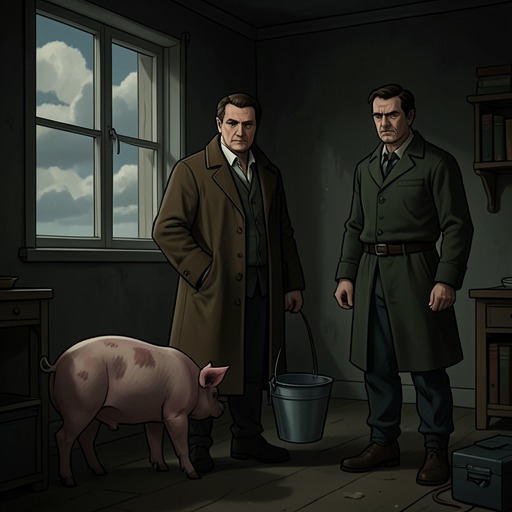
Mr. Horace Dumbleby, a butcher in Aldgrove, was distinguished from the debtors Siegfried could at least describe as charming. His shop was busy and prosperous, and he also kept six cows, fattened bullocks and pigs, and was said to own property. Yet Siegfried saw little of his money. The disparity between apparent means and infrequent payment sharpened the frustration, but Dumbleby’s conduct also showed how collection conflicts reached beyond the ledger. After Siegfried sent him the full sequence of P.N.S. letters following a late-night call, Dumbleby’s purse strings did not loosen; his feelings were wounded instead. Herriot later found that Dumbleby would fix him with a disapproving stare when they met in the country or at the Aldgrove pub, where the once-comfortable atmosphere became difficult for Herriot to ignore.
Urgency, Resentment, and the Cost of Care
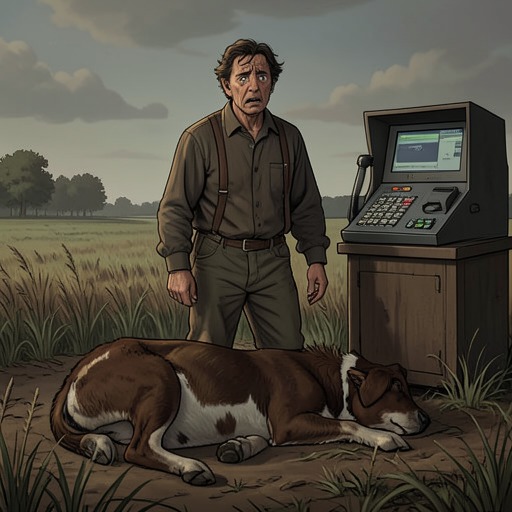
The recurring imbalance was most visible when a debtor needed the vets. Herriot notes that slow payers did not tolerate slowness from the practice: they demanded immediate attendance and pressed for assurances about how soon the vet would arrive. Their insistence could make Siegfried grip the telephone until his knuckles whitened and the veins stood out on his forehead. The scene reverses the usual logic of credit: payment could be postponed indefinitely, but the service was expected at once.
Dumbleby’s Sunday-night call brought that contradiction into especially sharp relief. After speaking with him at ten o’clock, Siegfried flew into a rage and unleashed the P.N.S. system, yet the letters harmed Dumbleby’s feelings without producing payment. Chronic nonpayment thus persisted not because the practice lacked bills or methods of pursuit, but because the relationship carried competing expectations: farmers wanted rapid, expert help when stock was in trouble, while the vets had limited leverage when it came time to collect. The episode makes unpaid fees part of the lived texture of rural practice, where professional obligation continued even as its financial return remained uncertain.