Ellerthorpe
All Creatures Great and SmallEllerthorpe is a small, remote village in the high Dales whose significance rests on the Wheat Sheaf, the old inn where James Herriot and Helen Alderson spent their honeymoon. The place joins two kinds of country life: the calm intimacy of a village pub and the strenuous veterinary work that Herriot arranged to continue among the scattered farms of the fells.
Setting and approach
The journey to Ellerthorpe ends across ten miles of desolate moor, followed by a descent on a steep, narrow road into the village. The Wheat Sheaf occupies an unassuming place in its single long street: a low grey-stone building with no light above the door. Its muted exterior and remote approach establish a setting far removed from a fashionable holiday resort.
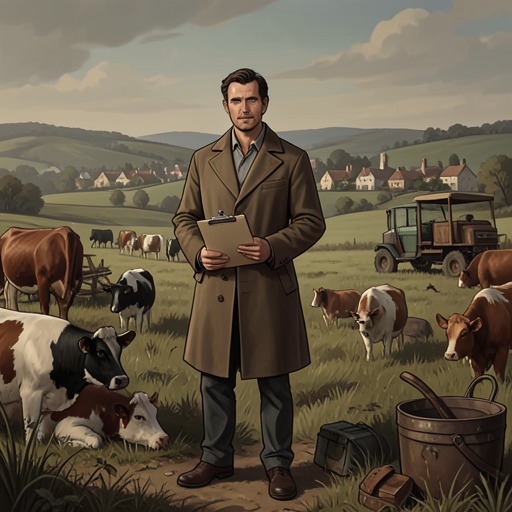
The surrounding landscape is also a working one. Herriot’s plan for his honeymoon depended on testing cattle at Allen’s farm, where a huge herd was scattered across the stark fells at the top of the Dale. The village therefore serves as a base within a demanding agricultural landscape, not as an escape from it.
The Wheat Sheaf
The inn is owned by Mrs. Burn, an elderly widow, and its welcome is practical rather than ceremonial. When the couple arrive late, she has already expected them and supper is waiting. Her niece, Beryl, serves lentil soup and a stew with mushrooms and vegetables; the meal is substantial enough that the guests decline the gooseberry pie and cream.
The Wheat Sheaf is deliberately unfashionable: it needs paint and is crowded with unattractive Victorian furniture. Its reputation comes instead from food, comfort, and an unhurried rhythm. Weekend visitors from the industrial West Riding come with their wives to fish or enjoy the air between meals, while the only other guest during the couple’s stay is a retired draper from Darlington, reliably in place at the table with a large napkin tucked beneath his chin. The pub’s social world is modest and habitual, organized around meals rather than display.
A honeymoon amid veterinary work
Herriot proposes staying at the Wheat Sheaf because he and Helen Alderson have often wanted to visit, and because the location lets him continue his work. He lays out a precise schedule: test Allen’s herd and nearby farms on Tuesday, marry on Wednesday, then return for the second injection and readings on Thursday and Friday. Siegfried Farnon protests that this is no proper honeymoon and urges him to go away, but Herriot persists and begins making arrangements with the Ministry notification cards.
The work makes the contrast between leisure and duty tangible. At Allen’s, the herd is spread over the high fells, and the farmer’s sons spend the morning pursuing and restraining the animals for testing. On the couple’s first morning there, Helen accompanies Herriot. Mrs. Allen initially watches her from the kitchen window and is taken aback by her bright purple slacks, but the two women soon fall into animated conversation. Their connection delays the departure until Mr. Allen intervenes so the testing can continue. The scene makes the honeymoon a shared entry into local working life, not simply a private stay at an inn.
Memory and significance
The Wheat Sheaf remains the emotional centre of Herriot’s recollection of Ellerthorpe. Its home-fed ham, Wensleydale cheese, steak-and-kidney pies, bilberry tarts, and Yorkshire puddings are part of its appeal, but the memory extends beyond food to the pub’s quiet, sleepy charm. Herriot recalls walking with Helen through the empty street at night, the old brass bedstead in their small room, the dark line of the fells beyond the window, and laughter rising from the farmers in the bar downstairs.
When Herriot later passes the inn, its ancient stone frontage is still unchanged after thirty years, and the memories remain vivid. Ellerthorpe thus holds together the practical and personal dimensions of the couple’s new life: a place of welcome and rest, set amid the work that Herriot chooses to carry into his honeymoon.