Helen Alderson
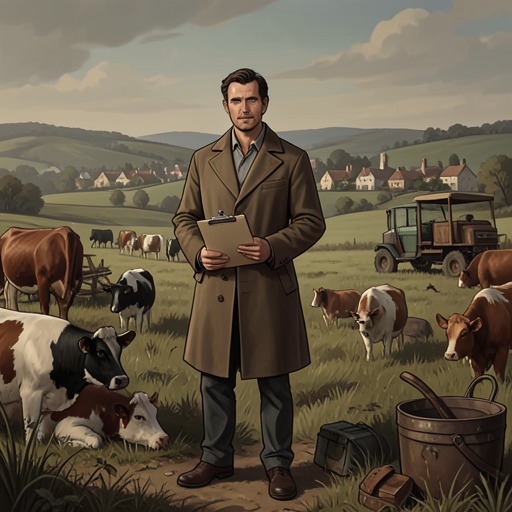
All Creatures Great and SmallHelen Alderson enters James Herriot’s life not through a social introduction but through a farm call: while her father and the farm workers are in the fields, she is kneading bread and then takes James up the fell to a lame calf. She is at once part of the working household and an informed guide to its landscape. Her developing relationship with James grows through repeated, sometimes awkward attempts at contact, but it culminates in marriage and a shared working life. The account presents her as a person whose attachment to the Yorkshire Dales and responsibilities at home are integral to that partnership, not as a figure detached from the practical world around her.
Identity and First Meeting
James first encounters Helen at her family’s farm, where she is making bread in the kitchen. She explains that the calf may have broken its leg, probably after getting its foot into a hole while running, and offers to accompany him because her father and the men are away in the fields. After washing her flour-covered arms, she puts on short Wellingtons and arranges for someone else to take over the bread. Her introduction is therefore also an action: she makes it possible for the veterinary visit to proceed and takes responsibility for showing James where the animal is.
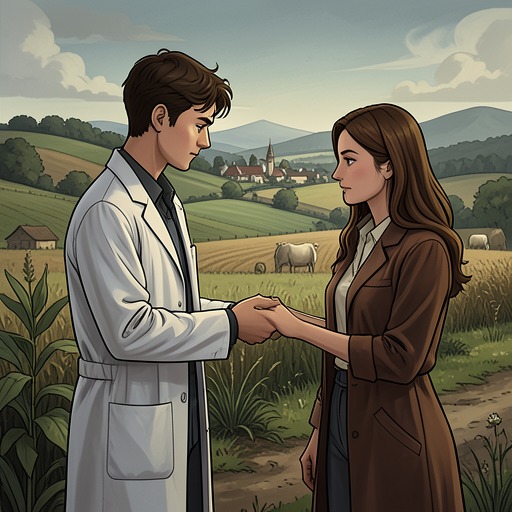
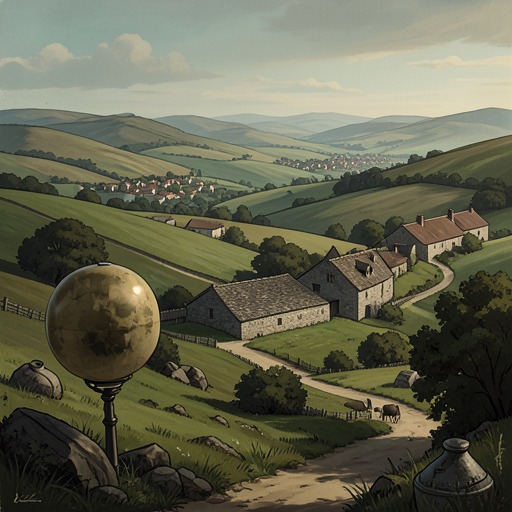
The calf is in a building high on the fell-side, reached by a walk across the farm. That journey brings Helen and James beyond the immediate routine of the house and veterinary practice. After James treats the calf’s leg, they sit outside in the warm weather and look across the valley. Helen names the surrounding heights, including Heskit Fell, Eddleton, and Wedder Fell, with an ease that suggests familiarity rather than performance. She says that she loves the country and recognizes that its bare, wild character can unsettle visitors. James responds that he feels sorry for veterinarians who do not work in the Yorkshire Dales. The exchange makes their shared appreciation of the place an early point of connection.
Family and Farm Responsibilities
Helen’s work at home extends well beyond this first visit. After her mother’s death, she has taken charge of the household and the care of her father and younger brother and sister. Siegfried Farnon later describes her as running the whole place, cooking and looking after the family. That account gives the farm visit additional context: bread-making is not a decorative detail but one visible part of the domestic work she carries alongside the demands of a farm household.
The family’s circumstances also shape the pressures surrounding Helen’s future. Her father is an expert stockman whose farm is among the best, but after his wife’s death he has become withdrawn and sometimes seems mentally elsewhere. As James begins visiting more often, Mr. Alderson grows alarmed. He has imagined Helen marrying Richard Edmundson, the son of a wealthy family and an old friend, and sees the unknown, financially insecure young veterinarian as a poor alternative. Helen’s own view of that comparison is not spelled out, but the expectation places her relationship with James within a conflict over security, status, and the established plans of the older generation.
By the time James’s visits become more frequent, the household arrangements have also changed: Mr. Alderson’s widowed sister has come to live with the family and can manage the house and younger children. This does not erase Helen’s earlier responsibilities, but it helps explain why James can begin to visit her in the evenings. He describes developing a habit of going to Heston Grange around eight o’clock, even while trying to restrain himself because of his work, propriety, and the presence of Helen’s father.
Courtship and Marriage
The first calf’s recovery does not immediately provide James with another reason to visit. He hopes to return at the end of the month to remove its plaster, but Helen’s father takes it off himself when the calf is sound and reports that the fracture has healed. James admires the self-reliance of the Dalesmen in general, yet in this instance he regrets it: the planned return had offered him a reason to see Helen again. He responds by joining the Darrowby Music Society, where he can attend the same Tuesday evening meetings as she does, though at first he spends them looking at the back of her head rather than speaking to her.
His eventual invitation comes during the clearing away after a meeting. While he and Helen wash dishes, James struggles to turn their conversation from music to the question he wants to ask. Holding on to a cup as she tries to take it, he manages to ask if he can see her sometime and proposes Saturday evening. Helen flushes, agrees, and leaves with the cup. Her reply is brief, but it changes the relationship from James’s solitary pursuit into an appointment they have both accepted.
The relationship moves quickly after Siegfried urges James to stop hesitating and ask Helen to marry him. James later credits that outburst with prompting him to speak to her. Helen says that she would like to marry him, and they settle on an early date. Their engagement brings happiness, but Helen insists that James must speak to her father and tell him what is happening. That request registers both her attention to family bonds and her refusal to let the future remain an unspoken arrangement. The wedding itself is remembered by James as a quiet ceremony; as they leave, Helen notices a new veterinary surgeon’s plaque for James beneath Siegfried’s at Skeldale House. Its placement marks his professional standing and the household they are beginning together.
A Working Partnership
Helen’s role in the marriage quickly becomes visible in work as well as companionship. On the first morning described after the wedding, she accompanies James to Allen’s farm for a tuberculosis test. Wearing bright purple slacks, she attracts the farmer’s wife’s attention; the two women soon fall into conversation, which takes long enough that Mr. Allen has to remind them it is time to leave for the next part of the test. The scene presents Helen as able to enter the social world of the farms on her own terms, while also showing how easily she establishes rapport with another farmer’s wife.
At the hillside testing site, James calls out an animal’s number and measurement, and Helen repeats the information as she writes it into her book. She is not merely accompanying him: accurate recording is part of the procedure, and she takes an active place in it. Their exchange gives practical form to their new partnership. James performs the examination; Helen records its result, and they continue together to the next animal.
The honeymoon setting at the Wheat Sheaf is remembered for its unpretentious comfort and the quiet of the old inn, but the account also places the couple’s first morning of married life within the veterinary round. The sequence resists a separation between romance and work. Helen joins James in the countryside he loves, and their shared life begins not by leaving its demands behind but by taking part in them together.
Character and Narrative Significance
Helen is drawn through a small number of decisive actions rather than an extended account of her private thoughts. She helps with a calf, leads James across the farm, speaks affectionately about the Dales, accepts his invitation, says yes to marriage, asks him to tell her father, and joins him in recording a tuberculosis test. These moments establish a character who is capable and attentive, with ties to family, landscape, and work. The narrative supplies no detailed account of her reaction to every pressure around the courtship; in particular, the contrast between James and the wealthier Richard Edmundson is presented through Mr. Alderson’s apprehensions, not through an expressed judgment from Helen.
Her scenes also connect the book’s idealized views of rural life to the labor that sustains it. The high valley where she and James sit offers a moment of ease, but she has left bread-making to walk to the calf, and her family’s farm and household continue to require work. Later, she enters the practical routine of the veterinary test, writing down measurements in her book. Helen’s significance lies partly in that continuity: the landscape that first draws James toward her is also a place of responsibilities, and their marriage brings affection into the same everyday world of family and professional labor.