Heston Grange
All Creatures Great and SmallHeston Grange is the Alderson family’s home and working farm, but its importance extends beyond its agricultural role: it is where James Herriot’s visits to Helen become a courtship, where Mr. Alderson’s resistance takes shape, and where a night of calving ends with Herriot asking to marry his daughter. The place brings the domestic and professional strands of their relationship together, with the farm’s ordinary work creating the occasion for a personal turning point.
Setting and Rural Context
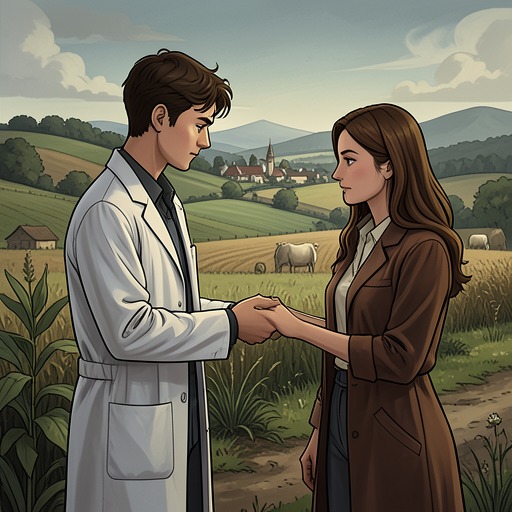
Heston Grange belongs to the rural world around Darrowby, where steep roads, fields, stone walls and farms are part of the veterinarian’s daily round. The wider landscape is introduced through James Herriot’s journey into Yorkshire: the hills resolve into broad valleys, with farmhouses among cultivated land and walls running across the uplands. The setting is not simply a pastoral backdrop. Veterinary work follows the seasons and the conditions of farm life: spring brings an intense rush of lambing and illness among livestock, while winter snow can obstruct roads and force the veterinarians to continue on foot. Heston Grange is one of the farm destinations within this working countryside, where visits may be shaped as much by urgent animal care as by the people who live there.
The farm is also connected to the recurring rhythm of Herriot’s professional life. His evenings do not belong wholly to courtship: work can occupy him around the clock, and a late-night call may send him back onto the road. This matters to the meaning of Heston Grange in the narrative. It is a place he seeks out to see Helen, but it is also a farm where animals require skilled attention and where family feeling is expressed through the care of livestock.
The Alderson Household
Helen’s father, Mr. Alderson, is an expert stockman and an efficient farmer; his farm is described as being among the best. Since his wife’s death, however, he has withdrawn into himself. His habits make his mood legible around the farm: when things go badly he mutters to himself, while pleasure can bring on a loud, tuneless hum that carries among the buildings. Herriot can sometimes locate him by following that sound. At Heston Grange, the father’s character is therefore conveyed not through formal declarations but through familiar gestures and sounds woven into farm work.
The household includes Helen’s two younger siblings and her widowed aunt, Lucy, who has recently come to live with the family. Aunt Lucy is a capable housekeeper and looks after the children. Her presence makes clear that Mr. Alderson’s unease about Herriot is not simply a fear of losing help at home, or a wish to keep Helen under his own roof. Rather, his resistance is bound up with a settled expectation about her future: he has imagined her marrying Richard Edmundson, the son of an old family friend who farms nearly a thousand acres. The Edmundsons are wealthy and influential; by comparison, Herriot is an unknown young veterinarian with little money.
Visits, Courtship and Resistance
After a night at the cinema with Helen, Herriot begins dropping in at Heston Grange on occasional evenings. The visits gradually become a pattern: around eight o’clock, he finds himself setting out for the farm, although his work, a sense of propriety and Mr. Alderson all give him reasons to hesitate. The repeated journey marks a change in the place’s significance. Heston Grange is no longer only a professional destination or the home of a farmer’s daughter; it has become the focus of Herriot’s developing attachment to Helen.
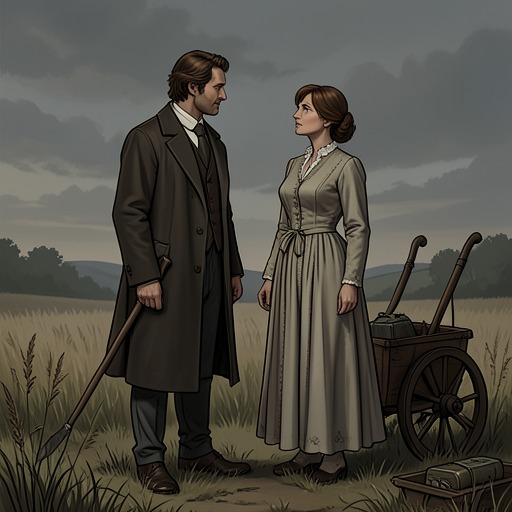
At first, Mr. Alderson seems barely to register Herriot among the young men who visit his daughter. As the calls become more frequent, he begins to watch him with increasing alarm. Their discomfort remains largely unspoken. They catch one another looking and then avert their eyes, making the farm visits tense without turning them into open confrontations. Herriot nevertheless likes Helen’s father and believes they might have got along in different circumstances. The conflict arises from Mr. Alderson’s assumption that Helen’s marriage to Richard would secure a life of comfortable affluence, and from his stubborn resistance to the prospect that this expected future might change.
Candy’s Calving and Herriot’s Request
The farm’s work brings the relationship to a decisive moment when Candy, the Aldersons’ house cow, begins calving in the middle of the night. Candy is a member of the Jersey cattle breed and the only one of her breed in the herd. While the Shorthorns’ milk is sent to the dairy, Candy’s rich milk is kept for the family’s food and butter. More important still, Mr. Alderson has a particular affection for her: he pauses by her in the byre, scratches her head and hums as he passes. Herriot knows that a poor performance during the calving could further damage his standing with Helen’s father.
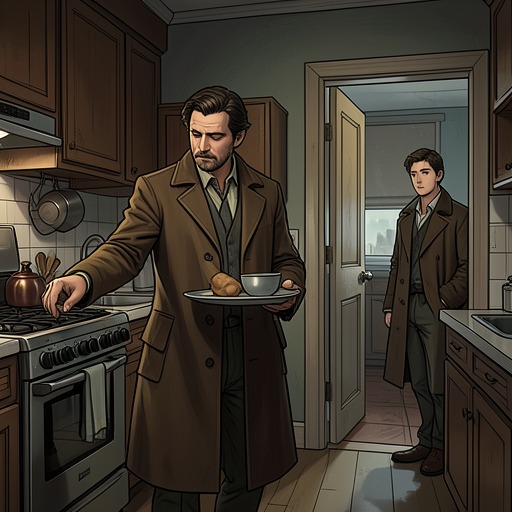
When Herriot reaches the farm, the practical arrangements are ready. Two buckets of water steam in the lighted loose box; a towel hangs over the half-door, and the two long-serving cowmen, Stan and Bert, stand with Mr. Alderson. Candy lies in deep straw, apparently comfortable but giving an inward sign that something is wrong. The veterinary visit thus begins as a professional test in a setting charged with family feeling: the animal matters both as a patient and as her owner’s favourite. After the calf is born, Candy noses it and begins to lick it. Mr. Alderson watches, rocking on his heels, and his characteristic humming returns, louder with delight.
Herriot chooses that moment to speak plainly. He tells Mr. Alderson that he would like to marry Helen. The humming stops; Mr. Alderson searches his face, empties the buckets and heads for the door. His response is not an immediate answer to the request, but an invitation for Herriot to come into the house. The movement from the loose box to the house makes Heston Grange the setting for both the practical resolution of Candy’s calving and the next, more personal conversation between the two men.
Narrative Significance
Heston Grange concentrates several parts of the story without separating them into different worlds. The farm is a workplace, a family home and the destination of Herriot’s evening visits. Its daily signs—the cowmen ready with water, Candy’s place in the household, and Mr. Alderson’s humming—make the family’s attachments visible through action rather than explanation. The same setting also gives Herriot’s courtship a concrete obstacle: he must face a father who values his daughter and has planned for her future, while recognizing that Herriot offers no comparable wealth or standing.
Candy’s calving provides the structural hinge. Herriot arrives because something is wrong with an animal Mr. Alderson loves; after the calf is safely with its mother, Herriot risks changing the terms of their relationship by stating his intention to marry Helen. Heston Grange therefore gives professional competence and personal courage a shared setting. The declaration does not erase the father’s hesitation, but his invitation into the house moves the encounter beyond wary glances and makes the farm the threshold of a more direct reckoning.