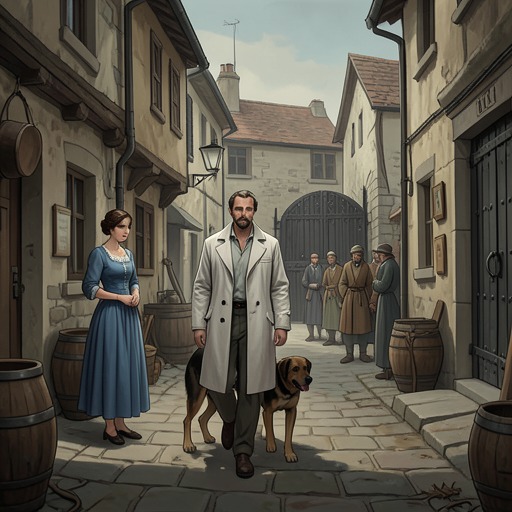
Ministry LVI inspection instructions
All Creatures Great and SmallThe Ministry LVI inspection instructions governed the practical conditions of James Herriot’s routine work as a Local Veterinary Inspector: inspections were scheduled in advance, cattle were expected to be assembled indoors, and the inspector was expected to be properly dressed. In the field, those requirements met the Dales farmers’ different sense of time, the unpredictable movement of animals, and terrain that could turn a routine test into repeated, exhausting work.
Scope and Purpose
As a Local Veterinary Inspector for the Ministry of Agriculture and Fisheries, Herriot carried out routine clinical examinations and tuberculin tests. The appointment brought an official certificate and a schedule of work distinct from emergency visits for sick animals. For those routine calls, a card informed the farmer that Herriot was coming and stated a specific time; the instructions also made clear that the animals were to be assembled indoors before his arrival.
The planned duration varied with the task. A clinical examination might take about fifteen minutes, whereas testing a herd could take several hours, depending on its size. The timetable therefore relied on farmers having the animals ready: the visit could not proceed as planned if the cattle were still scattered across fields.
Scheduling and Farm Practice
The instructions exposed a gap between the inspector’s timetable and the farmers’ habits. When Herriot came to treat a sick animal, the farmer was usually waiting and the beast was confined in a building. Routine inspections were different. Farmers might receive a card specifying the time and indoor assembly requirement but still be occupied gathering cattle when he arrived. A ten-minute delay at each clinical examination accumulated: after six calls, Herriot could be an hour behind.
At Mr. Kay’s farm, the first cattle were tied up in their stalls and the work went quickly. Then Herriot learned that another half-dozen young heifers remained to be tested. They were grazing at the far end of a large field rather than assembled indoors. On a hot day, Mr. Kay proposed driving them up to a small barn at the top of a long, steep pasture. The animals repeatedly turned away from the doorway and charged back down the hill, turning the expected procedure into a series of failed attempts to gather them.
Dress and the Realities of Inspection
The Ministry’s instructions also addressed the inspector’s appearance: new Local Veterinary Inspectors were expected to be properly attired. Herriot had taken that requirement seriously, wearing the prescribed uniform of a long oilskin coat and Wellington boots. Those clothes made an awkward match for chasing heifers repeatedly up a steep field in the blazing sun; by the third climb, sweat was running into his eyes and his shirt was clinging to him.
The episode reveals the practical tension within the instructions. They supplied a clear administrative framework—an appointed time, animals ready indoors, and appropriate dress—but could not make a farmer’s chosen arrangements or the animals’ behavior conform to it. The rules shaped the work without controlling its conditions: an inspection that looked orderly on a card could become physically demanding as soon as it reached the farm.