The Lost Receipt Book and Duplicate Billing
All Creatures Great and SmallThe lost receipt book transforms a routine day collecting veterinary fees into an escalating test of memory, trust, and professional accountability. Tristan Farnon handles the market-day payments with unexpected skill, but loses the book before recording the customers in the ledger. When the practice sends the bills again, farmers who have already paid must defend their word, while Siegfried Farnon’s own failure to remember an earlier settlement turns one mistake into a repeated affront.
A Routine Task and an Unlikely Success
The crisis begins with an ordinary piece of practice administration. On the evening before market day, Siegfried Farnon tells Tristan that he and James Herriot will be occupied, leaving Tristan solely responsible for taking customers’ cheques, issuing receipts, and entering their names in the receipt book. His instruction carries an unmistakable warning against making a mess of the task, and James hears it as a discordant interruption to the comfortable evening at home.
The next day, however, Tristan proves well suited to the public-facing work. Seated behind the desk, he takes payments steadily and adjusts his conversation to each visitor. He talks weather, cattle prices, and village affairs with one farmer; shares market stories with another; and uses his charm to put the women at ease. Laughter comes from the office, and James is relieved to see that nothing appears to be going wrong. At lunch and again at tea, Tristan is pleased with himself, while Siegfried approves the day’s takings: the figures are neat and accurately totalled. For a moment the assignment seems to have demonstrated that Tristan can be reliable in a role that calls for tact as well as arithmetic.
The Missing Record
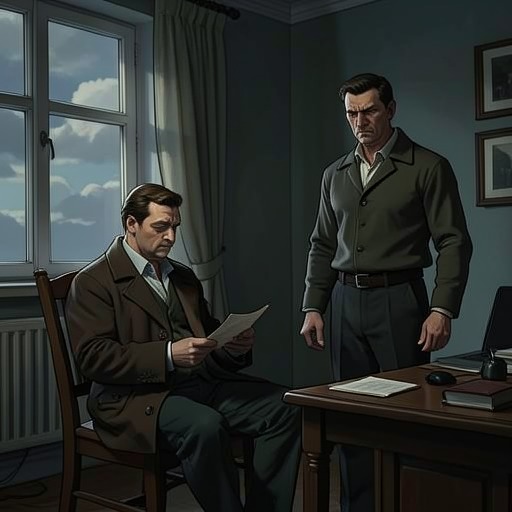
The apparent success collapses at the end of the day. James is in the yard disposing of the used bottles from his car when Tristan comes in from the garden, breathless, and tells him that the receipt book is missing. James initially assumes this is one of Tristan’s jokes. Tristan’s pale face and wide eyes make clear that he is serious: he has already spent about two hours searching and has ransacked the house, but the book has not turned up.
James first supposes the loss can be repaired because Tristan should have transferred the customers’ names to the ledger. Tristan then reveals the crucial omission: he had planned to make those entries that evening and has not yet done so. The book is therefore not merely a missing office object. It is the only record of the market-day payments and of the people who made them. Tristan can remember only two or three names, leaving the practice unable to identify most of the customers who have already paid.
The consequence is immediate and concrete. Unless the missing information can be recovered, the farmers will receive another bill the following month. James recognizes how damaging that will be: the customers have parted with their money once already, and a second demand risks making an administrative failure look like disbelief or dishonesty. He asks whether Tristan has told Siegfried. Tristan has not; Siegfried has only just come in. After his first panic, Tristan squares his shoulders and goes to report the loss himself.
Duplicate Bills and Damaged Trust
The receipt book is never found. A month later, the practice sends the bills again, timed to arrive on market-day morning. The timing brings the mistake directly into the customers’ ordinary routines and gives James a clear view of the aftermath: the waiting room is filled with farmers, all wearing an offended, self-righteous expression. Rather than enter the house, he slips away to the market square, where he hopes to avoid the complaints gathering at the practice.
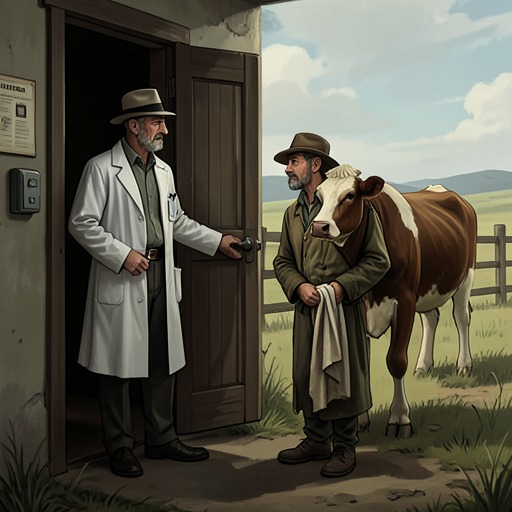
The problem follows him into the local community. A man who manages the Drovers' Arms challenges James in his office, explaining that he had already paid an account for his dog and now has another bill, with the original receipt to prove payment. James does not dispute the evidence. He apologizes, accepts that there has been a mistake, and promises to put it right. Over the next few days, he repeats the same apology to other customers. The scene shows how a lost record transfers the burden of proof: people who have paid must produce their receipts to establish that the practice has billed them twice.
Siegfried experiences the same problem at the Black Swan. Billy Breckenridge, a friendly local figure, tells him that he has received another bill for the three shillings and sixpence already paid at the surgery. Siegfried apologizes and buys Billy a drink; they part on good terms. But the reconciliation depends on a detail Siegfried fails to retain. A month later, he encounters Billy in the same pub and has sent him another bill for the settled amount. Billy is no longer jocular. He explains that he has lost the receipt Tristan gave him and insists that the two of them settle the disputed payment by tossing a coin.
Recurrence and Consequence
Siegfried reluctantly calls heads. The coin lands heads, and Billy hands him the three shillings and sixpence with formal dignity, treating the matter as closed. The outcome is an awkward reversal: although Billy has already paid, he gives the money over again because he can no longer produce the receipt and Siegfried cannot establish the earlier settlement from memory. The coin toss supplies a practical end to the immediate dispute, but it does not restore the missing record or guarantee that the practice will remember what has happened.
Siegfried forgets to note this second transaction as well. At the end of the month, Billy receives a fourth request for the sum he has already paid twice. This recurrence makes the original loss more than a one-time clerical mishap: a missing book leads to duplicated demands, and Siegfried’s absent-mindedness repeats the mistake even after he has dealt with the customer face to face. The consequence reaches beyond the account itself. Siegfried changes his habits and starts going to the Cross Keys instead of his favourite pub.
The Episode’s Wider Contrast
The billing episode sits against the practice’s everyday dependence on relationships with farmers. James has learned that customers may initially be disappointed when Siegfried is absent and may greet his opinions skeptically, but that they often soften when he works at the case; they also invite him into their homes and offer food. Their hospitality does not erase the commercial obligation to pay for treatment, but it makes clear that professional dealings take place within an enduring local community, where mistakes are encountered again in the waiting room, the market, and the pub.
The lost book briefly exposes how much that community depends on small acts of record-keeping. Tristan’s skill at conversation and collection cannot substitute for the names he failed to enter; a receipt, which would ordinarily support a straightforward exchange, becomes the customer’s only protection when the practice’s own records fail. James responds by apologizing, while Siegfried’s repeated forgetfulness carries the error forward. The comic sequence of repeated bills and the coin toss is therefore also a practical portrait of trust under strain: accurate totals are not enough when the people and payments behind them have been forgotten.