The gap between book learning and practical experience
All Creatures Great and SmallThe gap between book learning and practical experience is a central feature of James Herriot’s early work as a rural veterinarian: formal instruction offers models and methods, but only encounters with sick animals show how difficult it can be to apply them. The contrast is not simply between useless theory and valuable experience. Rather, the cases show book knowledge becoming meaningful through practice, while also exposing the limits of any expectation that real veterinary work will resemble its orderly illustrations.
The textbook ideal and the work itself
An obstetrics textbook supplies Herriot with an image of a cow attended by a calm, immaculate veterinary surgeon on a gleaming floor, surrounded by smiling helpers. In practice, the conditions of a difficult calving are far less controlled. Snow blows through an open doorway, and Herriot must work in uncomfortable farm surroundings rather than the clean, composed setting of the illustration. The discrepancy makes visible what the book leaves out: the weather, the labor, and the unpredictability that accompany the procedure.
The contrast becomes especially sharp as the work continues. Herriot washes his arms in a bucket and returns to the task, making repeated attempts to reach the calf’s head and guide the difficult delivery. His effort is tiring, and the hard floor and the cow’s condition are part of the problem rather than incidental background. The textbook has represented the procedure as a neat sequence performed by a relaxed professional; the actual case makes it a prolonged test of persistence and practical judgment. The imagined picture remains useful as an account of the task’s ideal form, but it cannot prepare him for every circumstance of carrying it out.
Experience as a competing authority
The value of practical knowledge is stated directly by a farmer known as Uncle, who dismisses book learning in favor of the experience of Mr. Broomfield, a practitioner who has done his work for more than ten years. His confidence reflects a familiar tension in rural practice: formal study gives the young veterinarian credentials and technical knowledge, while years spent treating animals give an older practitioner a reputation built on repeated encounters.
Herriot has also observed that farmers often offer confident advice about other people’s livestock, even though they call a veterinarian when their own animals are in trouble. In the calving case, the Dinsdales listen deferentially to Uncle, whose standing as a local authority gives his opinions weight. This does not establish that experience always produces better advice. It shows instead that veterinary knowledge operates alongside a community’s existing judgments, and that the practitioner must work in a setting where professional expertise may not automatically command the greatest trust.
From supervision to independent judgment
The professional challenge is also personal. After five years of preparation, Herriot has been in Darrowby for only a day and has not yet attended a case alone. He has met clients in Lidderdale, where farmers receive him politely and wish him success, but working under Siegfried Farnon’s supervision still feels like being watched by a professor. Herriot regards an unaided visit as the point at which his professional life will truly begin. The episode distinguishes possessing a qualification from being able to act independently in the field.
Practical examination turns general knowledge into decisions. In one case, Herriot finds a bay horse severely distressed and recognizes that an ordinary remedy for colic will not be enough. His examination identifies displacement of the small intestine and an abnormal, tense mass. The diagnosis does not come from the appearance of the animal alone, nor from applying a remedy by rote; it depends on interpreting what he can establish through direct examination. The case demonstrates the practical value of anatomical knowledge while showing that it becomes useful only when joined to observation and judgment.
Learning through uncertainty
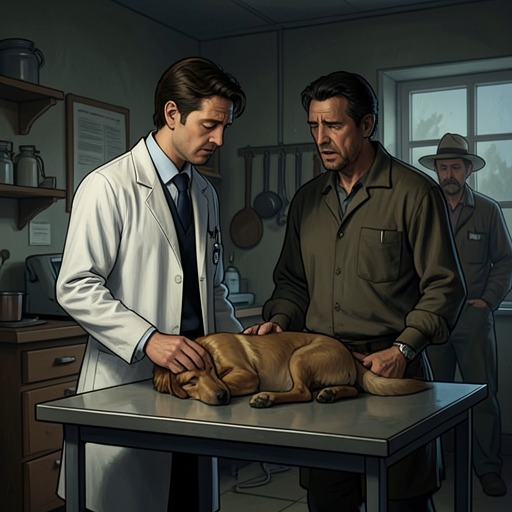
Other cases make clear that experience does not remove uncertainty. Examining a dog with a greatly distended abdomen, Herriot notices signs associated with pain, including altered breathing and an anxious expression. These observations give him grounds for concern, but the evidence presented does not make every aspect of the case certain. Clinical practice requires attention to signs whose meaning must be assessed rather than assumed.
A possible abscess behind a dog’s throat presents a different problem. Herriot considers inflammation as one possibility and an early abscess as another. His concern arises partly from the condition’s location, which makes it difficult to reach and potentially dangerous if it grows large enough to affect breathing. Yet his experience is limited: the cases he has encountered have either remained small and subsided or ruptured without intervention. He must therefore combine what he knows about the risk with an awareness of how little precedent he has.
The discovery of uterine torsion in a cow offers no simple victory, either. Once Herriot examines the cow, he recognizes the condition and understands that the delivery will not be easy. The important change is from expectation to recognition: practical examination reveals a complication that defeats any assumption of a routine case. Across these episodes, experience is not a guarantee of control. It is the developing capacity to notice what the case is showing, revise an initial expectation, and work within the limits of what can be known.
The meaning of the gap
Together, the cases present professional competence as a continual exchange between study and practice. Books offer descriptions, anatomical understanding, and procedures; farm visits test whether the veterinarian can interpret a particular animal under imperfect conditions. Farmers’ experience and local authority form another part of that environment, sometimes supporting and sometimes competing with formal expertise. Neither theory nor experience appears sufficient on its own.
The gap also gives the early practice its narrative shape. Herriot’s movement toward independent work is measured not simply by time since training, but by the moment when he must examine an animal, make a judgment, and accept the uncertainty of acting without a professor beside him. The clean textbook illustration and the difficult realities of the farm remain in view together. Their distance is not a reason to abandon learning; it is the measure of how much learning has to change when it becomes work.