The unpredictability and humiliations of veterinary work
All Creatures Great and SmallThe unpredictability and humiliations of veterinary work are inseparable from its practical demands: James Herriot must make consequential decisions from incomplete evidence while handling animals whose pain, strength, and behavior can overturn any orderly plan. Cases range from delicate diagnosis to blows, public embarrassment, and arguments over who deserves credit. Siegfried Farnon’s lesson that veterinary life offers “a long tale of little triumphs and disasters” gives these episodes a governing rhythm: uncertainty is not a temporary obstacle to the work, but one of its conditions.
Clinical Judgment Under Uncertainty
An early examination makes the uncertainty tangible. After carefully lathering his arms, Herriot kneels behind a cow and begins his first internal exploration. Within seconds, he expects to learn whether he can be finished in fifteen minutes or faces hours of hard labor. This cow has started calving a week early, her waters have been gone for hours, and the calf’s head is turned back in a cramped, dry passage. The examination does not simply reveal a diagnosis; it reveals how much work and risk remain.
The farmer’s uncle confidently recommends turning the calf completely around and delivering it hind legs first, or pulling it out with ropes. Herriot recognizes that there is not room to turn it and that pulling without bringing the head around could break the cow’s pelvis. The scene sets professional knowledge against the local confidence of an experienced observer. Herriot has to explain why advice that sounds decisive may be dangerous, even as the Dinsdales listen deferentially to the uncle. His authority rests not on certainty about an easy outcome, but on assessing what the cramped examination allows and refusing a harmful shortcut.
The first independent horse case sharpens the same problem. A bay hunter at Lord Hulton’s estate staggers around a peat-bedded box, drenched in sweat, with dilated nostrils, rolling head, and foam falling through clenched teeth. The horse has been treated all day with black draughts, but the severe, continuous pain suggests something more serious than ordinary colic. Rectal examination confirms displacement of the small intestine and a tense, abnormal mass. The signs give Herriot a basis for judgment, but not an easy remedy; as he washes his arms, his heart pounds and he is unsure what he can say. The case makes clinical reasoning visible as a sequence of observation, inference, and action under pressure, with no guarantee that the right inference will produce a rescue.
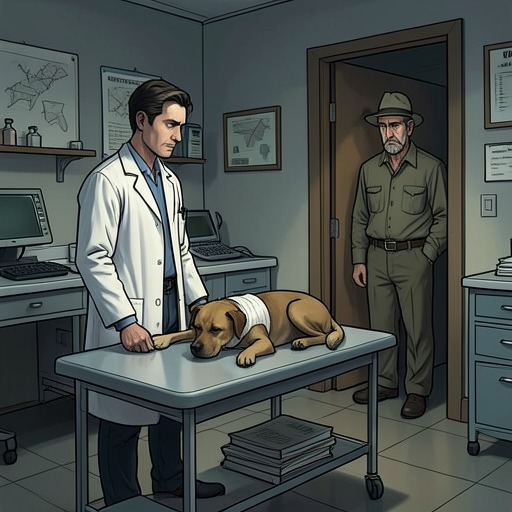
Other examinations expose the limits of what can be known from a first look. Strawberry is still eating when Herriot notices a slight gulp on swallowing and hears a faint snoring sound. He suspects a throat abscess, but the condition is hidden behind the throat and may threaten breathing if it grows. Over the next ten days the cow eats less, loses weight, and gives less milk while the abscess develops slowly; the injections offer little relief, and Herriot knows that rupture is what is needed. In a different case, a dog’s distended abdomen, painful breathing, and inward-looking expression point to severe fluid accumulation. Across these cases, the practitioner must interpret small signs while deciding how much confidence to place in them and what can realistically be done.
The Body as an Unreliable Workplace
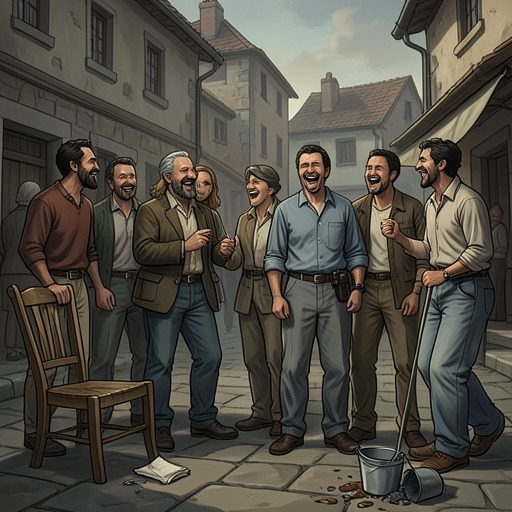
Veterinary work also makes the practitioner physically vulnerable in ways no diagnosis can control. At Mr. Sharpe’s byre, Herriot is treating a blocked teat with a thin metal instrument when the cow’s hoof catches him in the chest. He lands in the dung channel with a clear hoof imprint over his solar plexus, gasping and opening and closing his mouth like a stranded fish. Mr. Sharpe’s politeness battles his amusement; he explains that the cow likes to shake hands, then bends over her back in silent laughter. Herriot has to recover his breath and dignity before returning to the procedure.
The interruption does not end the work. With Mr. Sharpe holding the cow’s nose and Siegfried Farnon lifting her tail, Herriot gets the instrument past the thickened tissue and clears the obstruction with several downward pulls. Even with those precautions, the cow lands further blows on his arms and legs. The episode makes the comic reversal inseparable from the veterinary task: the person who arrives to treat the animal is abruptly reduced to a patient himself, yet still has to complete the treatment. The indignity is not a detachable joke; it is part of the conditions under which the work succeeds.
Even transport can become an ordeal before a visit begins. When Siegfried Farnon offers to show Herriot the district, the car has treadless tyres, a rusty body, and a windscreen webbed with cracks. Its passenger seat is not fixed to the floor. Herriot drops into it and tips backward, ending with his head on the rear seat and his feet against the roof. Farnon helps him up, apologizes charmingly, and drives on. The loose seat turns an ordinary introduction to the district into a small physical mishap, anticipating a working life in which equipment, animals, and circumstances rarely conform to a professional’s plans.
Humiliation and the Practice of Recovery
Siegfried Farnon treats humiliation as a predictable feature of the profession rather than proof that a practitioner is unfit. He recalls an eminent horse specialist performing a rig operation when the horse stopped breathing; the specialist danced frantically on the patient’s ribs. Watching him taught Siegfried that he too would look like a fool at intervals throughout his career. Even a highly skilled expert, the story insists, can be made ridiculous by an animal’s sudden turn. The lesson does not promise immunity from failure. It asks the practitioner to accept exposure as part of remaining at work.
The episodes repeatedly distinguish a mistake or humiliation from the whole value of a case. Herriot’s severe colic examination leaves him anxious and uncertain, while Siegfried’s account of the specialist turns a crisis into professional instruction. Siegfried’s broader counsel is that animals are unpredictable and that practice brings both triumphs and disasters; its variety, rather than a steady sequence of mastery, is what keeps the work from becoming dull. Humility is therefore practical. It allows a veterinarian to continue after an embarrassing setback without pretending that the setback could not recur.
That composure is tested by an even less controllable kind of embarrassment. Before examining a cow at Mr. Alderson’s farm, Herriot notices the scent of Mrs. Hall’s bath salts, which has burst from beneath his clothing. The farm men sniff and exchange looks, while Mr. Alderson fixes his gaze on the far wall. Herriot tries to wash his arms, but the smell seems to intensify. Once he kneels behind the cow, however, embarrassment gives way to the examination: the passage is narrowed almost shut, with the calf’s feet and head beyond it. He diagnoses uterine torsion and realizes that there will be no easy victory. The shift from social discomfort to urgent clinical attention does not erase the indignity; it shows how quickly the work requires the veterinarian to set it aside.
Expertise, Credit, and Local Authority
Uncertainty concerns not only diagnosis but also who gets to define what has happened. Siegfried Farnon has treated Muriel for recurrent bloating and, after considering the case, suspects actinobacillosis of the reticulum. He injects sodium iodine into a vein; when he returns, the cow is standing and chewing her cud. But the owner, Ned Holt, says that he expected her to recover because he had given her half a pound of Epsom salts in bran mash the previous night. Siegfried has spent a fortnight worrying over the case and believes he has identified the cause and applied the effective treatment. The owner’s explanation takes the credit. Siegfried throws empty cartons and bottles into the wastepaper basket and protests that his work has counted for nothing.
The dispute is more than bruised professional pride. The animal’s recovery is visible, but its cause is contested, and the owner’s account competes with the veterinarian’s diagnosis. Elsewhere, farmers confidently offer advice about their neighbors’ animals, though they tend to call the vet when their own livestock are in trouble; their counsel may be treated as more valuable than the veterinarian’s. Clinical work therefore carries a social burden: the practitioner must not only reason from evidence, but also work within a community that has its own explanations and ranks its own authorities.
Jeff Mallock, the knacker who opens diseased animals for post-mortem examination, makes that struggle especially sharp. Farmers sometimes take animals Herriot has treated to Mallock and ask him what was wrong. Though unable to read or write, Mallock has considerable pride in his experience after more than twenty years cutting up diseased animals, and the farming community readily accepts his judgments. He promotes explanations such as “worm in the tail” and a private catalogue of diseases, including Stagnation of t’lungs, Black Rot, Gastric Ulsters, and Golf Stones. Herriot finds it dispiriting when a farmer reports that Mallock has overturned his diagnosis. The contrast is not simply between book learning and ignorance: Mallock has practical access to the dead animal, but his confidence and reputation can give unsupported explanations the force of professional verdicts.
A Rule for Unpredictable Work
Against incomplete reports, variable animal behavior, and contested expertise, Siegfried Farnon insists on a basic professional obligation: “YOU MUST ATTEND.” A farmer’s description cannot reliably determine urgency, he argues, because the owner lacks the knowledge to judge the case and the animal may have worsened. The visit must be made whatever the weather or hour, and even when the complaint initially sounds minor. Siegfried’s instruction does not eliminate uncertainty; it sets a standard for acting responsibly within it.
The principle carries a cost. Attendance means accepting the possibility of a long night, an embarrassing failure, a dangerous examination, or a diagnosis that others dispute. Yet refusing to go would leave the animal’s condition to an incomplete account and could allow it to die. In this tension, the book locates the seriousness of rural veterinary practice: expertise is necessary, but cannot guarantee control; humiliation is recurring, but cannot excuse withdrawal. The work’s small successes matter precisely because they emerge from conditions that keep resisting mastery.