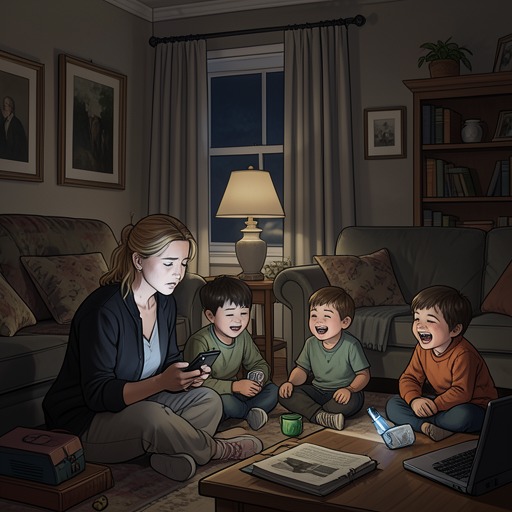
Christmas Day
All My Puny SorrowsChristmas Day marks a rare pause in the family’s scattered and difficult circumstances: Yolandi and Julie discover that it is the first Christmas either has spent alone, and turn a phone call into a long, shared evening. The holiday’s significance lies less in celebration than in the companionship they make across distance, while Lottie is hospitalized and their children are elsewhere.
A Holiday Spent Apart
Yolandi phones Julie to wish her a merry Christmas. As they compare their circumstances, they realize that this is the first time in both their lives that they have been alone on Christmas Day. The separation is specific rather than absolute: Julie’s children are with their father, Will is with his girlfriend’s family in Mexico, Nora is at Dan’s, and Lottie is in hospital. Dan has returned from Borneo, but the account does not suggest that the family has gathered around him; instead, the details establish how widely dispersed everyone is.
The day therefore brings together two kinds of absence. Yolandi and Julie are physically alone in their respective homes, while the family’s usual holiday arrangements have placed their children elsewhere and illness has removed Lottie from home. Their recognition that this is unprecedented gives the call its own quiet occasion: they are not simply exchanging seasonal greetings but noticing a change in the shape of their lives.
Companionship by Phone
Julie suggests that they drink together over the phone. They settle in their separate living rooms with Scotch, talking and listening, and tap their glasses against their phones. The improvised toast turns the telephone from a channel for conversation into the means of a small shared ritual: distance remains, but the gesture gives their separate rooms a point of contact.
Their exchange holds humor alongside affection. Yolandi praises Julie’s strength, while privately recognizing that she is trying to change how she thinks about strength and success. When Julie asks whether everything is unbearable, Yolandi answers by drawing attention to what they are doing at that moment. The conversation does not resolve the wider distress surrounding them; it makes room, briefly, for an experience that is not wholly defined by it.
Through Christmas and Into Boxing Day
The call lasts for hours, continuing through the night until Boxing Day. Both are glad when Christmas is over, and the end of the holiday itself becomes something they can toast. That response complicates any expectation that Christmas must offer uncomplicated warmth or reunion: for these two, the day is lonely, but its duration is made bearable by sustained contact, and its passing brings relief.
The episode gives the calendar a narrative function beyond marking a date. Christmas Day gathers separation, family illness, friendship, and an effort to revise the meaning of endurance into one conversation. Its modest conclusion is not a repaired family gathering but two friends remaining on the line long enough to reach the next day together.