East Village
All My Puny SorrowsEast Village is the Mennonite town that shapes the Von Riesen family’s early life and the conflicts that eventually carry its members elsewhere. It is at once a refuge with a strong religious identity and a place where church authority, gender expectations, business interests, and communal judgment narrow individual choices. The town’s streets, homes, church, and abandoned school become the settings for disputes over property, education, music, and the right to make a life beyond local conventions.
Setting and the Von Riesen Home
East Village lies on the far western side of the rocky Shield, amid blue and yellow fields. In 1979, the family watches its low bungalow—built of wood, brick, and plaster—leave on the back of a truck. It travels down First Street, past the A&W and the Deluxe Bowling Lanes, and onto the number twelve highway until it disappears from view. Elfrieda Von Riesen repeats that she can still see it, then acknowledges that it is gone. The removal makes a family home into a public spectacle, and its absence remains visible from the family’s new house: Jake Von Riesen can sit in his front yard and look through the trees toward the empty place where it stood.
The old house carries the story of Jake and Lottie’s beginnings as a young couple. Jake built it himself when they were barely twenty. Lottie recalls their early married life through an image of the two of them running through the sprinkler on hot evenings, heedless of older neighbors’ disapproval. The memory gives the property a personal history that clashes with the dealer’s description of its sale as merely business. The dealership next door wants the land for parking; its owner applies sustained pressure and makes threats until Jake sells for far less than his family believes the home is worth. Lottie urges him to resist, and Elfrieda tries to organize a petition against businesses expanding into people’s homes, but neither effort overcomes Jake’s guilt and his fear that fighting for his property would make him a bad Christian.
Religious Authority and Local Expectations
East Village began as a godly refuge from worldly vices, but the account shows religious devotion and commercial prosperity becoming entangled. As the inhabitants grow wealthier, they also become more publicly pious; Jake’s resistance to the car dealer is treated as though it might signal a failure of Christian character. The conflict is not simply between religion and business: the town’s religious language can make commercial pressure seem morally sanctioned. Jake, a quiet and studious man who values reading, writing, and reason, is regarded as an oddball, while Lottie’s objections carry less authority in a community organized around domestic hierarchy.
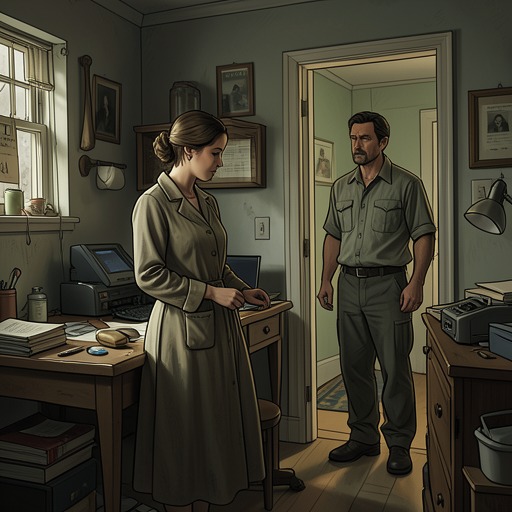
The church elders also police what kinds of ambition and expression are acceptable. When Elfrieda is fifteen and plans to study music at university, the elders arrive at the family home in a convoy of black cars. They have heard that she wants to leave the community and are especially suspicious of higher education for girls. Their visit turns a family home into a place of inspection: Jake receives them while Lottie remains in the kitchen rather than serving them, and the narrator sits beside her father as the men discuss Elfrieda’s plans. The episode locates the town’s restrictions in ordinary encounters as well as formal rules: authority arrives at the door, and family members must decide whether to accommodate it or resist.
Music, Books, and Resistance
Pianos are technically forbidden in East Village because they are associated with worldly pleasure. Jake and Lottie nevertheless bring one into the house after a city doctor recommends that Elfrieda have a creative outlet. For years, they cover it with sheets and gunny sacks when the elders visit. The family comes to love Elfrieda’s playing, and her parents sometimes request familiar songs. When the elders learn about the instrument, they consider punishing Jake with excommunication, but relent after he offers to accept the penalty; their compromise is that the piano may remain if the parents ensure Elfrieda uses it only as an instrument for the Lord.
The piano becomes a means of speaking where argument has failed. During the elders’ visit about Elfrieda’s education, she plays Rachmaninoff’s Prelude in G Minor, Op. 23 from the spare bedroom. The music interrupts the meeting and asserts a forceful presence without turning into a direct confrontation. The narrator understands the performance as the moment Elfrieda takes control of her life, and as the beginning of her departure from the town. Her later record of academic honors and scholarships intensifies the elders’ anger and fear; she leaves for Norway at seventeen to perform and study.
Books also challenge the town’s definition of proper conduct. Jake campaigns for a public library despite local objections that it is wasteful, dangerous, and unmanly. In a winter of forty degrees below zero, he spends weeks knocking on every door in town with a clipboard and pens, often going out at dinnertime. Once he has enough signatures, the town hall provides a small, mildewed room in an abandoned school, second-hand shelves, and money for books. Jake is delighted, and Elfrieda becomes the librarian, making an index card for every book and recording detailed information. The library gives their shared regard for reading a public, if modest, foothold in East Village.
Community, Memory, and Departure
The town’s rules shape more than the family’s immediate disputes. After Elfrieda leaves for Europe, Lottie enrolls in university classes in the city and trains as a social worker and therapist. The church elders have by then washed their hands of the Von Riesen women. Lottie turns the spare bedroom into an office, where Mennonites come, often secretly, for therapy—a practice regarded with deep suspicion. Some clients pay in kind: frozen meat, chickens, eggs, car repairs, or help with the yard. Their visits reveal needs that the community’s public image does not make easy to discuss, and Lottie’s practice creates a discreet place for people to seek help within the town.
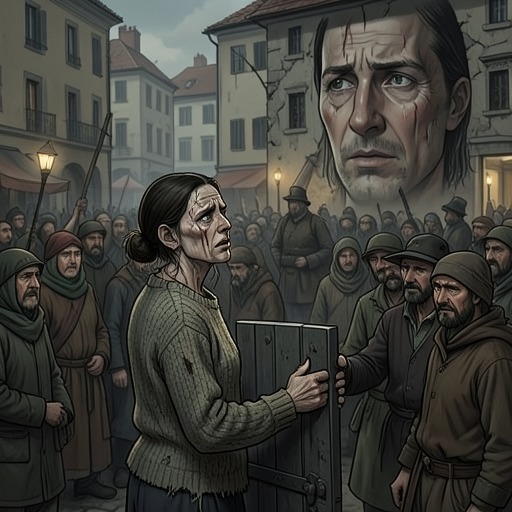
East Village is also shadowed by family and community memory. The Von Riesen grandparents came from a Mennonite village in Siberia in 1917, the year of the Bolshevik Revolution. The narrator recounts the murder of her grandfather’s parents, his survival by hiding in manure, and his eventual removal to Canada. Her grandfather warns the family not to teach the children Plautdietsch if they are to survive. The language is described as a language of shame, and the family’s silence as one way pain is carried across generations. This history supplies a personal context for the community’s habits of endurance and reticence without reducing every local experience to the same cause.
The cemetery keeps another measure of what the family has lost. The narrator recalls the small, old cemetery where her grandparents, Helena and Cornelius, are buried, with the graves of six of their babies arranged behind them. Much later, when Elfrieda dies, she is buried beneath a large tree at Elmwood Cemetery in Winnipeg rather than in East Village. Lottie had suggested burial with Jake, but Elfrieda had expressly refused to return her body to the town. That decision gives East Village a final, unresolved significance: it remains the place of the family’s beginnings and of its dead, but not a home Elfrieda is willing to claim in death.