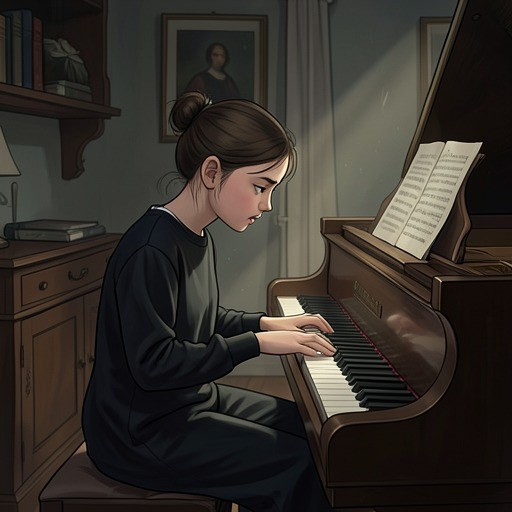
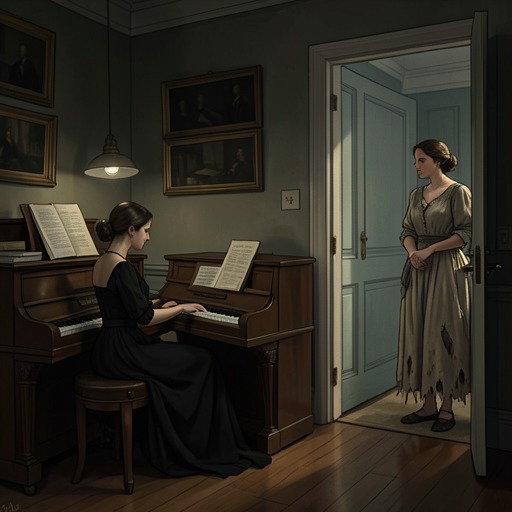
Elfrieda Von Riesen’s final rehearsal performance
All My Puny SorrowsElfrieda Von Riesen’s final rehearsal performance survives in the novel as a story Claudio shares after her death: he remembered her playing beyond herself, with an emotional freedom that seemed to dissolve the barrier between her and the piano. The orchestra stood and applauded for five minutes, while Elfrieda and many of the musicians wept. Recounted through grief and accompanied by a promised video recording, the rehearsal becomes a posthumous glimpse of her artistry at its most exposed and powerful.
The Rehearsal Recalled
The performance is not narrated as it happens. After Elfrieda has died, Claudio tells her family that a video recording of her last rehearsal is among the gifts. He says she gave the best performance of her life that day. His account places the event within a scene of mourning: the family has been sitting in heavy silence, and Claudio himself is crying as he describes what he witnessed.
Playing Beyond Herself
Claudio recalls a performance in which Elfrieda seemed able to express her emotions at will, as though no physical barrier separated her from the piano. The description makes musical expression feel less like display than release: the instrument does not stand between her inner life and its audience. The orchestra’s five-minute standing ovation marks the force of that encounter, while the unusual length of the applause gives the family a measure of what the performance meant to those present.
Tears, Recording, and Remembrance
When the performance ended, Elfrieda buried her face in her hands and wept. Half the musicians also wept, and Claudio now cries as he tells the story. The tears link the rehearsal’s immediate response to the later act of remembrance: Claudio gives the family both the account and the video, and they promise to watch it. The recording offers a way to return to the performance, while the story conveys what a recording alone cannot—the visible, shared emotion that followed the music.
Significance
Because the rehearsal is disclosed after Elfrieda’s death, its account carries both the brightness of artistic achievement and the irreversibility of loss. The family learns that on her final rehearsal day she played with exceptional power and that the musicians around her answered with sustained applause and tears. The moment does not resolve their grief; instead, it gives that grief a precise memory of Elfrieda alive at the piano, communicating through music what Claudio says she could express without restraint.