Elfrieda and Nic’s marriage
All My Puny SorrowsElfrieda and Nic’s marriage is a relationship of musical intimacy, shared imagination, and sustained caregiving. They build a life together in Winnipeg, where small gestures reveal their affection, even as Elfrieda’s recurring suicidal despair places their different understandings of safety, privacy, and hope under severe strain.
Meeting and shared life
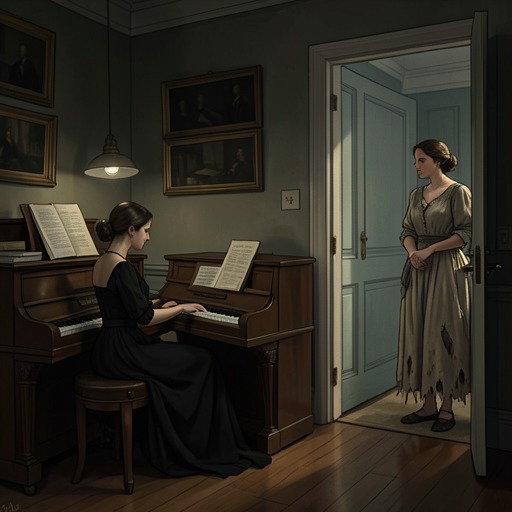
Elfrieda and Nic meet through piano lessons. Nic later admits that he began taking lessons partly to sit beside her on the bench and have her guide his fingers onto the keys. He even buys her a new piano bench; when she objects to its soft padding, he accepts that playing music need not be made comfortable. The exchange captures the particular texture of their intimacy: his affection appears in thoughtful practical gestures, while her musical life resists ordinary ideas of ease.
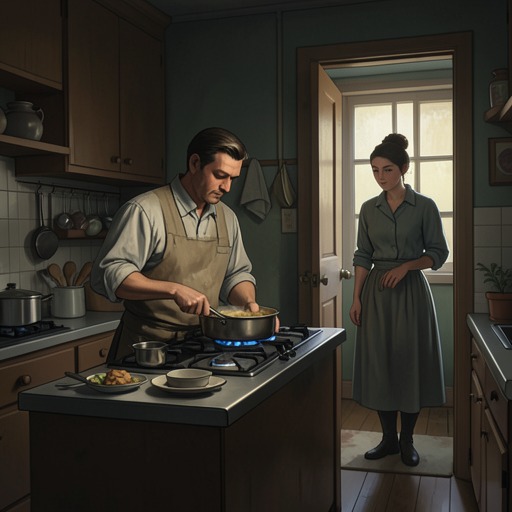
Nic is a medical scientist and a precise, methodical person who trusts manuals, recipes, and exact measurements. Elfrieda, by contrast, enjoys odd requests and musical experimentation, including the suggestion that he play around the notes rather than follow them exactly. Nic responds to this looseness with delight. Their difference is not simply a source of friction; it gives their shared life its balance, with his orderly temperament making room for her unpredictability.
Nic is not Mennonite, a distinction that matters to Elfrieda after her experiences with Mennonite men, whom she associates with attempts to claim her inner life and bind her through shame. The difference allows their partnership to stand apart from a religious culture she has found constraining. He is not presented as a cure for her despair, but as someone who loves her without requiring her to fit that pattern.
They live together in Winnipeg and imagine moving to Paris, where Nic might work in a laboratory. They share a love of speaking French, arguing about politics, and wearing scarves throughout the year; the imagined city offers them a picture of beauty and a different possible life. For the time being, they remain in Winnipeg. The plan matters as a shared horizon, not as a move they have actually made.
Intimacy amid recurring illness
After returning from Norway and other places, Elfrieda spends a period at her parents’ home withdrawn and deeply distressed. She gradually regains some health, resumes playing piano, and gives a few concerts before meeting Nic. Their relationship begins after this period of crisis, but it does not make her distress disappear. Her condition returns, and the marriage becomes part of a wider network of family and professional care rather than a simple resolution to her suffering.
When Elfrieda stops eating and asks her family not to call a doctor, Nic and her mother are desperate for help. Yolandi travels from Toronto and calls an ambulance despite Elfrieda’s pleas. The sisters later acknowledge that Elfrieda wants to die while Yolandi wants her to live, making them enemies who love each other. Nic’s place in this crisis is different: he is among those trying to care for Elfrieda, but the evidence also shows how little any loved one can control what she wants or how she experiences treatment.
The strain continues through hospitalization and planning for Elfrieda’s return home. Nic and Yolandi try to assemble a psychiatric home-care team, meeting to compare what they have observed and to decide how to keep her safe. At one evening conference, they discuss whether Elfrieda seems more engaged, whether she is taking her medication, and whether hospital rules about meals will leave her without food if she will not go to the communal eating area. Their conversations do not produce certainty. They do, however, let them reaffirm their shared commitment to her survival.
Care, privacy, and competing duties
Nic pursues practical support, contacting the social worker responsible for the proposed care team and offering to pay for it himself. He receives no assurance that funding exists or that private payment is possible. In another conversation with Yolandi, he explains that the team may be impossible to arrange under budget cuts and policy changes. He has instead arranged for Margaret, a friend, to stay with Elfrieda for several hours each day, while their mother plans daily visits. His efforts show care as repeated logistical work, limited by systems neither spouse can command.
The couple’s different ethical instincts become visible when Elfrieda’s copy of Final Exit arrives. Nic does not want to throw away her mail because he regards that as an invasion of her privacy and personal rights. Yolandi sees the book as dangerous and wants it removed. Nic considers hiding it, but resists taking possession of or disposing of something that belongs to Elfrieda. The disagreement is not evidence that he wants her to harm herself; it shows how his respect for her autonomy can collide with the urgent protective response of her family.
That conflict is sharpened by Elfrieda’s request that Yolandi take her to Zurich. Elfrieda says Nic has already refused to take her and believes that he still expects medicine to cure her. She asks Yolandi to keep the plan from Nic and their mother, presenting her sister as the only person who understands. The request exposes a painful division in the family’s care: Elfrieda seeks help to end her life, while Nic and others continue to pursue treatment and safety. Yolandi refuses to take her to Switzerland, leaving the central disagreement unresolved rather than turning it into a shared decision between the spouses.
Hope and uncertainty after the hospital
At one point Elfrieda tells her family that she has woken feeling like a different person. She says she wants to undertake a tour, contact Claudio, play tennis again, and perhaps move to Paris with Nic. The return of these plans suggests renewed possibility, but it does not establish that her recovery is secure. Yolandi worries that Elfrieda may be released before the promised care team exists, and Nic has not yet spoken with Claudio about the tour. He knows that touring frightens Elfrieda beforehand but can exhilarate her once she is doing it, another uncertainty they must weigh rather than resolve in advance.
Nic continues to organize daily support even as Yolandi has to return to Toronto for her children and other family obligations. He tells her that he has matters under control and that they can remain in contact by telephone and plane. Later, while Nic is in Spain, he has spoken with a hospital nurse, who reassures Yolandi that Elfrieda will not be discharged immediately. When Nic returns to Winnipeg, he is again part of the daily circle around Elfrieda. The sequence shows a marriage lived through separations imposed by work, travel, hospitalization, and family responsibilities, with care maintained through practical coordination rather than constant physical presence.
What the marriage can and cannot promise
Elfrieda and Nic’s marriage is marked by tenderness without a guaranteed outcome. The piano bench, his pleasure in her unconventional requests, their plans for Paris, and his persistent attempts to arrange care all establish a bond grounded in close attention. Yet love does not erase the difference between Elfrieda’s wish to die and Nic’s continued investment in treatment, nor does it give him power to secure the support he seeks. The marriage therefore becomes one of the novel’s clearest accounts of care as both devotion and limitation: Nic can stay, plan, negotiate, and imagine a future with Elfrieda, but he cannot make that future certain for her.