Grief
All My Puny SorrowsGrief in All My Puny Sorrows is not a single passage through sorrow toward acceptance but a recurring condition that reshapes the family’s ordinary rooms, conversations, and decisions. After Elfrieda Von Riesen dies, Yolandi Von Riesen and those closest to her try to live with an absence that offers neither a simple explanation nor a settled account of responsibility. Books, dreams, arguments, and the burial of Elfrieda’s ashes become ways of approaching that absence without resolving it.
The Immediate Aftermath
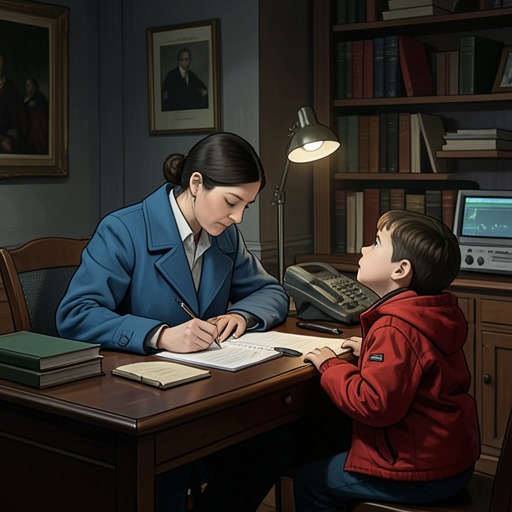
In the yellow living room of Elfrieda’s home, Nic recounts the ordinary lunch he shared with her after picking her up from the hospital. She asked him to go to the library for books from her past, works she remembered as having changed her life or made her feel alive. While he was away, she disappeared. The books he retrieved remain in a sloping tower beside the computer table. The family looks at them briefly, then looks away: the books had not saved her, and in that moment they cannot bear to look at them. The contrast between the library errand and the empty house makes absence concrete without making it comprehensible.
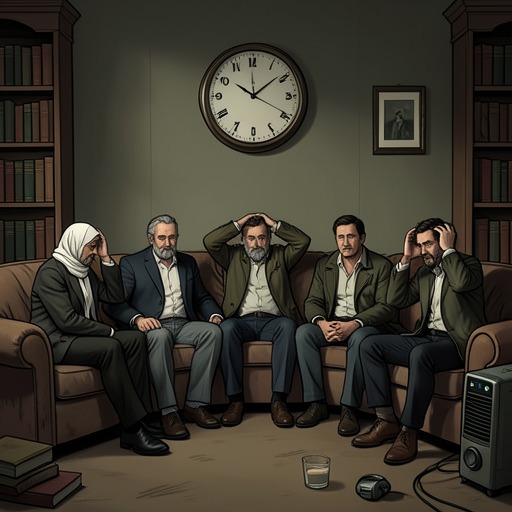
The family gathers close around Lottie. Will and Nora sit on either side of their grandmother with their arms hooked through hers, as if their closeness could keep her from floating away. Lottie repeats a familiar phrase in response to gestures of care, to the news that Elfrieda is out of pain, and to Nic’s gratitude for the life she gave him. When she asks what comes next, everyone answers together with the word breathe. The small, bodily instruction does not solve the family’s loss; it marks the immediate task of continuing to exist within it.
That evening, Nic stands alone on the front step after seeing the family out. Lottie asks whether he will be all right; he lowers his head onto her shoulder. Will offers to stay overnight, but Nic declines. His parents, brother, and friends are expected in the following days, yet that night he is alone. The scene places grief not only in the family’s shared gathering but also in the private interval that follows it.
Books, Memory, and Shared Mourning
Nic gives Yolandi a manuscript Elfrieda wrote, titled Italy in August. Yolandi had not known her sister was writing a book. In one passage, the protagonist’s longing for Italy is bound to the fictional sisters she encounters in literature. Those characters, the manuscript explains, had protected her and helped pull her through moments when life felt like quicksand. Yolandi briefly feels jealous that these imagined sisters offered help she could not. The feeling passes into a recognition that grief might be spread among women connected by reading, even when only one of them was Elfrieda’s actual sister.
The manuscript’s final paragraph addresses its reader as a companion on a journey and bids farewell at length. Its leave-taking gives form to a book preoccupied with goodbyes, while Yolandi’s discovery of it makes her sister’s private writing newly present after death. The books and the manuscript therefore carry opposing implications: they gave Elfrieda a source of protection and vitality, but they could not prevent her death. Remembering that contradiction does not diminish the books’ importance; it keeps consolation from becoming a claim that literature could have rescued her.
That night, Will sleeps on the living-room couch while Yolandi, Nora, and Lottie share Lottie’s bed. Lottie sweeps aside the whodunits, clothes, glasses, agenda, and laptop that cover it. They talk late into the night and early morning about Elfrieda, her unmistakable style, the past, and almost anything except the future, which feels too dangerous to approach. Their conversation and their shared sleeping space make mourning a form of company, but not a promise that the family can yet imagine what comes next. In June, Yolandi has been flying back and forth between east and west for six weeks, a repeated journey that gives the period of crisis a physical rhythm as well as an emotional one.
Grief as Conflict and Embodied Experience
By August, Yolandi describes her right eye as having swollen and darkened around the border. She interprets the affliction as an allergy to autumn, shorter days, longer nights, and death. The seasonal change makes loss feel bodily and recurring: time continues to turn, but its passage does not carry her cleanly away from bereavement. A friend tries to draw her out of the house for fresh air and urges her to move on in small steps. Yolandi later judges the outing a mistake.
At a café called Saving Grace on Dundas, the friend argues that suicide is always a sin because of the suffering it causes survivors. Yolandi counters by asking about the suffering caused by people who remain alive and harm others. When her friend suggests that Elfrieda might have considered the effects on her family, Yolandi reacts with anger at the assumption that anyone can know what another person’s suicide means. She says she has begun measuring character and integrity by a person’s capacity to kill themselves, then tests that claim by naming people and judging whether she thinks they could do it. The exchange exposes how bereavement can turn moral abstractions into personal provocations: Yolandi refuses to let discussion of suicide be closed by a judgment about its effects on survivors.
The argument threatens the friendship. The friend says they should stop discussing suicide lest it damage their relationship; Yolandi insists the subject will remain part of their conversation. She compares avoiding the thought of suicide to refusing to consider the ways a plane might crash. When the friend suggests buried anger, Yolandi responds sharply, then tries to ease the tension. She invokes Goethe’s insistence that suicide calls for sympathy and must be discussed anew in every era, but the friend is no longer listening. Yolandi shifts to talking about Lefty, a border collie, in an attempt to find a neutral subject. The scene does not show the disagreement resolved; it shows how difficult it is for Yolandi to make her grief speak in terms others can tolerate.
Dreams, Burial, and Unresolved Blame
In a dream, Yolandi and Elfrieda talk and laugh in Elfrieda’s yellow kitchen beside the large picture window. Yolandi wants to raise a more urgent concern about her work and her fear of finishing her book and learning how it will be received. Elfrieda stops her from speaking, takes her hand, and tells her that she is on her own now. Yolandi first experiences the words as a sudden, permanent loss, with her sister becoming a dark blur moving toward a rectangle of light. After hearing Lottie’s dream of survival, however, she reconsiders her own dream: it may be a survival dream rather than a nightmare, and the beginning of a cure. The insight is limited but consequential. To survive, Yolandi recognizes, she first has to know what she is surviving.
The question of where Elfrieda’s remains belong carries the same unresolved tension. Yolandi wants to take some of her sister’s ashes to Toronto, but Nic does not want them divided. They are buried beneath an enormous tree at Elmwood Cemetery in Winnipeg. Lottie had suggested burial beside the girls’ father in East Village, but Nic says Elfrieda had explicitly rejected being buried there. Their decision gives effect to Elfrieda’s stated wish, even as it leaves Yolandi separated from the ashes she hoped to keep nearby.
Nic tells Yolandi that she did everything she could and that nobody is to blame. She remains unsure. She imagines that Elfrieda might have died peacefully, and not alone, in Zurich, and concludes that she failed her sister. Nic, in turn, says he should have fought harder to keep Elfrieda in the hospital; Yolandi believes Elfrieda could talk her way out of the ward. Neither account settles responsibility. Their exchange shows grief returning to choices that can no longer be changed, as each survivor searches for an alternative ending and finds no certainty that another action would have prevented the death.