Nora
All My Puny SorrowsNora is the fourteen-year-old daughter of Yolandi Von Riesen and Dan, and the younger sister of Will. She lives with her mother in Toronto and studies dance at a ballet school made possible by a scholarship. In the novel’s family crisis, she is often physically distant from Elfrieda Von Riesen and the rest of the family in Winnipeg, but her messages keep her present in the action. Her quick humor and frankness sit beside genuine vulnerability: she is a young dancer worried about her body, her relationships, and whether her mother will come home.
Identity and Background
Nora’s training is one reason Yolandi moved to Toronto. The scholarship makes attendance at a particular ballet school possible, since Yolandi could not otherwise afford it. Nora loves dancing, but tells her mother that she thinks she is too fat. Yolandi’s friend Julie reacts with anger at the persistence of that kind of judgment. The exchange establishes both Nora’s commitment to dance and the self-consciousness that accompanies it; her mother worries that Nora may have an eating disorder, while also recognizing that the evidence does not justify treating that fear as a diagnosis.
Nora is fourteen during the visit to the CN Tower with Yolandi, and later insists that she is almost fifteen. The correction, delivered with exasperation when her mother forgets the significance of her birthday, is a small assertion of growing up. She is also attentive to adult life without being fully admitted into it. When she asks Yolandi whether she regrets having children, the question shocks her mother. Nora explains that she is considering never becoming pregnant because she fears the physical changes of pregnancy. Yolandi worries that her own strained manner may have made Nora feel like a burden, but Nora’s explanation makes clear that the question was also about her own imagined future.
Life Between Toronto and Winnipeg
The distance between Nora and her mother’s family is measured in repeated check-ins. While Yolandi is back in Winnipeg attending to Elfrieda, Nora sends messages asking how her aunt is doing. She also asks permission to get her belly button pierced and updates Yolandi on domestic upheaval in Toronto. Will has broken the front door, and Nora later reports that a prank involving store testers has earned her a ban from Winners. Her messages are funny and matter-of-fact, but they also show a teenager managing a household whose routines have been disrupted by her mother’s absence.
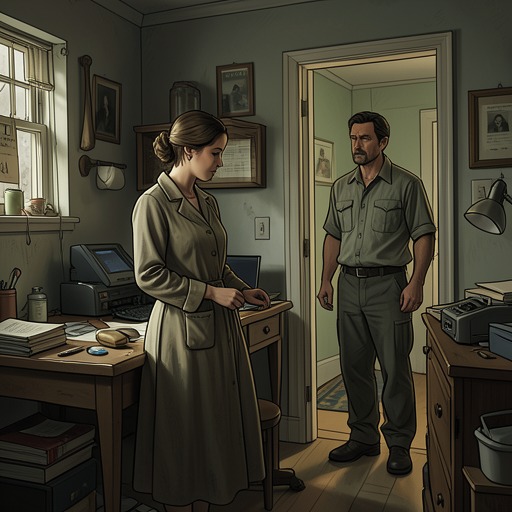
Nora’s home life is not orderly. During one of Yolandi’s returns from Winnipeg, the apartment has an ant infestation, Will has gone back to New York, and Nora has a Swedish boyfriend from one of her classes. Yolandi initially encounters the boy cooking in the kitchen without being able to communicate with him; only later does she learn who he is. In a subsequent account, the boyfriend, Anders, communicates through gestures and drawings after blocking the toilet and leaving his clothes locked in a leaking washing machine. These episodes make the Toronto household feel busy and unsettled, while showing Nora’s independence in forming relationships and navigating life beyond her mother’s immediate supervision.
Dance, Friendship, and Growing Up
Dance is not only Nora’s school commitment but a way she and her mother share attention. When Yolandi asks Nora and Anders to show her some choreography they are working on, the teenagers first resist and then perform. Yolandi is struck by the seriousness and control of their movement, and by how quickly they return to awkward adolescence once the dance ends. Nora’s training is therefore presented through both discipline and play: it gives her a demanding artistic world, but also a language in which she can show her mother something she is learning.
Her closeness with Yolandi appears in small gestures rather than easy declarations. On a visit to the CN Tower, they try to understand their new city from above, paying for binoculars but still being unable to see Winnipeg. Later they share wine and olives at a rooftop bar, then walk home singing songs they both know. Nora lets her mother hold her hand briefly and offers an unexpectedly generous assessment of her appearance. Yolandi is moved by the compliment, partly because praise from a teenage daughter is not something she takes for granted. The scene joins affection to Nora’s emerging independence: she can be tender with her mother without ceasing to judge her with a teenager’s candor.
Nora’s relationship with Anders is also still adolescent and negotiated through family rules. When he may need to stay over after late rehearsals, Nora texts her mother to remind her of the circumstances and objects to the possibility that Will might make him sleep in the laundry room. Yolandi permits him to use the couch, while their exchange turns into teasing about Nora’s age and her birthday. The episode gives their bond a recognizable domestic texture: questions of permission and privacy coexist with the absurd logistics of a crowded apartment.
Family Crisis and Loss
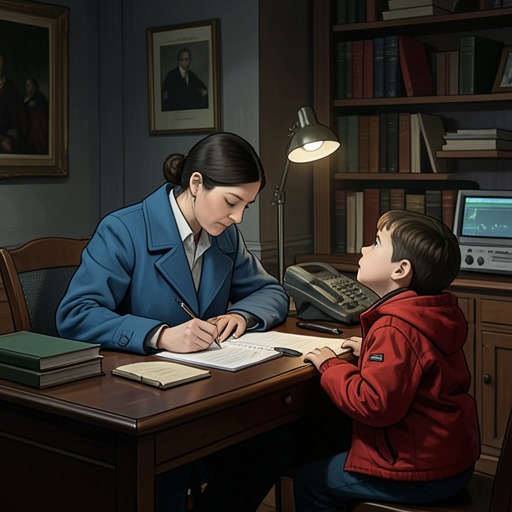
As Elfrieda’s crisis deepens, Nora continues to ask after her aunt from Toronto. She knows that her mother is away because of Elfrieda’s hospitalization, but the consequences of that absence arrive in her own life too. At a church gathering, Nora calls Yolandi in tears: she thinks she has broken a toe on a friend’s mother’s treadmill and fears she will miss her final dance recital, only a week away. Will needs to return to New York for his summer job, and Dan is still in Borneo. Yolandi asks whether Nora can stay with a friend for a few days. One friend is away with her parents, and Nora says staying with Anders would feel strange; instead, she asks her mother to come home. The request makes the cost of caregiving concrete without diminishing the severity of Elfrieda’s need.
After Elfrieda’s death, Nora joins the family in Winnipeg. She and Yolandi are still wearing the clothes they had worn to play tennis when they arrive at Nic and Elfrieda’s home; Nora observes that they have dresses for the funeral and underwear. Will is there too, crying alone in the bathroom. Nic recounts that Elfrieda had spent a peaceful, ordinary lunch at home before asking him to go to the library for books that had once made her feel alive. Nora’s presence in the room places her among the family members receiving this account, though the scene gives her no separate explanation or response. She is a witness to the adults’ grief as well as a grieving niece.
Narrative Role and Significance
Nora often enters the story through texts, brief exchanges, and household details rather than extended scenes of her own. This form makes her both a separate young person with immediate concerns and part of the family’s connective tissue: even while Yolandi is in Winnipeg, Nora’s messages bring Toronto’s broken door, dance worries, and negotiations over boyfriends into the same narrative stream as Elfrieda’s hospitalization. Her ordinary preoccupations do not cancel the crisis; they show what the crisis interrupts and what continues around it.
Her concerns about body image and pregnancy also extend the family’s meditation on women’s bodies and the futures they imagine for themselves. Nora is not simply a symbol of youthful hope: she worries about weight, fears pregnancy, and needs her mother’s attention at moments when that attention is divided. On Christmas Day, she is at Dan’s home while Will is with his girlfriend’s family in Mexico, Yolandi is alone, and Lottie is in hospital. The arrangement underscores how dispersed the family has become. Nora’s place in the novel is therefore defined by both intimacy and distance: she remains closely attached to Yolandi, yet must keep living, dancing, and growing up while the family’s grief unfolds elsewhere.