The Von Riesen family home is moved away
All My Puny SorrowsThe removal of the Von Riesen family home is a childhood memory of both physical displacement and the pressures that made the loss possible. In late summer 1979, the family stood in the street as the low bungalow Jake had built was carried away on a truck. The empty space it left remained visible from their new house, turning a vanished home into a daily reminder of a decision Jake had not wanted to make.
The House Leaves
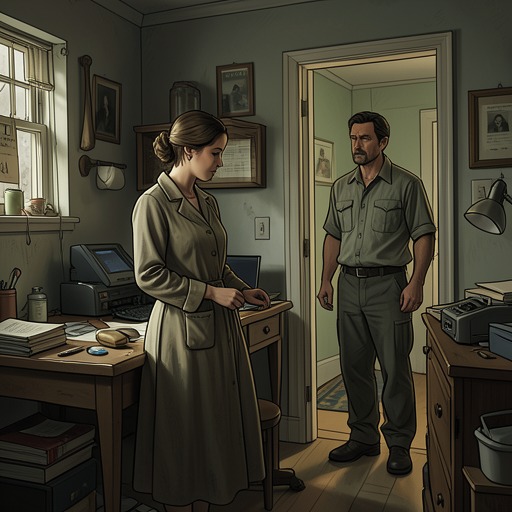
The house was made of wood, brick, and plaster. Jake had built it himself when he and Lottie were barely twenty, newly married and full of energy. Lottie remembered their early life there through summer evenings when, after the day’s work, the couple ran through the sprinkler in the front yard. Years later, Elfrieda described the scene as her parents’ La Dolce Vita moment and the sprinkler as their Trevi Fountain. The bungalow thus carried more than the family’s possessions: it held the story of their beginning together and the evidence of Jake’s labor and care.
The family watched the house make its slow way down First Street, past the A&W and the Deluxe Bowling Lanes, and out onto Highway 12 until it disappeared from sight. Elfrieda repeatedly insisted that she could still see it, then acknowledged that it was gone. The narrator, Yolandi Von Riesen, remembers standing with the family in the road and asking Jake where the house was going. He shaded his eyes against the sun and said that he did not know; the narration makes clear that he did not want to know. After the others got into the car, he remained looking at the empty space until Lottie sounded the horn gently to bring him back to them. The movement of the building was visible and slow, but its destination—and the meaning of the loss for Jake—remained unresolved in that moment.
The Sale and Its Pressures
The house was moved because the owner of the adjoining car dealership wanted the property for a larger parking lot. He applied sustained pressure and made threats until Jake finally sold the home for very little, as Lottie characterized the price. The following Sunday at church, the dealer presented the transaction as ordinary business rather than a personal matter. That distinction did not undo the pressure that had brought it about, or Jake’s reluctance to give up a house he had built himself.
The family’s account places that pressure within East Village’s entanglement of commerce and religious authority. The town had begun as a Mennonite refuge from worldly vices, yet increasing wealth went hand in hand with increasing piety. In that climate, Jake’s resistance to the dealer could be treated as a failure of Christian conduct, while yielding could be understood as the proper course. The implication weighed heavily on him: he felt guilty about refusing, and feared that standing up for his property might be sinful. His wish to be a good Christian therefore helped make commercial pressure effective, even though the house was his to defend.
Lottie urged Jake to resist, though her support was limited by the expectations placed on her as a Mennonite wife and by the ease with which the community overlooked women. Elfrieda, older than Yolandi and more alert to the dispute, tried to organize a petition against businesses expanding into people’s homes. Neither effort relieved Jake’s persistent guilt. The episode presents the sale not as a free choice made without constraint, but as a surrender shaped by business power, religious judgment, and the unequal standing of the family members who opposed it.
The Empty Lot and the New Home
The family had several days before they could move into their replacement house, so they went camping in the Badlands of South Dakota. The new home was similar to the old one, but it was not the house Jake had designed and built with close attention to its details, including a long covered porch from which the family could watch electrical storms while staying dry. When the family returned, the old house’s absence continued to define their view of the new place: from his lawn chair in the front yard, Jake could see through the trees across the highway to the empty spot on First Street.
The family’s responses to the move differed. Lottie was restless and dreamy. Jake slammed things around in the garage. Yolandi spent time building volcanoes in the backyard or roaming the outskirts of town. These details give the relocation an aftermath beyond the single afternoon of the truck: the family had a new address, but the loss settled into their separate routines rather than resolving with the move. Jake’s view across the highway especially preserves the contrast between the house he had made and the vacant ground where it had stood.
From Displacement to Defiance
In the period after the camping trip, Elfrieda went around town with red paint, making her mark. The account connects this act to the rock paintings she had seen while camping: their durability and their combination of hope, reverence, defiance, and solitude prompted her to devise a design using the initials of her name and the words All My Puny Sorrows. Her mark was a response to a changed landscape in which the family’s home had been taken away, though the text does not reduce her action to the house dispute alone. The move belongs to a larger sequence in which Elfrieda seeks a visible presence within a community that limits what its members, especially girls, may do.
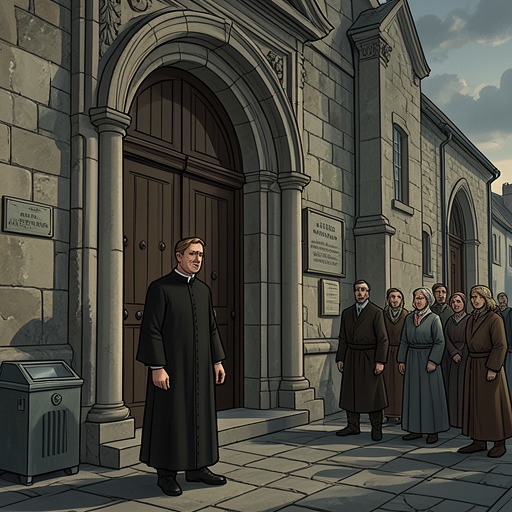
Soon afterward, the bishop arrived with a group of elders to challenge Elfrieda’s plans to study music at university. The family’s struggle over the house had already shown how community religious expectations could make resistance feel like wrongdoing; the visit makes those expectations explicit in the regulation of education and music. The family had secretly brought a piano into the new house, and the elders eventually permitted its use only as an instrument for the Lord. When Elfrieda played Rachmaninoff before them, the music briefly shifted the balance in the room: the elders fell silent, and her playing became an assertion of the life she intended to pursue. The home’s removal did not cause that confrontation, but it helps establish the material and social pressures surrounding it.
The episode therefore makes a private property loss legible as a conflict over who may shape a family’s life. Jake’s handmade house is taken from its place through commercial pressure and reinforced religious guilt; afterward, its empty lot remains within sight, while Elfrieda turns to a different means of leaving a mark. The building goes away, but the family’s memory of it—and the struggle over agency that its removal exposes—continues in the new home.