The old Toronto house
All My Puny SorrowsThe old Toronto house is a failing, polluted property that Yolandi Von Riesen reshapes into a home for herself, her daughter Nora, and her mother, Lottie. Its broken rooms and contaminated surroundings make shelter seem precarious, yet the house becomes the material setting for Yolandi’s attempt to bring her family together. Lottie’s eventual approval does not erase the damage; it gives the work of repair a shared purpose.
Acquisition and Condition
Yolandi’s real estate agent dislikes the house and does not want to show it, but Yolandi says time is running out because Lottie is coming. The agent’s description of the property as having good bones sounds ominously literal when the structure is inspected. The house is in disrepair throughout: walls are cracked, absent, or crumbling; floors and stairs are wrecked; bricks break down into red powder; the roof needs replacing; and the foundation has holes. Weeds overrun the yard, and skunks live beneath the deck. A book titled Serial Killers A to Z, left in a kitchen cupboard by the previous owner, adds an unsettling trace of the house’s former occupancy.
The damage is not confined to the building. The house lies near a polluted lake and between a funeral home, a mental hospital, and a slaughterhouse. Lottie responds to Yolandi’s description by seeing a fitting, if grim, provision for each member of the family. The property’s yard is little more than dirt and garbage, with soil saturated by lead from nearby factories. Yolandi repeatedly finds used condoms and needles and collects them with a long stick in a blue pail by the back gate. The gate opens in the wrong direction and strikes her as she passes. These practical hazards make the work of turning the property into a home an everyday negotiation with its surroundings.
Repairs and a Plan for Living
Yolandi has four weeks before Lottie arrives with a moving truck from Winnipeg. Her plan assigns each family member a floor: Nora will live in the attic with the squirrels, Yolandi on the second floor with the mice, and Lottie on the main floor near the skunks. The arrangement is comic in its frank acknowledgment of the house’s inhabitants, but it also makes a place for each of them. Yolandi imagines the three stepping out through broken back screen doors on different levels and breaking into song, borrowing the possibility of a shared household from La Bohème.
An abandoned cinder-block motor-parts factory stands across the lane behind the house. It blocks much of the western sky, though the family can see nearly all the way back to Winnipeg from the third-floor roof. A sludge-filled moat surrounds the factory, where discarded objects accumulate. At night, two men in hip waders vacuum the sludge from the moat, sending its brown, toxic water down the lane toward Adelaide and King Street, and eventually to Lake Ontario. The view and the polluted water connect the house to a larger landscape of industrial neglect rather than separating its problems from the city around it.
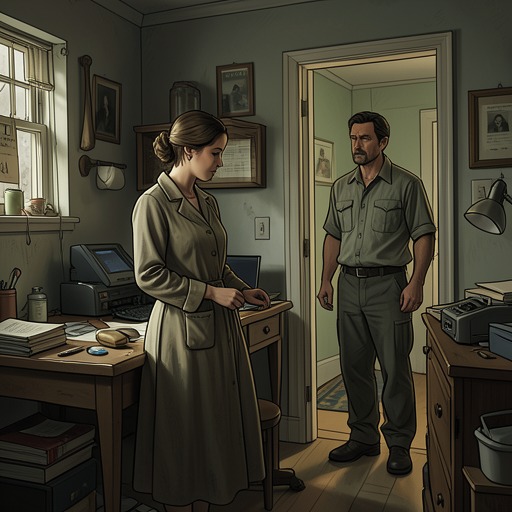
Yolandi hires workers to repair the property, including one who invites her to a support group for adult children of alcoholics. When she explains that her parents were not alcoholics, he replies that everyone has difficulties. Another worker, formerly a philosophy professor in Bucharest, promotes urinating near the house as a way to deter the skunks. At night, after negotiating prices in cash with the various men working around the property, Yolandi sleeps on an air mattress in the otherwise empty house and listens to Nelson tell stories about babies, women, and work. The repairs thus begin amid improvisation: the house is not yet ready for the family, but people and plans are already gathering inside it.
The most deliberate addition is a large bedroom attached to the back of the house. Yolandi intends it to be bright and warm, with a future view onto a flower-filled yard and open sky. This room is specifically for Lottie. Its intended comfort stands against the existing conditions of the property, while the imagined garden gives the renovation a destination beyond mere structural repair.
Lottie Arrives
Lottie’s first view of the house comes during a nighttime electrical storm, with heavy rain and strong wind. Nora is in the car with school friends while Lottie struggles with an umbrella outside. She eventually lets it go; it flies up, drops, and then strikes the car after Lottie dodges it. Lottie retrieves it and throws it into the factory moat. The encounter gives her introduction to the property an unmistakably unsentimental tone: the house and its surroundings are not made presentable before she sees them.
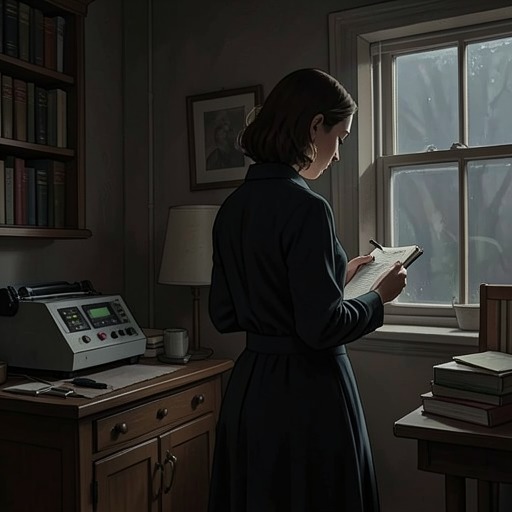
Inside, Nelson is finishing the ceilings on a ladder while music plays. Lottie inspects the house slowly, running her hands over the banisters and walls, pausing over features and recalling details from her childhood. She concludes that it has style, an unusual charm, and a warm atmosphere, and says she can see the family living there happily. Her response changes the meaning of Yolandi’s undertaking. The house remains damaged, but its imperfections do not prevent Lottie from recognizing it as a possible home. Yolandi, Nora, Nora’s friends, and Nelson join in the celebration, and Lottie and Yolandi share a toast with Nelson to the future, the unlikely present, private memories, or simply shelter.
A House Made into a Home
Lottie insists that the bars be removed from the windows of her part of the house. The renovation workers worry about her safety on the ground floor, but she refuses to live behind bars. Her demand makes the renovation about more than making the rooms habitable: it also concerns the terms on which she will live in them. The family’s new home is to offer shelter without making it feel like confinement.
Before Lottie’s belongings arrive, Yolandi climbs Nelson’s ladder and writes AMPS on a section of ceiling that will soon be painted over. The mark is temporary in its placement, but it is made at the threshold between renovation and residence. The next morning, Lottie and Yolandi will supervise the moving truck, direct the placement of the furniture, and remain in the house to live. The old Toronto house therefore reaches a crucial change not through a completed restoration, but through occupation: its broken rooms, planned bedroom, and contested windows become part of a home shared by three generations.