Yolandi and Lottie’s mother-daughter relationship
All My Puny SorrowsYolandi and Lottie’s mother-daughter relationship holds together through ordinary acts of companionship and the strain of a family crisis. They share jokes, late-night schemes, and familiar reassurances, but the struggle over how to respond to Elfrieda’s wish to die exposes a sharp difference between them: Lottie cannot give up hope, while Yolandi sometimes acts even when doing so means going against what another family member wants.
Family Roles and Early Solidarity
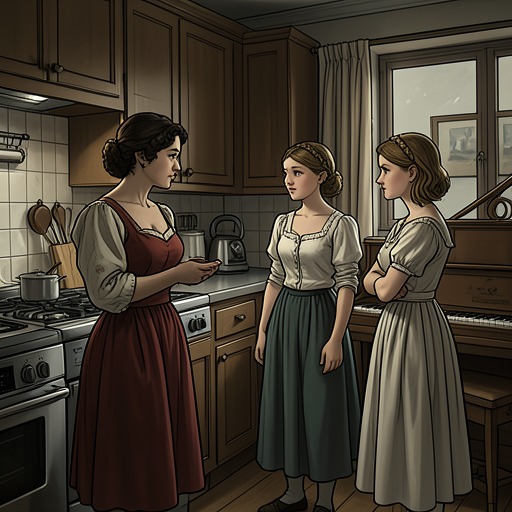
When Mennonite elders arrive at the family home to challenge Elfrieda’s plan to study music at university, Lottie refuses to perform the welcoming role expected of her. She stays in the kitchen washing dishes rather than making coffee and serving homemade food, leaving Jake to face the men in the living room. She had previously urged him to tell the elders that their visit was inconvenient, but he could not bring himself to do it. Lottie had agreed not to intervene directly, while also refusing to wait on the visitors as they discussed the family’s future.
Yolandi is present in both rooms, first sitting silently beside Jake and then joining Lottie in the kitchen. Lottie asks where Elfrieda is; Yolandi does not know. The two sit together on the counter and share apple juice while the elders’ conversation continues nearby. Their small retreat is not a solution to the pressure on the family, but it gives mother and daughter a moment of common ground. They witness the same encounter from different positions: Jake is left to answer the elders, while Lottie and Yolandi keep company away from the meeting.
Care, Crisis, and Different Responses
The most consequential disagreement between Lottie and Yolandi arises when Elfrieda stops eating and begs her mother and Nic not to call a doctor. Lottie phones Yolandi in Toronto, asking her to come. When Yolandi reaches Elfrieda, she decides to call for medical help despite the promise Lottie may have made. Lottie stays at the dining-room table, with her back to the sisters, unable to support one daughter’s choice over the other’s. She does not intervene when Elfrieda asks her to stop Yolandi or when the paramedics take Elfrieda away. The scene presents Lottie’s withdrawal not as indifference but as a painful inability to choose between her daughters; nevertheless, it leaves Yolandi to make the decision and bear its immediate consequences.
After this crisis, Nic and Yolandi press Lottie to take a trip. She travels with heart pills and mystery novels and continues to call to ask how Elfrieda is doing. Her reports from the ship range from a conversation with a bartender who prayed for the family to a discussion with the captain about burials at sea. When she describes falling from her bed during a storm and being kept from harm by the cabin’s safety features, her confidence that she would be rescued becomes an emblem of her stubborn expectation that life will find a way to preserve her.
That hope also shapes the sisters’ attempts to keep Elfrieda alive. When Elfrieda asks Yolandi to take her to Zurich, she insists that Lottie and Nic must not know, believing they would prevent the trip. Elfrieda understands Lottie as someone who will never give up, whether her faith rests on God, chance, or something else. Lottie is not present for this private request, but her place in the family is defined by the expectation that she will continue to hope. Yolandi, meanwhile, has already refused Elfrieda’s request to take her to Switzerland. Their different responses to Elfrieda’s despair leave Yolandi caught between her mother’s persistence and her sister’s demand for help.
Shared Life and Practical Companionship
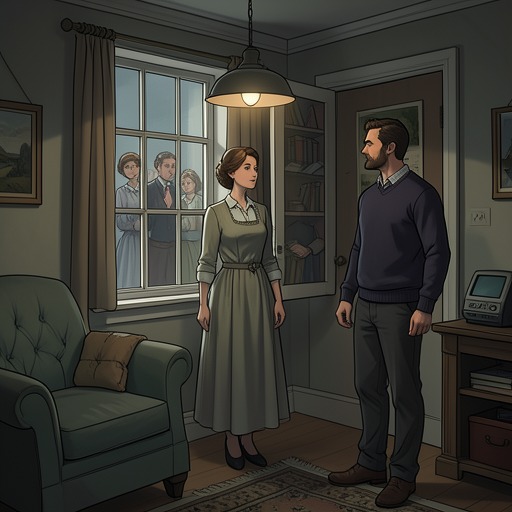
Their bond is not confined to arguments about care. After returning from her trip, Lottie is awake late at night playing online Scrabble with a stranger in Scotland. Yolandi checks on her and asks about the Bible open beside her computer. Lottie says she has been reading it because she has been communing with her dead sister, Mary, but she also finds fault with the passages she has tried. The exchange lets Lottie speak about faith without presenting it as settled certainty; Yolandi listens, responds with humor, and wonders whether her mother is also looking for solace.
On another night, Lottie turns a practical need into a joint escapade. She has arranged for Shelby to move her old electric organ to Julie’s house, where Julie’s children can practise. Yolandi helps carry it to the truck while Lottie holds the apartment doors open. When rain becomes heavy, Lottie goes back for a garbage bag to cover the instrument. At Julie’s house, no one answers, so the three leave the organ in the yard shed and put a note on the door. Lottie pays Shelby for his help; mother and daughter return to her apartment soaked. Their improvised delivery shows them cooperating without ceremony: Lottie makes the plan, and Yolandi joins in carrying it through.
Reassurance, Grief, and Continuing Connection
Lottie’s care for Yolandi often takes the form of reassurance. When she finds Yolandi’s manuscript, she asks whether it is the new work and how many words it contains. Elfrieda praises its opening, and Lottie leads Yolandi into the hallway, puts a hand at her back, hugs her, and tells her that everything will be all right. The reassurance is repeated often enough that Yolandi sometimes wonders whether her mother thinks she is foolish, but she also recognizes it as something a mother says. It recalls the refrain Yolandi hummed to herself in the days before Jake died, linking Lottie’s comforting words with an earlier family loss without making them a guarantee against grief.
The relationship therefore offers neither effortless agreement nor a simple cure for the family’s pain. Lottie and Yolandi can differ profoundly about what love requires when Elfrieda wants her suffering to end; they can also sit together, listen, laugh, and carry an organ through the rain. Their closeness is made visible in those practical gestures and in Lottie’s steady attempts to reassure her daughter. Even when Lottie’s hope cannot resolve Yolandi’s conflict, it remains one of the forms through which the two continue to care for each other.