Poster Girl
All Quiet on the Western FrontThe Poster Girl is a vivid, almost hallucinatory image from a theater advertisement that Paul Bäumer and Albert Kropp encounter during a rest period behind the lines. She embodies the lost world of peacetime beauty, cleanliness, and desire, standing in stark contrast to the soldiers' ragged, louse-ridden existence. The poster becomes a focal point for their yearning, their crude humor, and their painful awareness of the gulf between the front and the life they once knew.
Appearance and Context
The poster shows a girl in a light summer dress with a red patent-leather belt around her hips. She stands with one hand on a railing and holds a straw hat with the other. She wears white stockings and white shoes, fine buckle shoes with high heels. Behind her smiles a blue sea with whitecaps, and at the side is a bright bay. She has a delicate nose, red lips, and slender legs, and appears wonderfully clean and well cared for, as though she bathes twice a day and never has any dirt under her nails. Beside her stands a man in white trousers, a blue jacket, and a sailor's cap, but he interests Paul and Albert much less. The poster is a wonder to them; they have quite forgotten that such things exist, and even now they hardly believe their eyes. They have seen nothing like it for years, nothing like it for happiness, beauty, and joy.
The Soldiers' Reaction
Paul and Albert stand before the poster with wide eyes, unable to credit that such things still exist. Paul remarks that the girl could not march many miles in those thin shoes, then feels silly for thinking of marching in front of such a picture. They argue about her age—Paul guesses twenty-two at the most, Albert insists she is not more than seventeen—and the thought gives them gooseflesh. They look askance at one another, aware that their own ragged, stained, and dirty uniforms offer no competition. So they proceed to tear the young man with the white trousers off the hoarding, taking care not to damage the girl. That is something toward it. Albert then suggests they go and get deloused, and Paul agrees, even going so far as to consider getting a clean shirt and socks. The poster directly prompts them to seek a semblance of cleanliness and normalcy.
Thematic Significance
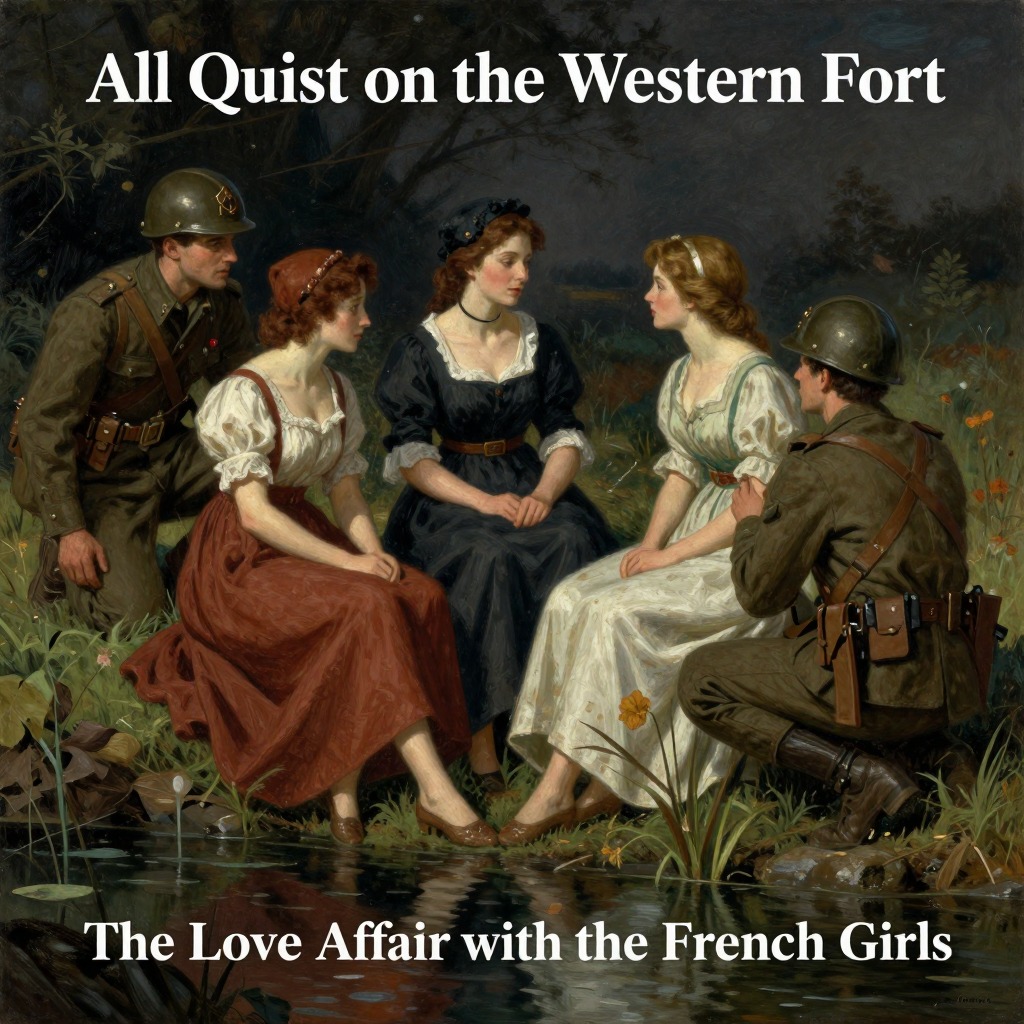
The Poster Girl represents everything the war has taken from them: beauty, leisure, cleanliness, and the innocent pleasures of youth. She is a static, untouchable image of a world that no longer exists for them, a world of summer dresses, seaside holidays, and carefree flirtation. The soldiers' response—a mixture of longing, crude humor, and practical action—reveals how the war has simultaneously sharpened their desires and coarsened their sensibilities. The poster is a silent accusation, a reminder of the life they have lost and the impossibility of ever returning to it unchanged. It also serves as a benchmark for their later encounter with the French women across the canal, whom they approach with the same mixture of hope and awkwardness, carrying army bread and liver sausage as offerings. The poster girl, in her pristine perfection, remains an unattainable ideal, while the real women, hungry and real, offer a fleeting, imperfect substitute.