Potato Cakes
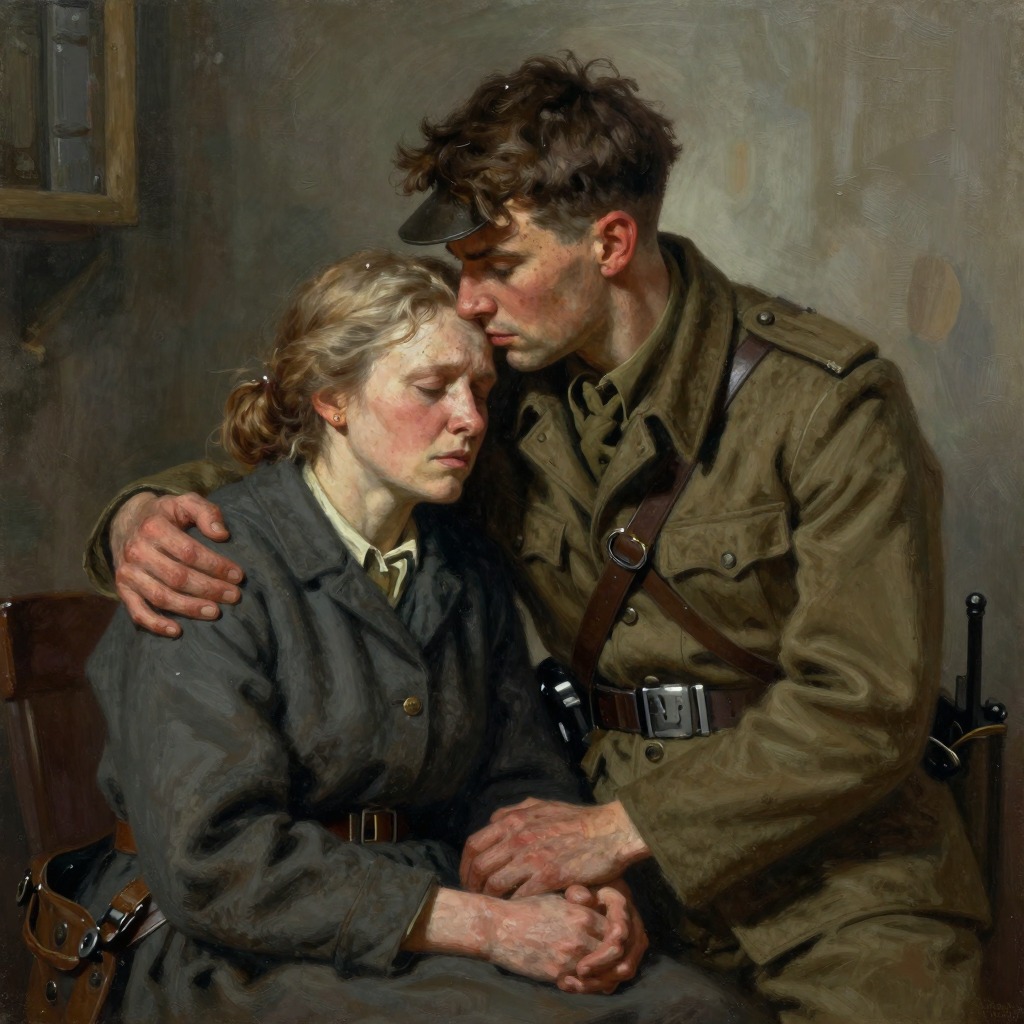
All Quiet on the Western FrontPotato cakes appear in All Quiet on the Western Front as a concrete, emotionally charged object that bridges—and ultimately underscores the unbridgeable gap between—Paul Bäumer's life at the front and his life at home. They are not merely food; they are a physical manifestation of his mother's care, her suffering, and the world of peace that the war has made inaccessible to him. The cakes carry the weight of memory, guilt, and the painful recognition that the soldier can no longer fully inhabit the home he longs for.
Origin and Preparation
Paul's mother makes the potato cakes for him during his leave, standing at the hot stove despite her own pain from the cancer that is consuming her. Paul knows this: when he later considers giving the cakes to the Russian prisoners, he stops himself, remembering "that my mother cooked them herself and that she was probably in pain as she stood before the hot stove." The cakes are thus imbued from the start with her sacrifice and her love, a love expressed not in grand gestures but in the humble, labor-intensive act of preparing food for her son. She also gives him a pot of jam, and these two items—the cakes and the jam—are the only tangible gifts she can offer, representing the meager resources of a poor family that nonetheless gives everything.
Journey to the Front
Paul carries the cakes and jam with him as he travels back to the front after his leave. When he finally rejoins his company, he brings them out to share with his comrades, Stanislaus Katczinsky and Albert Kropp. The outer cakes have become mouldy, but Paul keeps those for himself and gives the fresh ones to his friends. This act of sharing is both a gesture of comradeship and a way of extending his mother's care to the men who have become his surrogate family. When Kat bites into a cake, he immediately recognizes its origin: "These are from your mother?" he asks, and when Paul nods, Kat says, "Good, I can tell by the taste." The cakes carry the unmistakable signature of home, a taste that the front-line soldier can still identify.
Emotional Resonance
The moment of sharing the cakes nearly breaks Paul. He writes, "I could almost weep. I can hardly control myself any longer. But it will soon be all right again back here with Kat and Albert. This is where I belong." The cakes trigger a flood of emotion—grief for his mother, longing for home, and the painful recognition that the front, not home, is now his true place of belonging. The cakes are a taste of a world he can no longer inhabit, and the act of eating them with his comrades becomes a ritual of farewell to that world. Later, when Paul is in the training camp, his father and sister visit him and bring another pot of jam and a bag of potato cakes. He eats some that evening but finds he has no taste for them, and he goes out intending to give them to the Russian prisoners. It is only the thought of his mother's pain that stops him: he puts the bag back in his pack and gives only two cakes to the prisoners. The cakes remain, uneaten, a burden of love he cannot fully accept or discard.
Thematic Significance
The potato cakes are a concentrated symbol of the novel's central theme: the destruction of the pre-war world and the impossibility of return. They represent the love, care, and normalcy of home, but they also demonstrate how that world has become alien to the soldier. Paul can recognize the taste of his mother's cooking, but he cannot find his way back to the emotional state that once made that taste a source of simple joy. The cakes are a reminder of what has been lost, and their mouldy edges are a fitting emblem of a past that has begun to decay, even as its memory remains achingly vivid. In the end, the potato cakes are not just food; they are a relic of a life that the war has rendered unreachable, a final, tangible link to a mother who is dying and a home that no longer exists for the soldier who has been forged by the front.