Thrashing of Himmelstoss
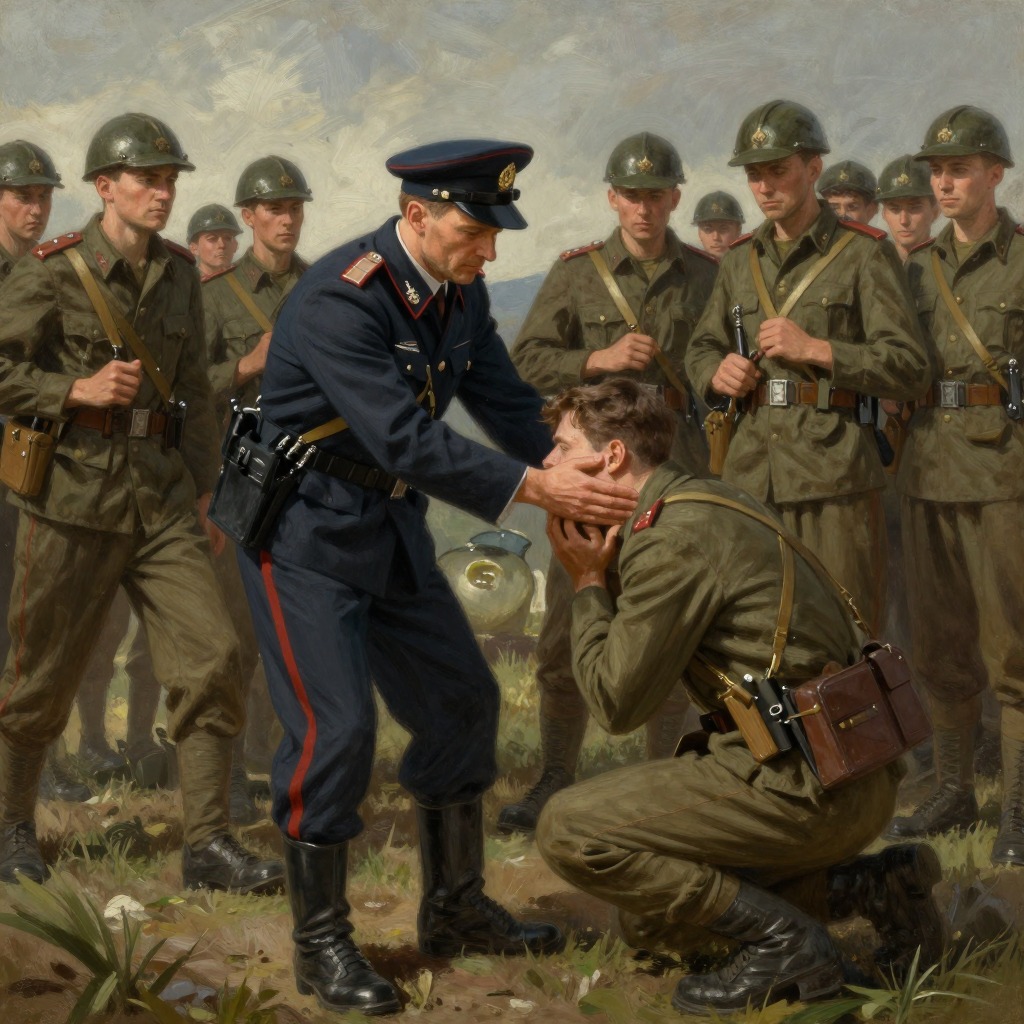
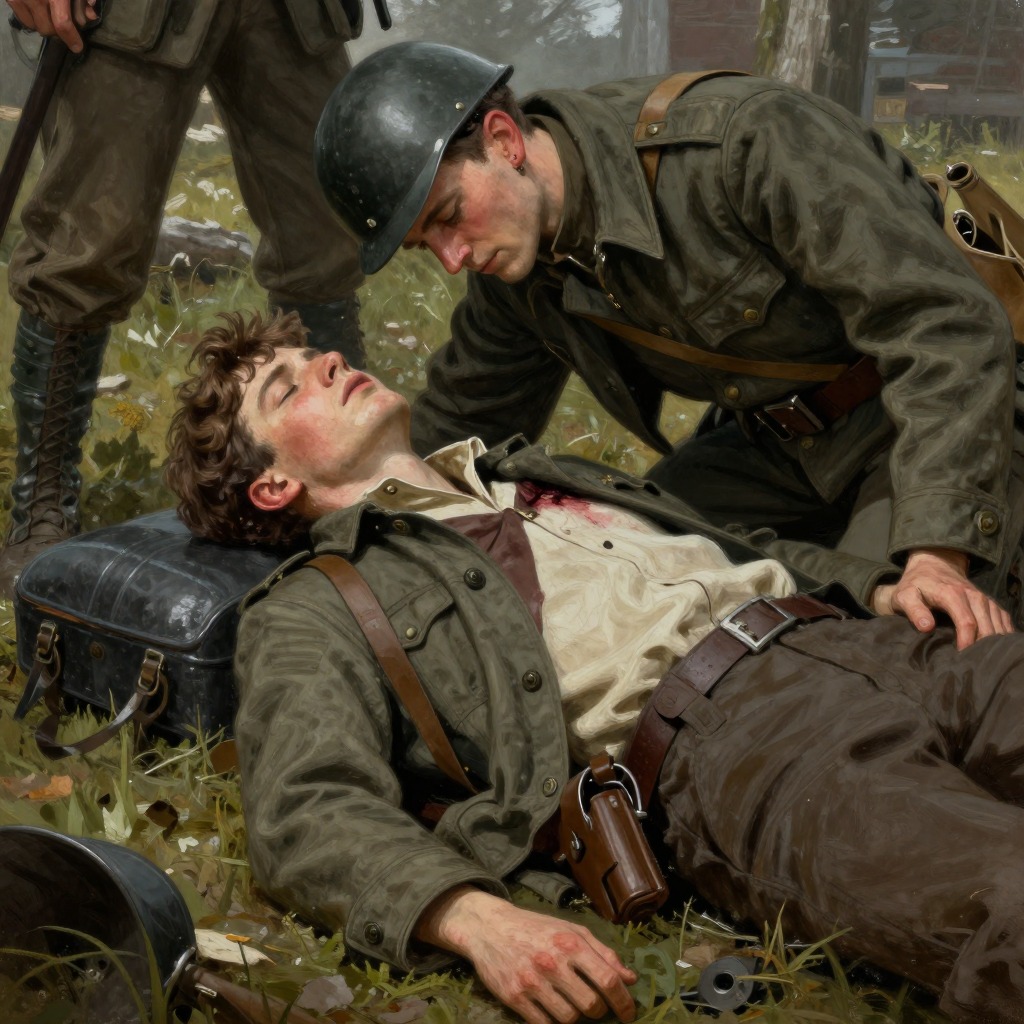
All Quiet on the Western FrontThe Thrashing of Himmelstoss stands as one of the most cathartic and symbolically charged episodes in the early part of the narrative, a carefully planned act of collective revenge that temporarily inverts the brutal hierarchy of the army. It is the culmination of months of systematic humiliation and abuse inflicted by Corporal Himmelstoss, a petty tyrant whose authority derived entirely from his rank. The beating, executed on the eve of the protagonists' departure for the front, is not merely a settling of scores but a ritualistic assertion of the soldiers' humanity and a defiant rejection of the dehumanizing system that Himmelstoss represents.
Causes and Background
The roots of the thrashing lie in the relentless torment Himmelstoss inflicted on the recruits under his command. A small, undersized man with a waxed moustache, he was a postman in civilian life who reveled in the absolute power his corporal's stripes gave him. He singled out Paul Bäumer, Albert Kropp, Tjaden, and Haie Westhus for special persecution, sensing a quiet defiance in them. His methods were a catalogue of petty cruelties: forcing Paul to remake his bed fourteen times in a single morning, making him scrub out the Corporals' Mess with a toothbrush, and ordering Kropp and Paul to clear a barrack-square of snow with a hand-broom and dustpan. He subjected them to hours of pointless drill on wet, ploughed fields until they collapsed, and made them stand at attention in a hard frost without gloves, watching for the slightest movement of their bare fingers on the steel barrels of their rifles. The most grotesque of his inventions was the "Change at Lohne" game, where men had to scramble under their beds on command, a drill he practiced for hours. His treatment of Tjaden, who wet his bed in his sleep, was particularly vicious: Himmelstoss paired him with another sufferer, Kindervater, in a system of mutual retaliation that only caused both men to sleep on the cold floor and catch colds. This systematic abuse forged a deep, simmering hatred in the four friends, a hatred that demanded an outlet before they left for the unknown horrors of the front.
The Ambush and the Beating
The opportunity came on the last evening before their departure. Knowing Himmelstoss's habit of visiting a certain pub, the four conspirators lay in wait for him on a dark, uninhabited road near the barracks. Armed with a bed-cover, a cushion, and a whip, they ambushed him as he walked home, slightly drunk and singing. They threw the cover over his head, rendering him a helpless, white sack, unable to see or raise his arms. Haie Westhus, the largest and strongest of the group, delivered the first blow, a punch that felled Himmelstoss like an ox. As he lay on the ground, they used the cushion to muffle his yells, allowing him only brief gasps of air before silencing him again. Tjaden, whose personal grudge was the deepest, then unbuttoned Himmelstoss's braces, pulled down his trousers, and set to work with the whip, his blows landing with the rhythm of a woodcutter. The scene was a grotesque parody of military discipline: Himmelstoss on the ground, his striped postman's backside exposed in the moonlight, while Haie held his head on his knees with a fiendish grin, and Tjaden, indefatigable, delivered the punishment. After Tjaden had his fill, the others took their turns, and finally Haie stood Himmelstoss up to deliver two final, well-aimed blows, one with each hand, that sent him toppling over again. The entire act was a brutal, precise, and ritualistic inversion of the power structure that had governed their lives for months.
Consequences and Aftermath
The immediate consequence was a profound sense of satisfaction and closure. Haie Westhus, who considered the thrashing the high water mark of his life, summed up the feeling with the mysterious pronouncement: "Revenge is black-pudding." The four soldiers left for the front the next morning, their morale bolstered by the act of defiance. Himmelstoss never discovered who had attacked him, though he did recover the bed-cover they had left behind. The beating had a lasting impact on the group's dynamic, cementing their bond and establishing a code of justice that operated outside the official military framework. When Himmelstoss later arrived at the front, the memory of the thrashing hung over their first encounter. Tjaden, emboldened by the past, openly insulted him to his face, calling him a "dirty hound," and the other soldiers refused to stand at attention for him. The incident also had a more subtle, long-term effect on Paul Bäumer. The memory of the beating, and the raw, physical satisfaction it provided, would later contrast sharply with the complex, guilt-ridden emotions he experienced when he killed the French printer Gérard Duval with his own hands in a shell-hole. The thrashing was a clean, unambiguous act of revenge against a known enemy; the killing in the crater was a messy, morally ambiguous encounter with a fellow human being. The event thus serves as a crucial marker of the soldiers' moral journey from a world where justice could be personally and decisively enacted to one where the lines between enemy and brother, guilt and innocence, became tragically blurred.