Violin of Russian Prisoner
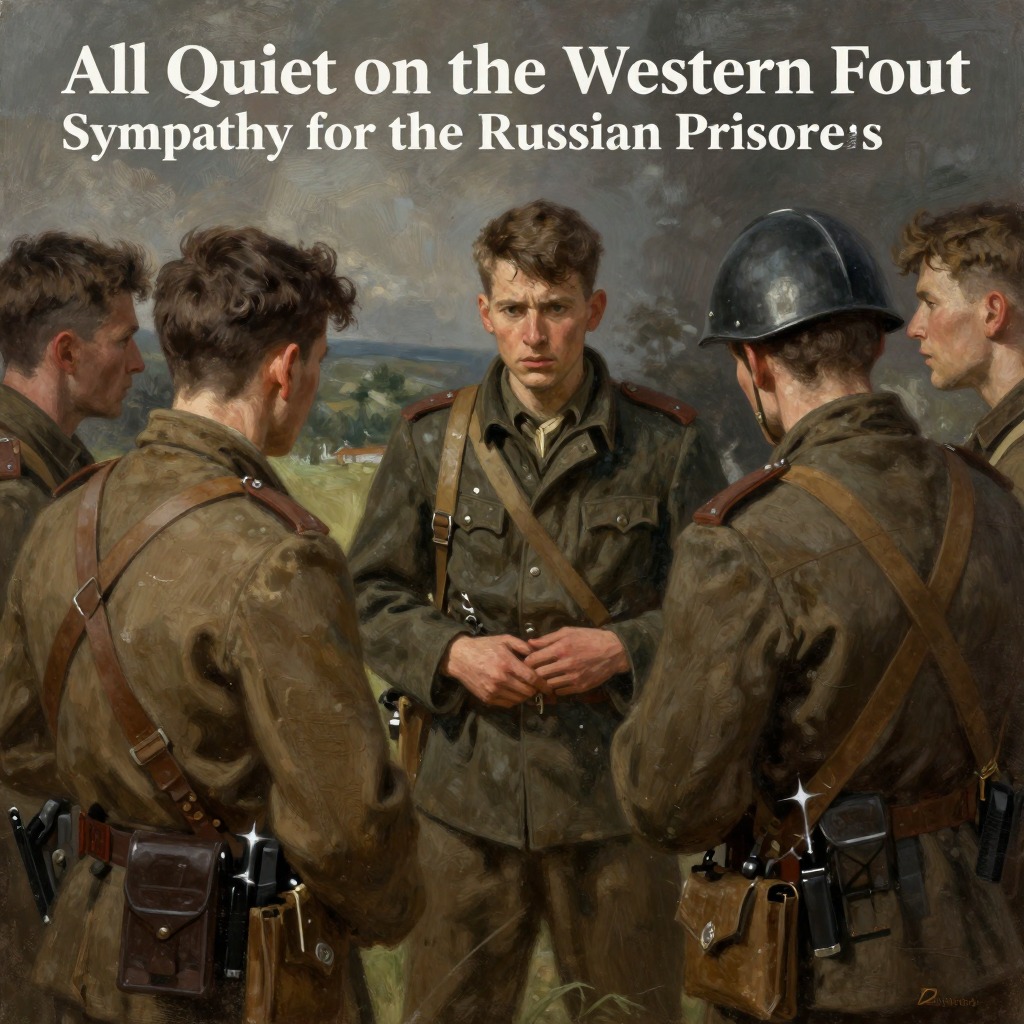
All Quiet on the Western FrontThe violin of a Russian prisoner of war appears in the narrative as a fragile, resonant object that momentarily dissolves the barriers of language, nationality, and war itself. Played by a musician who had once been a violinist in Berlin, the instrument produces sounds that seem to belong to another realm—thin, clear, and achingly beautiful against the desolate backdrop of the camp. Its music becomes one of the few moments of genuine, unguarded communication between the German soldiers and their captives, revealing a shared capacity for art and sorrow that the war has tried to obliterate.
The Musician and His Instrument
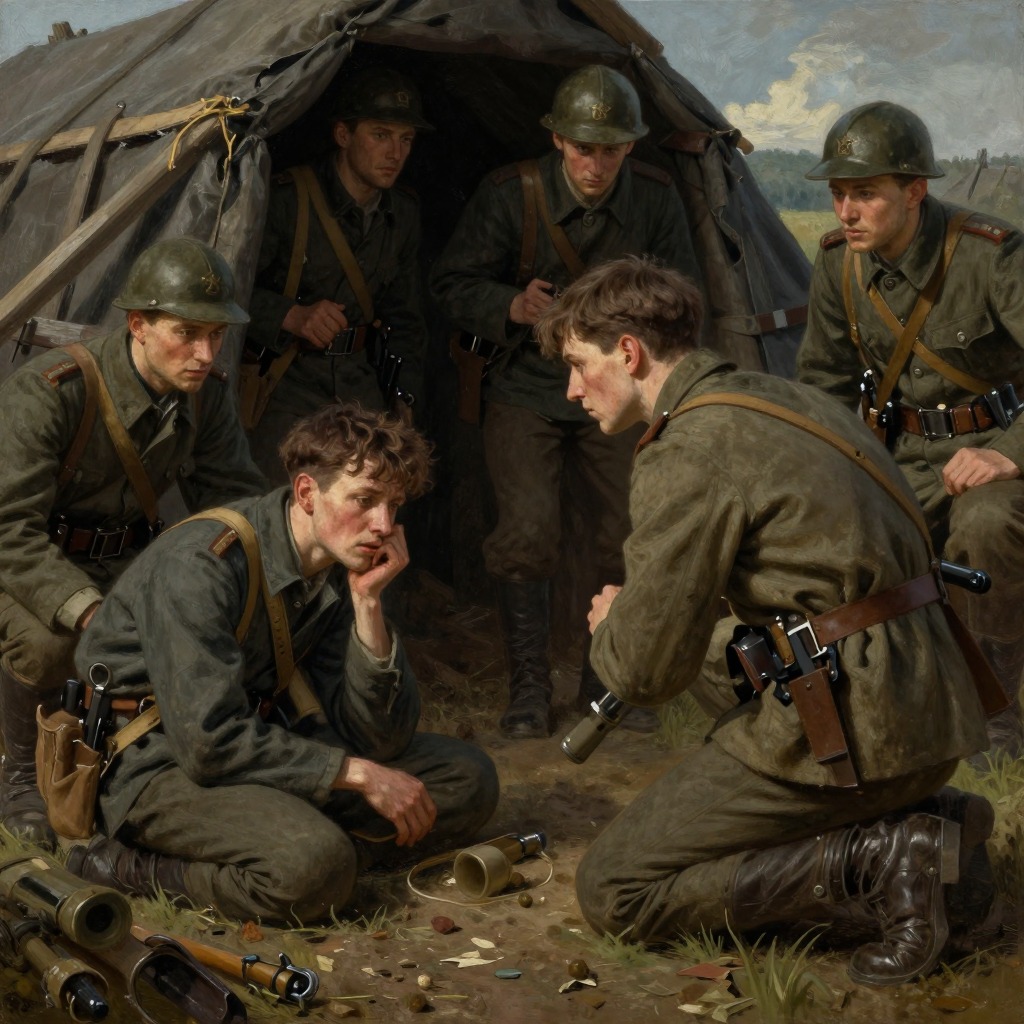
The violinist is one of the few Russian prisoners who speaks a little German. When he learns that Paul Bäumer can play the piano, he fetches his violin and begins to play. The other prisoners sit down and lean their backs against the wire fence, while the musician stands and plays, sometimes closing his eyes with the absent expression violinists get, sometimes swaying to the rhythm and smiling across at Paul. The instrument itself is not described in detail, but its sound is rendered with extraordinary precision: it plays mostly folk songs, and the other prisoners hum along, their voices forming a dark, subterranean chorus like "a country of dark hills that sing far down under the ground." Above this mass of sound, the violin stands "like a slender girl," clear and alone. When the voices cease, the violin continues alone, its tone so thin in the night air that it sounds frozen; one must stand close to hear it properly. The musician and his violin create a moment of fragile artistry that is utterly out of place in the camp, yet all the more powerful for its incongruity.
The Sound of Shared Sorrow
The violin's music does not merely entertain; it becomes a vehicle for collective emotion that transcends the roles of guard and prisoner. The folk songs the musician plays are familiar in their structure, yet in this setting they carry an immense weight of longing and loss. The prisoners hum along, their voices merging into a single, mournful entity that seems to rise from the earth itself. Paul, listening, is moved to a sadness that is both personal and universal. The violin's sound, he reflects, would be much better in a room; out here in the open, under the cold stars and beside the wire fence, it makes a man grow sad. The instrument thus becomes a conduit for the unspeakable grief of all the men present—a grief that has no language but music.
Contrast with Other Sounds and Silences
The violin's appearance is set against the pervasive auditory landscape of the camp and the front. The prisoners are usually silent, speaking only a few words, and their lives are marked by the "awful melancholy of life and the pitilessness of men." The only other sounds are the wind coming down from the beech woods, the occasional burial chorale sung in parts that sounds like a distant organ, and the constant, grinding silence of apathy and starvation. The violin breaks this silence with something intentional, beautiful, and human. It stands in stark contrast to the mechanical noises of war—the shells, the machine-guns, the roaring of tanks—and to the dehumanizing quiet of the camp, where men stand at the wire fence like "sick storks" or "great birds." The violin reasserts the possibility of expression and connection in a world designed to crush both.
Thematic Significance: A Fleeting Bridge
The violin of the Russian prisoner is a key instance of the novel's exploration of shared humanity across enemy lines. Paul, who has just killed a French printer with his own hands and is tormented by the memory, finds in the Russian musician's playing a moment of pure, non-violent encounter. The music does not erase the reality of the camp—the prisoners are still starving, still dying of dysentery, still standing at the wire fence—but it offers a glimpse of a world where a German soldier and a Russian violinist can share a moment of understanding. The instrument itself, a product of peacetime culture, becomes a fragile emblem of everything the war is destroying: art, beauty, communication, and the simple dignity of making music for another person. Its thin, frozen sound in the night air is a perfect metaphor for the precariousness of such moments—beautiful, fleeting, and almost too fragile to survive the surrounding darkness.