
Social Silence Around Suicide
All the Bright PlacesThis thread traces how gossip, stigma, and institutional avoidance obscure mental-health crises and complicate mourning.
increasing Bearing strength in each event
 decreasing
Bearing strength in each eventdecreasingThe Gossip Story
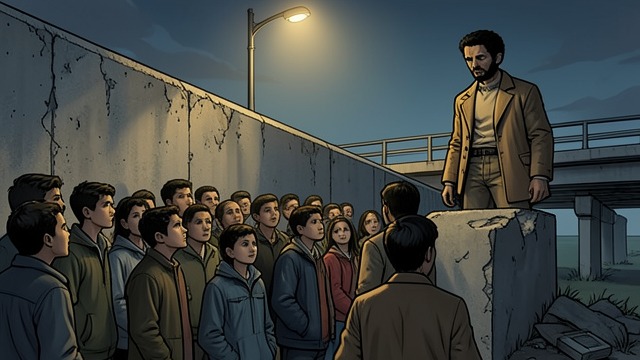
The Gossip Story
Rumor replaces fact
Students turn Theodore Finch’s tower incident into an exaggerated account, while the Bartlett Dirt publishes a sensational story about Violet Markey’s rescue.
The person disappears
The coverage makes Finch a school spectacle and Violet a public hero without accurately representing either teenager’s private experience.
Gossip produces attention without understanding, adding pressure to already fragile students.
A Ranked List
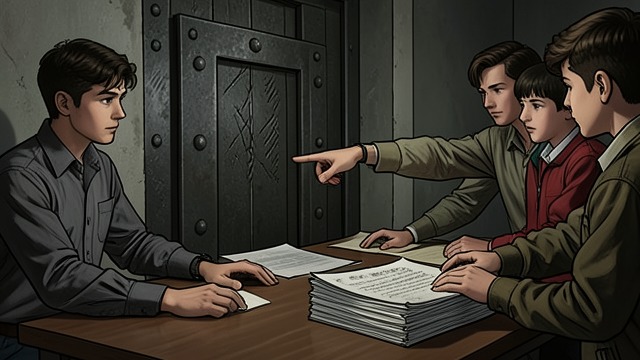
A Ranked List
Suicide treated as entertainment
The Bartlett Dirt publishes a list of supposedly suicidal students, putting Theodore Finch at the top. Some classmates treat the subject as a joke.
A counter-effort
Jordan Gripenwaldt places information about suicide resources in the school paper, but the attention remains fixed on ranking and rumor.
The contrast shows how public discussion can reproduce stigma even when reliable help is available nearby.
The Support Group
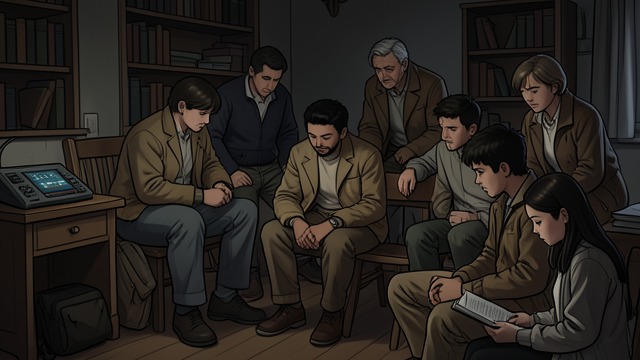
The Support Group
An unfamiliar room
Theodore Finch attends Life Is Life, a group for teenagers who have experienced suicidal thoughts or attempts. He introduces himself under a false name and hides the severity of his own risk.
Recognition without disclosure
He hears Amanda Monk describe her pain and realizes he is not the only teenager carrying a hidden crisis. Yet he leaves without making the group a sustained source of care.
The meeting briefly counters stigma but cannot substitute for ongoing intervention.
An Accident Narrative
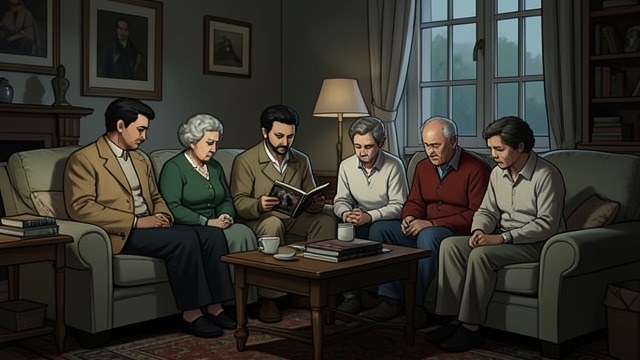
An Accident Narrative
A family’s explanation
Theodore Finch’s family describes his death as an accident because there is no formal note. The service avoids naming suicide directly.
Violet’s uncertainty
Violet questions whether Finch intended to die or went to Blue Hole seeking its bottom. The ambiguity leaves her without a stable account to mourn.
The family’s story offers protection from stigma but also demonstrates the silence surrounding suicide.
The School’s Aftermath
The School’s Aftermath
Misplaced prevention
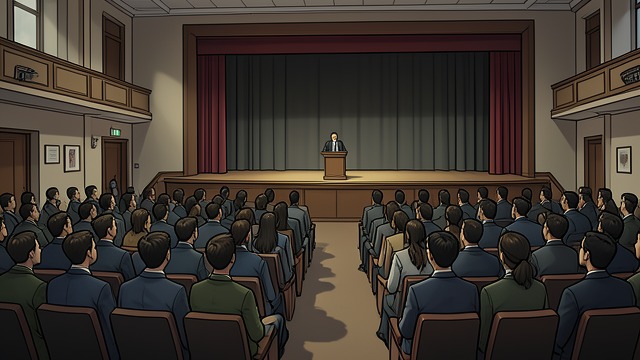
The school stages assemblies about self-defense and drugs, while rumors falsely suggest Theodore Finch died because of substance use.
A more honest conversation
Violet Markey asks Amanda Monk what suicidal thinking felt like. Amanda describes worthlessness and a narrowed sense of choice, helping Violet understand without reducing Finch to a stereotype.
The aftermath shows that accurate listening matters more than spectacle or convenient explanations.
Early January, after the tower incident
Late January
March, after Finch’s hospital visit
May 3, at Finch’s funeral
May, two weeks after the funeral
