
The Meaning of Signs
All the Bright PlacesThis thread examines how the novel uses signs as both invitations to interpret and reminders that interpretation cannot guarantee rescue.
increasing Bearing strength in each event
 decreasing
Bearing strength in each eventdecreasingThe First Offering
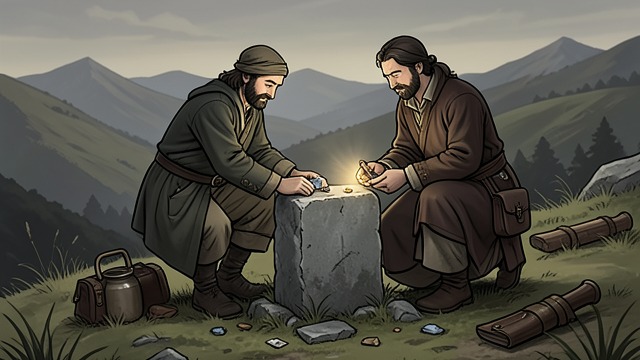
The First Offering
A deliberate trace
Theodore Finch and Violet Markey leave small objects beside Hoosier Hill’s marker, creating a private proof of their visit.
A game with limits
Their offering can be found by another visitor, altered, or lost. The practice makes memory tangible without promising permanence.
This first sign establishes the language Violet will later use to read Finch’s solitary journeys.
The Rock’s Message
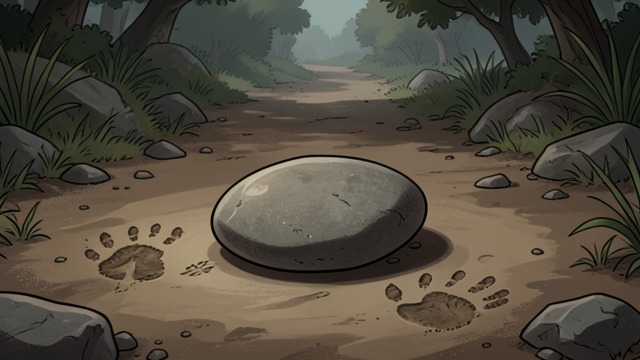
The Rock’s Message
A private prompt
Theodore Finch leaves Violet Markey a rock bearing the words “Your turn.” She recognizes it as part of their offering ritual.
Meaning made together
The simple message invites continuation rather than giving instructions. Its significance comes from shared experience, not from the object alone.
The stone becomes a portable sign that connects two people across separate moments.
Cryptic Messages
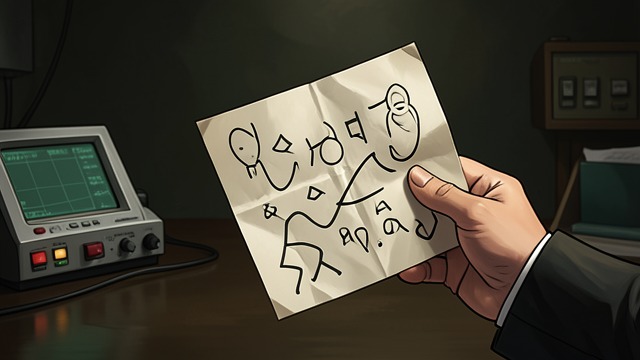
Cryptic Messages
Words without directions
Theodore Finch sends Violet brief, evocative messages about branches, paint, signs, and private loveliness. He does not answer her direct questions about his location.
Interpretation under pressure
Violet searches their shared map and memories for connections. The messages become emotionally meaningful but dangerously ambiguous while she is trying to determine whether he is safe.
The novel shows that beautiful language can carry feeling without communicating actionable information.
A Clue to Water
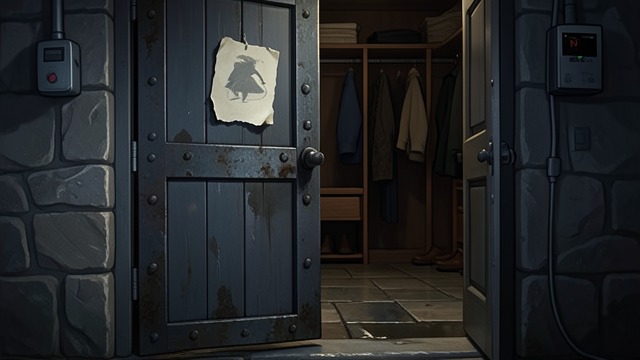
A Clue to Water
The closet wall
Violet finds words on Post-its in Theodore Finch’s closet and rearranges them into phrases connected to his childhood and to water.
A destination identified
She infers that Finch may have returned to one of their water sites and travels to Blue Hole. The clue narrows the search but comes too late to prevent his death.
Signs can guide a survivor toward truth without giving them power over the outcome.
The Map’s Last Number
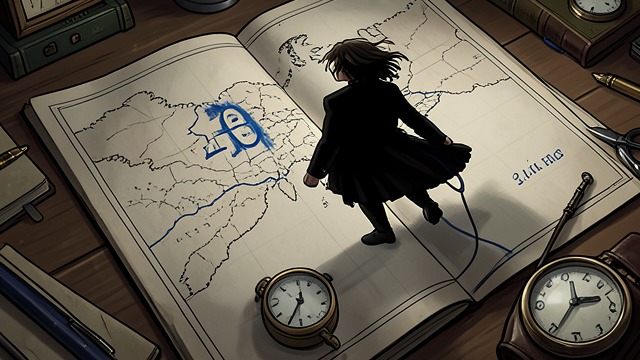
The Map’s Last Number
A place outside the plan
Violet studies the remaining destinations and realizes Farmersburg was added by Theodore Finch without their usual discussion.
The route becomes personal
She follows his last clue to Taylor Prayer Chapel, where she finds his song. The map’s final entry is not a school requirement but a message shaped for her.
The route teaches Violet to read signs while accepting that some questions cannot be answered.
Mid-January, at Hoosier Hill
Late January
Late March through April
April 26, at Finch’s home
May, before the final wander
