
Language, Nicknames, and Silence
All the Bright PlacesThis thread traces how names and written fragments create intimacy while also exposing the limits of language to communicate distress.
increasing Bearing strength in each event
 decreasing
Bearing strength in each eventdecreasingA Public Label
A Public Label
Naming difference
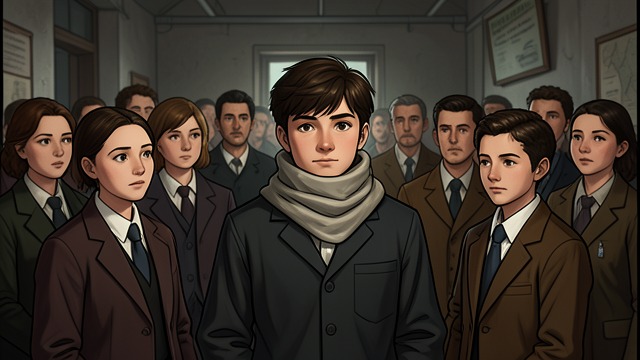
After Theodore Finch’s strange questions become known at school, classmates call him a freak. The label compresses a complicated child into a joke.
Identity under pressure
Finch learns to perform around the insult, using humor and reinvention to control how others see him. The label nevertheless shapes his expectations of rejection.
The novel contrasts imposed names with the complexity of the person bearing them.
Ultraviolet Remarkey-able
Ultraviolet Remarkey-able
A name made between them
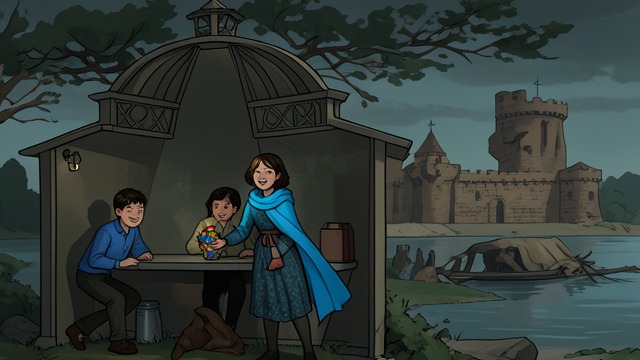
Theodore Finch calls Violet Markey “Ultraviolet” and later “Ultraviolet Remarkey-able,” joining a color image to his playful language.
An intimate recognition
The nickname gives Violet a way to imagine herself as more than the grieving, careful person others see. She accepts it while remaining distinct from Eleanor Markey.
Their private vocabulary creates closeness without requiring either person to explain everything directly.
Quotes as Conversation
Quotes as Conversation
Borrowed words
Theodore Finch and Violet Markey exchange Virginia Woolf quotations through Facebook, responding to each other with lines from The Waves.
Intimacy through reading
Their literary exchange makes Violet write again and lets Finch feel understood. It is flirtation, shared play, and a way to communicate moods indirectly.
The quotations become a private language, powerful but not always adequate for asking directly for help.
Post-its as Song

Post-its as Song
Words arranged and rearranged
Theodore Finch writes separate words on Post-its, sorting them into positive and negative groups. He shows Violet Markey how fragments can become a song.
Expression without explanation
The method lets Finch convey affection and mood in forms that feel manageable. It does not make him able to disclose the full extent of his crisis.
The creative practice is both authentic communication and a possible screen for what remains unsaid.
The Farewell Lyrics
The Farewell Lyrics
A song left behind
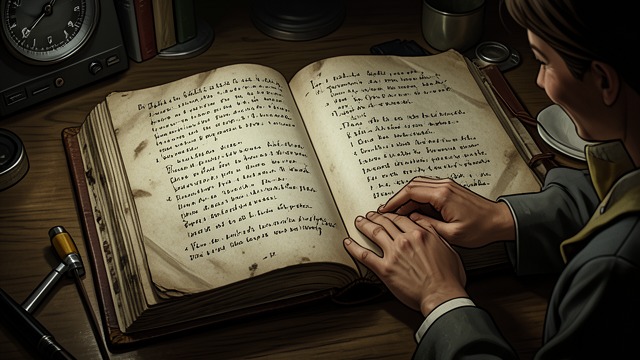
Violet Markey finds Theodore Finch’s handwritten song manuscript hidden in the chapel Bible. The lyrics describe how he felt happy, special, and loved with her.
Meaning without blame
The song does not say why Finch died or accuse Violet of failing him. It gives her a final expression of tenderness while leaving the cause of his death unresolved.
Words preserve a feeling, but they cannot substitute for the speaker’s presence.
Years before the novel, recalled in February
January, during the first wanderings
Mid-January
March, during Violet’s closet visit
Late spring, at Taylor Prayer Chapel
