A Street Bridge Crash
All the Bright PlacesThe A Street Bridge Crash killed Eleanor Markey and left her younger sister, Violet Markey, physically alive but carrying grief, fractured memories, and a lasting sense of responsibility. The crash is first encountered through a news report and later through Violet’s recollection, so its bare public facts gradually acquire the intimate details of a family loss: a party, an argument, a route Violet suggested, and a warning about ice that could not prevent the car from leaving the bridge.
Background and Circumstances
Eleanor was eighteen, a senior at Bartlett High School, and a member of the student congress. At approximately 12:45 a.m. on April 5, she lost control of the car on A Street Bridge. The news account identifies icy conditions and speed as possible causes, not settled explanations. Eleanor was killed on impact; Violet, sixteen and riding as a passenger, sustained only minor injuries. The contrast between the certainty of Eleanor’s death and the uncertainty about what caused the crash remains central to the event’s aftermath.
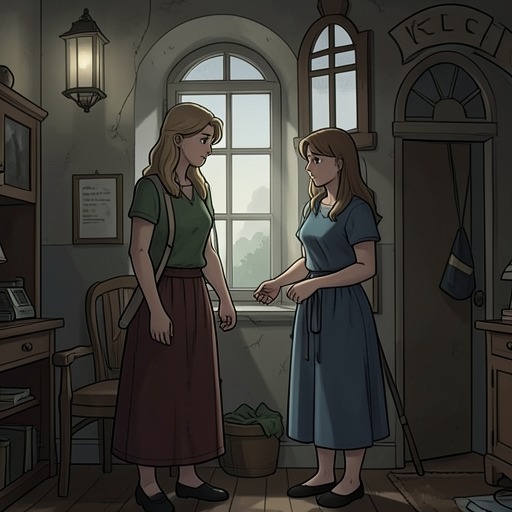
The sisters had been leaving a party. In Violet’s later account, Eleanor had argued with Eli Cross, with whom she had been going out for most of the previous year. Eleanor was upset, but would not let Violet drive. Violet remembers telling her to take A Street Bridge. That detail places Violet inside the chain of decisions leading toward the crash, but does not establish that she caused it: the report points instead to possible ice and speed, and Eleanor was at the wheel.
The Crash in Memory
Violet’s recollection returns in fragments rather than as a complete account. She remembers getting into the car, the bridge sign warning that the bridge iced before the road, and Eleanor saying she could not hold on. She remembers the car sliding, the air as it went through the barrier, and her sister screaming; after that, her memory stops. Violet woke in the hospital three hours later. The gap is part of the event’s narrative shape: the account can name what happened to the car and its passengers, but Violet cannot narrate the impact or the interval that followed from her own continuous memory.
The crash therefore appears in two different forms. The news report gives the time, the location, the sisters’ ages, and the outcome. Violet’s remembered sequence supplies the route, the warning sign, and her sister’s distress, while ending at the point where her consciousness fails. Neither version removes the unresolved question of how responsibility should be understood. The reported possibilities of ice and speed coexist with Violet’s painful knowledge that she recommended the bridge.
The Site and Its Traces
Later, Theodore Finch runs across A Street Bridge and sees the remaining damage to its stone guardrail: an open gap where part of the wall used to be. A faded white cross lies on its side beside the breach. He cannot tell whether Violet, her parents, or someone from school placed it there. The marker makes the bridge a site of public remembrance, but its uncertain authorship also reflects how little Finch knows about the private history attached to it.
Below the bridge, in an old, dry riverbed, Finch finds pieces of glass and metal, a red taillight lens, a shattered side mirror, and a dented license plate folded nearly in half. These remnants turn an account he has read into a material place where the crash happened. He leaves the debris undisturbed but takes the plate, concerned that a stranger might treat it as a curiosity or souvenir. His response makes the wreckage more than evidence of a collision: it is also something personal, connected to a family and a loss that should not be casually possessed.
Bereavement and Consequences
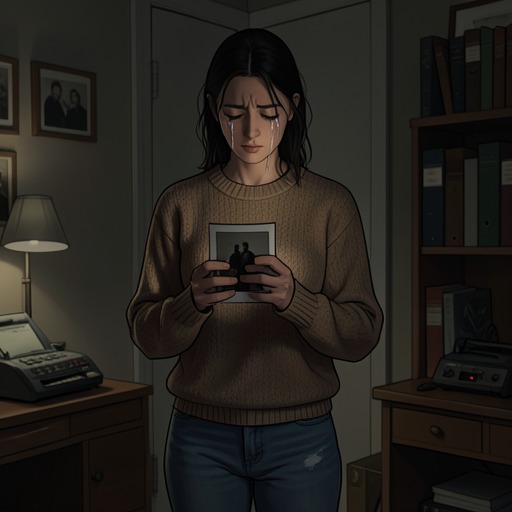
Eleanor remains present in Violet’s life through memory and the calendar. When Finch asks why Violet had been on the school’s bell tower ledge, she explains that it was her sister’s birthday and that Eleanor would have been nineteen. The date gives the loss a recurring form: a birthday is both a marker of the life Eleanor did not continue to live and a reminder of the age she would have reached. Violet also describes her sister as smart, stubborn, moody, funny, sometimes mean when angry, sweet, and protective. Eleanor had been the person Violet could tell anything to and her best friend; remembering her as a whole person keeps their bond from being reduced to the circumstances of her death.
The crash also changes Violet’s imagined future. Before it, her dream was to attend New York University’s creative writing program, a plan rooted in a family visit to New York and her mother’s connections there. After the accident, Violet changed her mind. She completed an application and essay but did not submit them, and later explained that she had missed the regular-admission deadline. The evidence does not present the accident as the only fact in her decision, but it makes the lost application a concrete measure of how sharply her plans diverged from the future she had once pictured.
Narrative Significance
The event’s consequences recur through spaces, objects, and partial telling. The bridge is at once a route across Bartlett and the place where the sisters’ journey ended; the damaged guardrail and abandoned car parts preserve physical traces, while the cross offers a marker whose maker remains unknown. Violet’s account likewise preserves some details and loses others. Her recollection can identify her own suggestion of the route, but not the final moments after the car went through the barrier.
That combination of known facts and irreparable gaps helps explain why the crash continues to matter beyond its initial report. Violet’s survival does not cancel her bereavement, and the fact that she suggested the bridge does not make her responsible for the crash. The story instead holds those facts beside each other: an accident with possible environmental and driving causes, a sister lost, a survivor who remembers only part of what happened, and a future altered by grief. Finch’s discovery at the bridge gives that private history a witness, while Violet’s later telling allows Eleanor to appear not only as the person killed there, but as a sister whose character and relationship with Violet endure in memory.