Crane-Watching by the River and Finch’s Fight with Roamer
All the Bright PlacesThe river excursion and ensuing fight bring two sharply different sides of Theodore Finch into the same scene: his patient attention to a wandering hooded crane and his sudden, dangerous confrontation with Gabe Romero. Violet Markey follows Finch away from Bartlett High School during a fire alarm, and the escape briefly turns the school’s ordinary geography into open space for private discovery. That refuge does not last. When Gabe arrives with Ryan Cross and Joe Wyatt, the encounter becomes a fight that only ends after Violet repeatedly calls Finch back to himself.
The escape from school
During third period, the fire alarm interrupts class and sends students outside. Finch approaches Violet with an invitation to meet him in the student parking lot, then walks away without drawing the attention of the surrounding teachers and school staff. Violet hesitates, frightened that someone may stop her, but follows. She and Finch run across the boulevard in front of the school and continue beside the trees that divide the main parking lot from the river. At a break in the trees, Finch takes her hand.
The movement away from school matters to the scene’s emotional shape. Violet describes the run as both frightening and freeing: she is breaking from the supervised order of the school, but she does not yet know where Finch is taking her. The alarm, ostensibly a signal to gather and follow instructions, becomes the opening for a spontaneous escape. Finch does not explain his destination before they leave; the invitation itself draws Violet into an experience whose purpose only becomes clear at the river.
The crane and Finch’s refuge
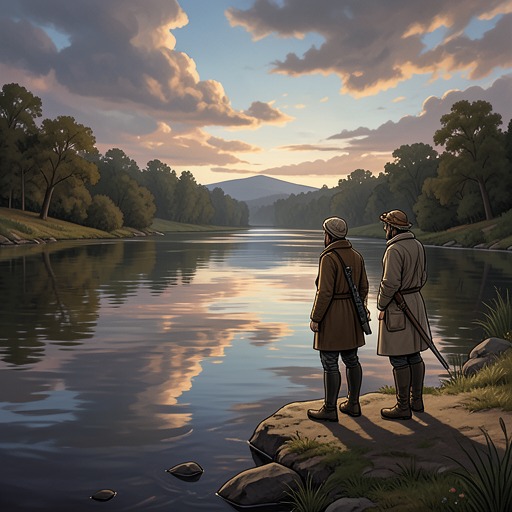
The riverbank is steep enough that Violet slips while Finch makes his way down ahead of her. At the water’s edge, he points across the river to a large bird in the shallows. Violet observes its red crown, white head, and charcoal-gray body before Finch identifies it as a hooded crane. He says it may be the only one in Indiana, perhaps even the only one in the United States, and estimates that it is about seven thousand miles from its Asian wintering grounds. The bird’s presence is a striking departure from the familiar school landscape, but Finch has not found it by chance: he explains that it has been in the area for about a week.
Finch also reveals what brings him to this stretch of river. When he cannot stand being at school, he comes down to the water; sometimes he swims, and sometimes he sits. He had been concerned that the crane might be injured, a detail that gives his attention to it a note of watchfulness rather than mere curiosity. Violet initially sees the bird as lost. Finch disputes that interpretation by pointing to its behavior: it wades and splashes in the shallows. He calls what it is doing wandering, turning the crane’s uncertain distance from home into an image of movement rather than helplessness.
That distinction connects the bird to Finch’s own practice. The river is a place he can leave school for when its pressures become unbearable, and he observes the crane moving freely through unfamiliar surroundings. The scene does not establish that the bird’s situation is equivalent to his, but Finch’s description gives the encounter a personal resonance: wandering can be purposeful even when a traveler is far from home. Violet is invited to see this private landscape through Finch’s way of looking, not simply to accompany him on an escape.
An interruption becomes a fight
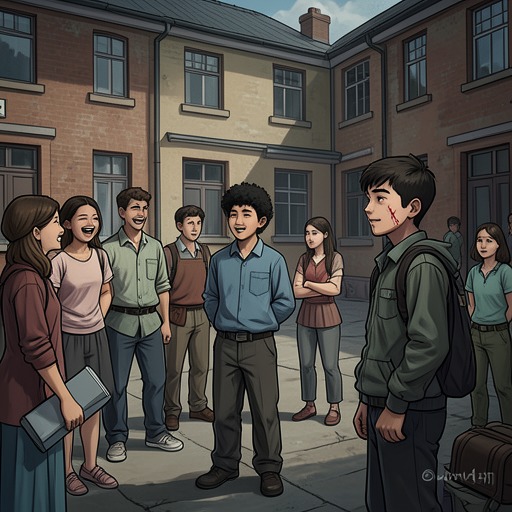
After the crane-watching, Finch dries himself with his sweater, shakes water from his hair, and gets dressed. Violet suggests returning to class, but Finch proposes another idea before he can explain it. Ryan, Gabe, and Joe then slide down the embankment to join them. Ryan says that they saw Violet leave during the alarm. Gabe turns to Finch with a taunt about whether the outing belongs to their geography project, making the private river trip into a target for ridicule.
The exchange escalates when Finch answers Gabe with a sexual insult about Gabe’s mother. Gabe uses a homophobic slur in response, and Violet tells him to stop, while warning Finch not to worsen the confrontation. Her intervention does not prevent the fight. Gabe jumps on Finch, and both boys roll down the bank into the water. Ryan and Joe initially remain standing nearby; Violet urges Ryan to act, but he answers that he did not start it.
Gabe strikes Finch repeatedly. Finch first blocks rather than retaliates, but then twists Gabe’s arm behind his back and holds his head under the water. The reversal changes the immediate danger of the scene: Finch, who had been on the receiving end of the attack, now has Gabe under his control. Ryan pulls at Finch’s sweater collar and arm, while Violet tells him to let Gabe go. Finch does not respond at first. When he finally looks at Violet, she has the impression that, for a moment, he does not recognize her. She repeats the command sharply, and Finch releases Gabe.
Aftermath and significance
Finch straightens, lifts Gabe onto the bank, and walks up the hill without waiting or looking back. His face is bloody, but the scene does not end in further violence: he has stopped, and Gabe is left coughing up water. Violet’s voice marks the decisive turn. Ryan has physically tried to pull Finch away, but the narrative emphasizes Finch’s response to Violet’s repeated instruction, especially the moment when his attention returns to her. The interruption that began as an escape from school has become a conflict in which her words help end the immediate threat.
Violet does not return to class. Knowing her mother will not yet expect her home, she goes to the parking lot, unlocks Leroy, and rides to the east side of town. She searches the streets until she finds the Finch family home and knocks. Finch’s sister Kate answers and greets her as Violet, suggesting that her arrival is not wholly unexpected. This visit carries the consequences of the river scene beyond the riverbank: rather than simply go back to school after Finch leaves, Violet seeks him out at home.
The event therefore joins revelation, rupture, and response without resolving the conflict between Finch and Gabe. It reveals the river as a recurring refuge in Finch’s life, places the crane’s solitary wandering beside his own movement away from school, and shows how quickly his quiet attention can give way to violence when he is provoked. Violet’s decision to follow him, speak up during the fight, and then go to his house makes her more than a witness to the encounter. The scene’s central contrast remains unsettled: wandering offers Finch a moment of freedom and connection, but the return of his school antagonists turns that open landscape into another site of confrontation.